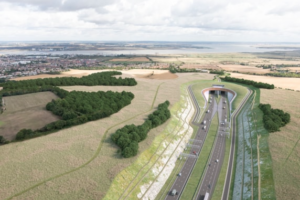
The early work to prepare parts of Essex and Kent for construction of National Highways’ Lower Thames Crossing is now underway.
Before the major construction and tunnelling begins in 2028, work will be carried out to protect the area’s utility supplies, heritage, and wildlife, with around 1000 hectares of new habitat created.
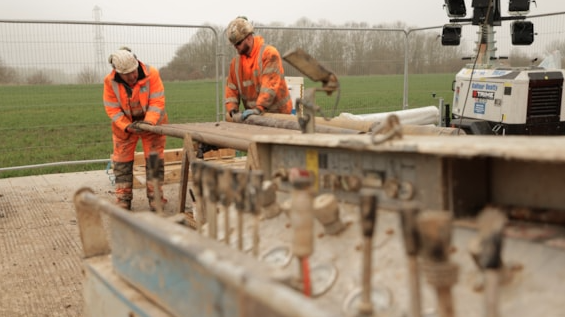
In Essex around Coalhouse Fort, around 50 archaeologists are currently excavating to uncover and preserve the heritage of the area. Ground investigations are also being carried out to give a better understanding
of soil, rock and ground water to help the detailed design of the foundations and structures needed to build the route.

Shaun Pidcock, Delivery Director for the Lower Thames Crossing, said:
“There’s now real progress to be seen, as we start getting the area ready for the new road and tunnel to be built. Our low-carbon approach to construction means the Lower Thames Crossing will be Britain’s greenest road and create local jobs and new skills.”
Later this spring, work will start to turn an area of scrubland bigger than 30 football pitches near Coalhouse Point in East Tilbury into a wetland for migratory and wading birds. Diggers will create wetland ‘scrapes’, ponds, and ditches that will fill with tidal water and give a home to water voles and newts. Work on the new habitats will be completed next year, before being left to mature.
In Kent to the east of the Thong village, new habitats with ponds, trees and hedgerows are being created. Later this spring archaeologists will start work in the area around the southern tunnel entrance, to the east
of Gravesend.
Later this year the project will also start diverting gas, water, electricity and telecoms lines along the route to safeguard supplies that feed London and the south-east.
Members of the public are invited to a series of community roadshows to talk to the project team and learn about work taking place near them. The first event is in East Tilbury on Monday 9th March, with nine events
planned over the next four weeks.
The project’s first work compounds are being set up near East Tilbury in Thurrock, and at Thong near Gravesend. They will contain facilities for workers and storage for machinery, equipment and materials. ‘Haul
roads’ – temporary roads used by construction vehicles to keep materials and equipment off local roads – are being created between the compounds and nearby worksites.
Six hydrogen generators are already at work on one of the compounds alongside a new electric drilling rig and diggers. The project recently bought the largest ever volume of low-carbon hydrogen for a construction
scheme.
(Picture: National Highways)