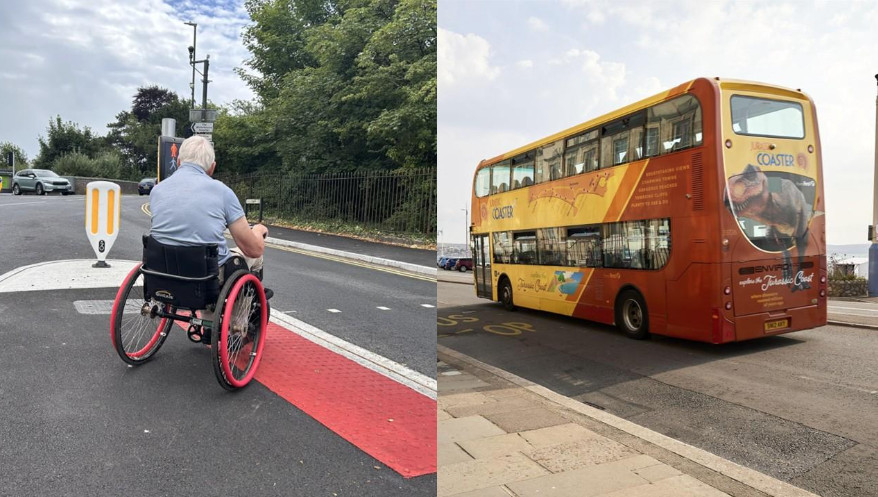
Dorset Council is bringing together plans to improve buses and community transport with safer walking, cycling, and using a wheelchair or mobility scooter – so more people can reach work, school, health appointments and local shops without always needing a car.
Two linked reports going to Cabinet this month set out the approach: Transforming Public and Community Transport, and the Active Travel Infrastructure Plan.
Cabinet will be asked to endorse the strategic direction and approve development of a full business case – the next major step towards a modern, community‑aligned transport system for Dorset. Work would be phased from 2027/28, subject to funding and future budget decisions.
The Transforming Public and Community Transport report sets a clear approach for a rural county. It focuses on strengthening key bus routes where demand is strongest, backing community transport where fixed services aren’t viable, and using flexible, bookable options in the hardest‑to‑serve places.
The timing aligns with the council’s financial planning and the lead‑in needed for consultation and procurement during 2026/27, before services could begin from April 2027 if approved.
Detailed options, service levels and delivery models will be developed and tested through the business case during 2026, and no decisions on specific routes or frequencies have been made at this stage.
The goal is simple: more residents able to travel independently, more of the time – especially older people, disabled residents and young people. The report also recognises the financial realities of running transport in a rural area and explores how a long‑term, sustainable model can be developed with partners including town and parish councils.
The Active Travel Infrastructure Plan complements this by mapping where better crossings, smoother surfaces, new or improved paths, junction changes and lower speed limits would make local trips easier and safer.
The plan covers Dorset through area‑based network plans and includes a prioritised programme of improvements. It draws on extensive local feedback to focus effort where it will make the most difference. Having an approved plan strengthens Dorset’s hand when bidding for government funding and securing better provision alongside new development. Most schemes will require external funding and further local engagement before detailed design and delivery.
Drivers benefit too. If more short journeys switch to walking, wheeling or cycling – and more long trips use buses – there will be fewer cars on the road, meaning less queuing, more reliable journey times, and reduced vehicle emissions.
Cllr Jon Andrews, Dorset Council’s Cabinet Member for Place Services, said:
“This is about making everyday journeys simpler. By improving buses and community transport – and fixing the pinch points that stop people walking, using a wheelchair, or cycling – we’ll help residents stay connected to jobs, learning and essential services. It’s a practical, long‑term plan for Dorset, and we’ll deliver it with towns, parishes, partners, and volunteers.”
If approved at Cabinet on Thursday 29 January, the council will develop the full business case during 2026 and line up funding and delivery partners, with schemes phased from 2027/28 and subject to future budget decisions.
(Picture: Dorset Council)