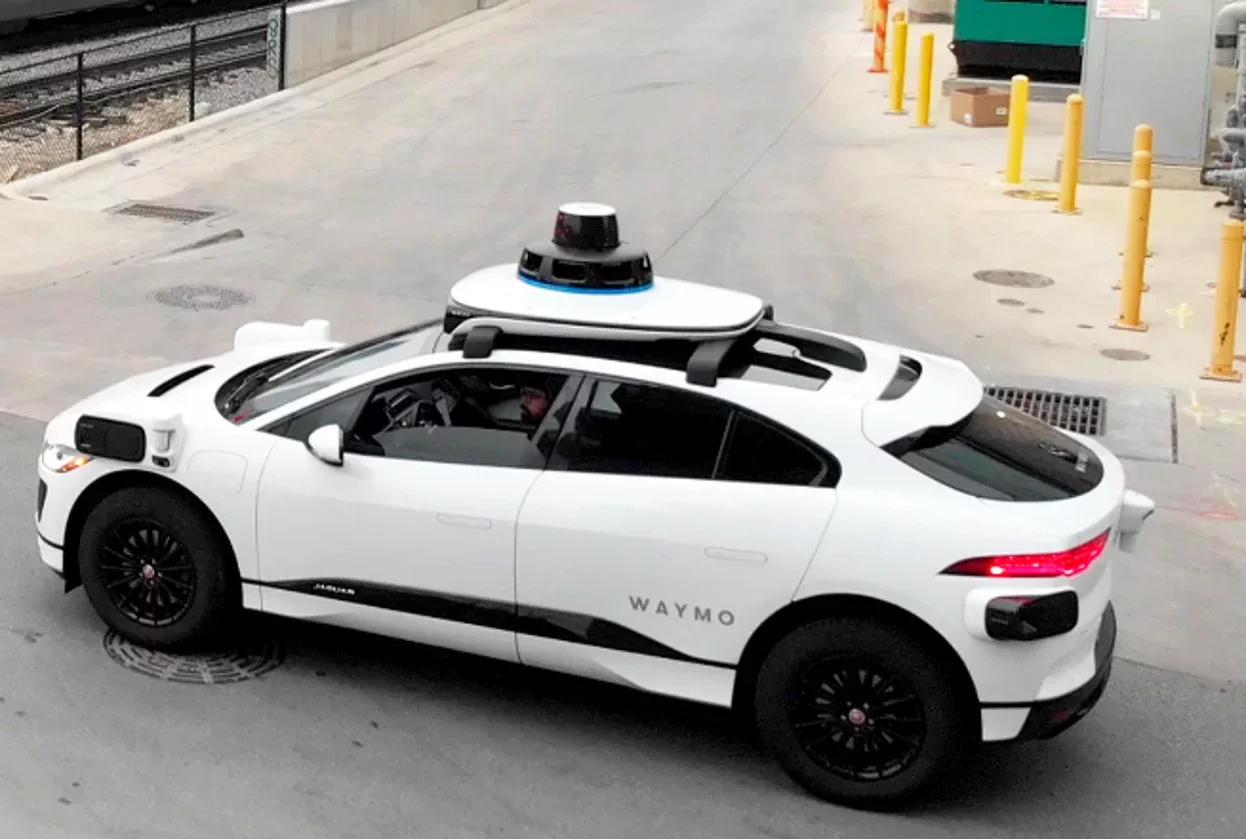
Driverless cars are beginning to display human-like behaviors like impatience on the roads, in a sign of increased intelligence in the robotaxis.
The chilling development was identified by University of San Francisco engineering Professor William Riggs, who has been studying Waymo cars since their inception, says the Daily Mail.
On a journey with a reporter from the San Francisco Chronicle, the pair noticed the Waymo they were traveling in crept to a rolling start at a pedestrian crossing before the person had reached the other footpath.
The subtle movement was reminiscent of the way humans act behind the wheel, but a strange occurrence for the robotic Waymo, which prides itself on being safer than a driver because it errs on the side of caution and leaves no room for human error.
The action of letting the foot gently off the break moments before they should to allow the car to begin creeping forward at a rolling pace displays a sense of impatience – a human reaction not previously seen in the robotic cars.
‘From an evolutionary standpoint, you’re seeing a lot more anticipation and assertiveness from the vehicles,’ Riggs said.
Up until this point, Waymo taxis have been known to follow the road rules down to the letter, sometimes causing frustration among motorists.
But robotaxis are designed to constantly gather information about road conditions, and the algorithm is often fine-tuned to ensure the product is the best it can be.
David Margines, the director of product management at Waymo, said human specialists who drive the cars to train them had to juggle two separate goals: ensuring the Waymo followed every traffic law, whilst simultaneously working to transport customers in a reasonable timeframe.
‘We imagined that it might be kind of a trade-off,’ he told the publication.
‘It wasn’t that at all. Being an assertive driver means that you’re more predictable, that you blend into the environment, that you do things that you expect other humans on the road to do.’
The result is a more ‘humanistic’ way of driving.
In another example of these developments, Margines provided an example of a Waymo driving through an intersection, merging into traffic in which it had the right of way.
Another car swerves into Waymo’s path. The robotaxi hit the brakes and prevented a crash, while simultaneously beeping its horn to let the other driver know of its displeasure.
The act of using its horn is just another example of human-like behavior which serves as a reminder of the intelligence capabilities of the robot.
These small tweaks may be beneficial in getting a passenger from point A to B faster, but it raises the question of whether the car is becoming too similar to humans, now to the point that it is mimicking poor choices motorists make on the roads out of frustration or emotion.
(Pic: Waymo)