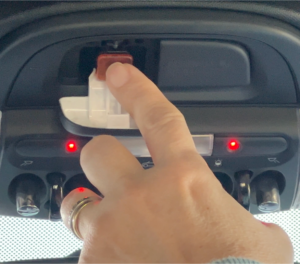
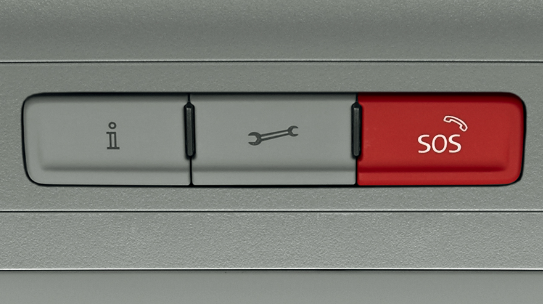
The benefits of eCall have been brought into focus after a pair of Swedish motorcyclists who were seriously injured in a crash on a Welsh road were rescued when their bike detected the impact and sent out an automatic SOS.
The BBC says that Johan Takats, 47, was riding a BMW R 1250 GS Adventure bike when he lost control on a slip road of the A40 in Raglan, Monmouthshire, and hit the barrier of the central reservation, triggering the emergency call.
The force of the impact caused pillion passenger Helena Engstrom, 45, to be thrown onto the opposite side of the dual carriageway, leaving them both lying helplessly on the road with serious pelvic and leg injuries.
An investigation, filmed for BBC series The Crash Detectives, revealed that when the riders were too badly injured to respond to a call from BMW’s emergency centre, the bike’s GPS pinpointed their exact location and the alarm was raised with Gwent Police.
“Due to the intervention of the technology on the motorcycle, detecting the collision, and making that call, it’s probably got help to them more quickly than if they were having to describe their location,” said forensic collision investigator PC Richie Wyatt.
They were travelling in a group of four, on three bikes, with Helena’s boyfriend Peter Mårtensson, and another friend, Mattias Johansson.
It was day six of a trip which they had started by taking a ferry to Germany, before travelling to Amsterdam and then taking another ferry to Newcastle upon Tyne. They had visited Hadrian’s Wall, and Mount St Bernard Abbey, and spent the night before the collision in Aberystwyth, Ceredigion.
Mr Takats had been a motorcyclist for 18 years at the time of the crash said the bike was just a few months old and the standard-fit SOS function was a reassuring feature.
“I think it is great technology. It is nice to know that in an accident the bike can send information like location, speed and direction of travel to the call centre,” he said. “[But] I never thought I would be needing it.”
eCall business case expert Andy Graham, co-founder of VESOS, extolled the virtues of eCall:
“If we can’t exploit eCall for making roads safer, what hope do we have for self-driving vehicles? I have worked on eCall since a business case for the DfT I undertook with SBD in 2006, assessing eCall in the required methodology. This showed the value of the data not just for Blue Light services but in traffic operations and road safety analysis.
“Over the last few years I have worked on updating this business case as eCall has become mandatory – so ensuring mass fitment – and as new use cases such as smart motorways have developed.”
Commenting on the progress that eCall has made, Andy added:
“From a potentially voluntary scheme with a poor business case to today’s mandated fitment, eCall is a genuine ‘no brainer’.”
(Picture: National Highways)