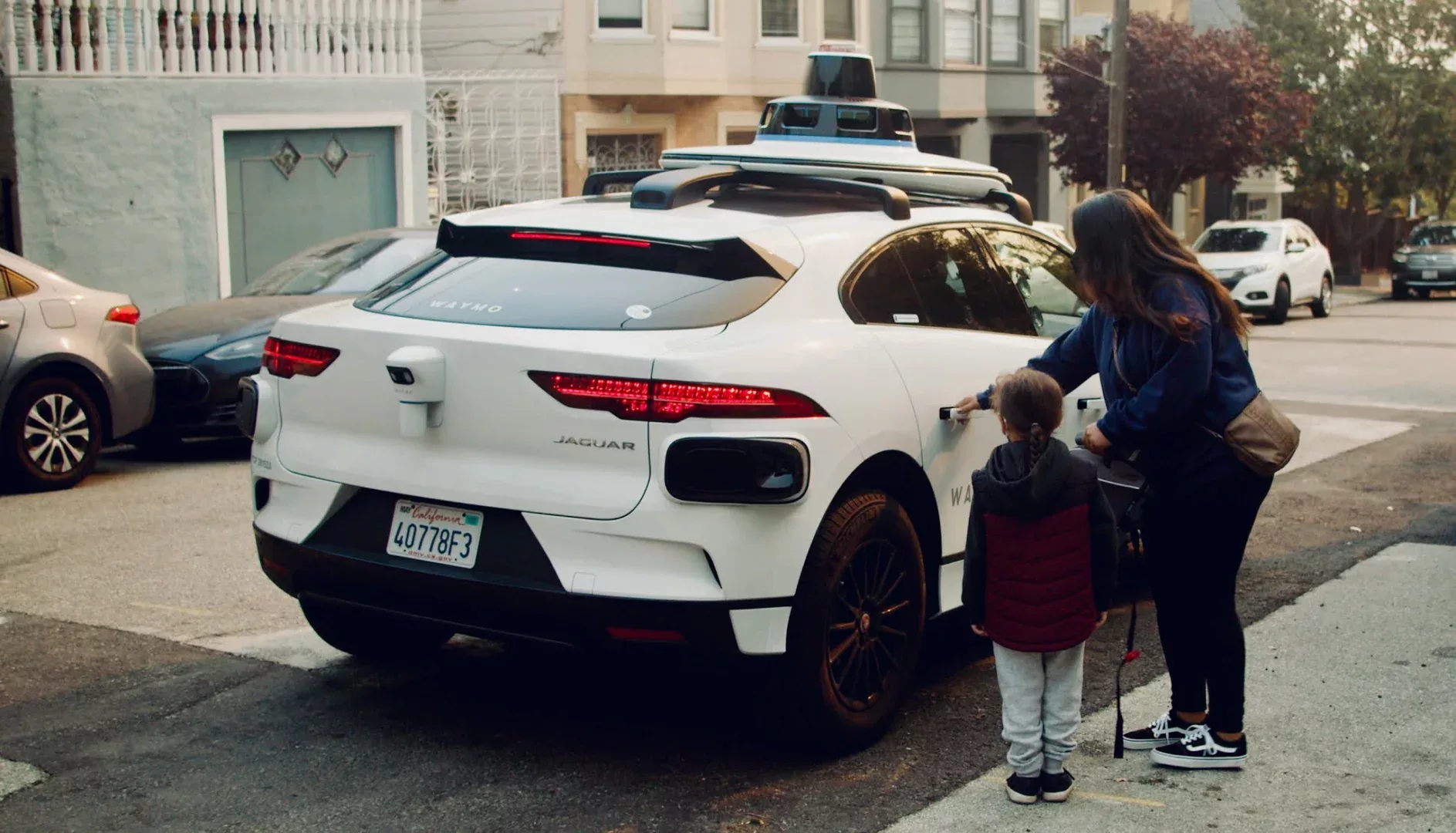
The European Union is lagging behind in the race to put driverless cars on its roads. Self-driving taxis developed and deployed by companies such as Tesla and Waymo have gone from curiosity to commonplace in several US cities. In June, Waymo overtook ride-hailing app Lyft’s market share in San Francisco (the two companies later announced they’d join efforts to bring self-driving rides to Nashville). And China has its own thriving robotaxi industry, spearheaded by Baidu Inc., WeRide Inc. and Pony AI Inc.
According to Bloomberg, if you turn your gaze to Europe you will see a continent stuck in a very analog traffic jam. Despite boasting some of the world’s prime carmakers, Europe’s self-driving track record is thin, with no established player and pilot projects in a handful of cities, the most promising of which is being run by Volkswagen AG-backed Moia in Germany.
The realisation that it might miss the driverless boat couldn’t come at a worse time for the EU. Faced with sluggish growth and geopolitical troubles, the bloc has spent the past year self-flagellating for falling behind in all kinds of technology sectors – from semiconductors to cloud computing to artificial intelligence.
Markus Villig, the chief executive officer of Estonian ride-hailing unicorn Bolt Technology OU, says that there is very little time to stave off another debacle. Unless the European Commission acts quickly, Villig told Brussels scribes in mid-October, Europe’s driverless sector will never catch up. He added that, if nothing changes, by 2030 Europeans will move about their cities in American robotaxis: the umpteenth case of Europe being a passive buyer of tech developed elsewhere – and a pretty bad look at a time everyone in Brussels is banging on about tech sovereignty and strategic autonomy.
Villig is calling for a mix of investment, regulatory clarity and straight-up protectionism. The bloc is funneling hundreds of millions into companies developing electric vehicle batteries, and Villig said that comparable investment should be earmarked for European AI labs developing autonomous vehicles.
In his view, these budding “local champions,” which he characterized as often tiny and early stage, should get priority access to the EU’s planned AI gigafactories to train their computer vision and navigation models. Bolt isn’t planning to develop self-driving software itself, but aims to become the ride-hailing platform of choice for Europe-made autonomy software.
Some might question whether self-driving is strictly necessary – critics argue that it doesn’t take any cars off the road and is more a convenience play than anything else – but the global momentum around the technology is clear.
And if consumers start to demand and expect autonomous vehicles, Europe will do well to straighten out its fragmented regulations. Traffic laws and rules overseeing self-driving tests and deployment – and ride-hailing services – vary at the national and even at the city level, making it hard for any player to take advantage of the EU’s vaunted single market.
“It’s possible to train, test and maybe run autonomous vehicles in the Baltics or in the Nordics – but the market isn’t large enough to make business sense,” Villig said. “We need big cities.”
Bolt’s CEO isn’t completely shouting into the void. Days before his Brussels visit, commission president Ursula von der Leyen was in Turin, Italy, delivering a tub-thumping speech about AI adoption. Speaking in the birthplace of Fiat Automobiles, she predictably wound up touching on Europe’s driverless future. “Why don’t we set-up a network of European cities where the first self-driving cars can hit the road?” von der Leyen said. “We’re ready to support the automotive industry to develop innovative models, made in Europe for European streets.”
Last week, Henna Virkkunen, the commission’s tech boss, started implementing von der Leyen’s vision, gathering a group of carmakers and technologists who will work to “create a harmonized framework for self-driving cars in Europe,” according to a commission spokesperson.
The question is not just whether that framework will come soon enough – but who will end up benefitting from it. For Villig, Europe just can’t let foreign-made autonomous cars into the EU market without irreparably jeopardizing European competitiveness in the sector. His key request to the commission is to prevent or severely limit US and Chinese driverless mobility companies’ ability to operate in Europe. His thesis is that self-driving vehicles are a strategic technology that should be “walled out a bit. Look at what we do with the space sector, for example,” he said.
It’s a tall order, First, von der Leyen’s agenda, over the past 10 months, has been commandeered by trade negotiations with the Trump administration in the US. One key issue between Washington and Brussels was the latter’s digital regulations, which the US sees as burdensome and unfair to American companies. Any EU restriction on US champions like Tesla or Waymo would likely be met with fury – given that during trade talks the US explicitly demanded that EU rules on self-driving cars be loosened, according to Politico.
Most importantly, it’s not clear the EU will be able to sell any such move to Europeans. Right now, it takes an intercontinental flight to San Francisco for EU citizens to feel humbled by the comparison. But days ago, Waymo announced plans to provide driverless rides in the UK starting in 2026. Suddenly, the contrast will become inescapable – making it much harder for von der Leyen to ask her fellow Europeans to wait just a little longer.
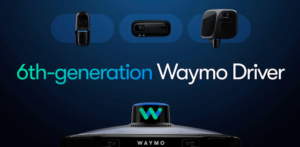
(Pic: Waymo)