Drivers across England are set to benefit as the Government announces a £63 million investment package to supercharge Britain’s electric vehicle infrastructure, driving down charging costs and putting money back in the pockets of working people as part of the Plan for Change.
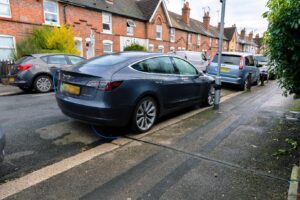
A pioneering £25 million scheme for local authorities will expand access to cheaper at-home charging. This will provide access to cheaper household rates, allowing consumers to save up to £1,500 a year compared to running a petrol or diesel car, transforming how thousands of households without driveways power up their electric cars.
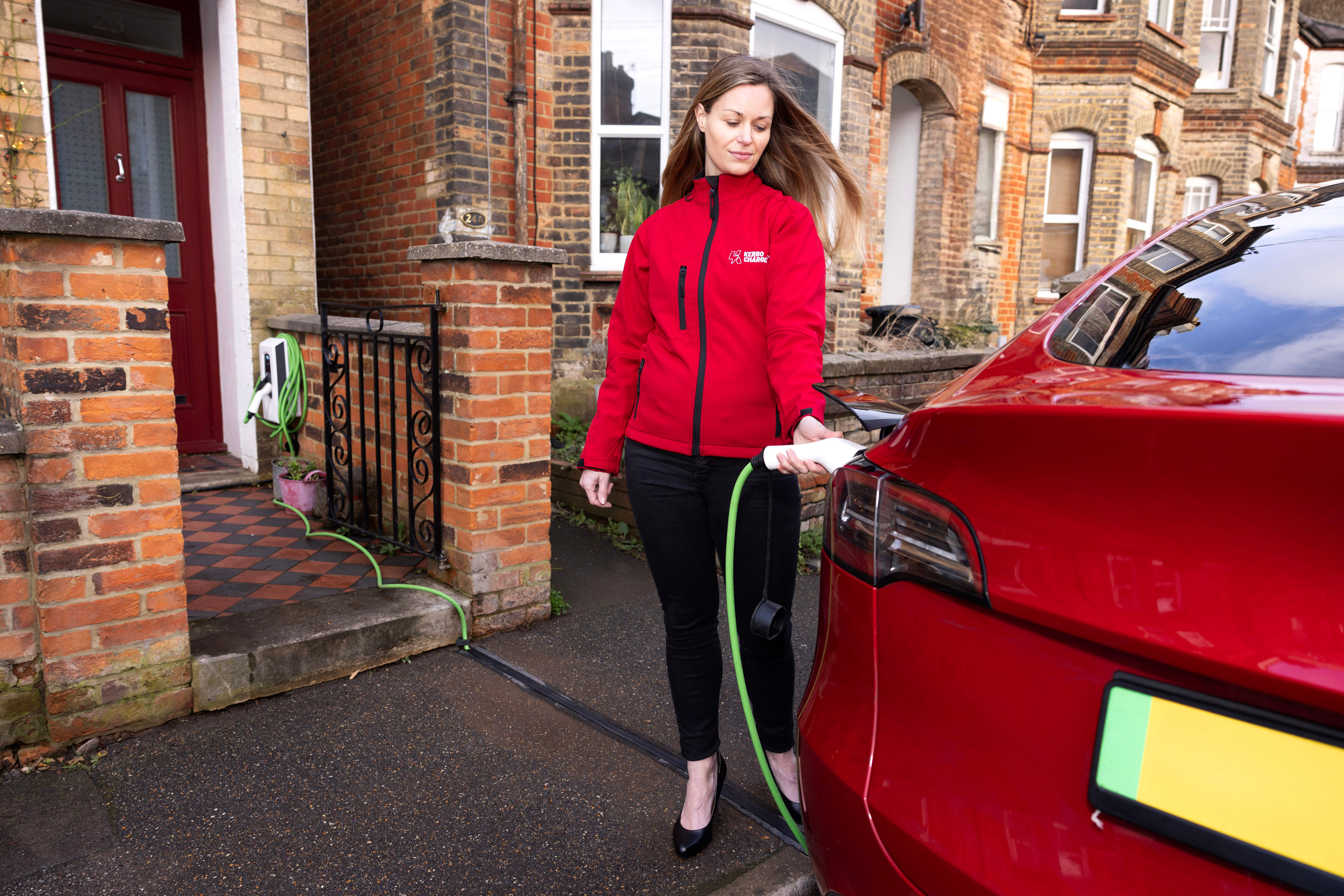
The innovative cross-pavement technology will allow cables to run safely beneath pavements, connecting homes directly to parked vehicles, enabling more families to tap into cheaper domestic electricity rates for as little as 2 pence per mile even if they don’t have a driveway.
The fund is the latest move to bolster the UK’s growing charging network which has reached a record 82,000 public chargepoints, with a further 100,000 expected to be installed as a result of the government’s Local EV Infrastructure Fund and £6 billion of private investment committed to 2030.
To ensure the savings the EV transition can bring are felt in the public sector too, the NHS in England is also receiving a major sustainability upgrade with an £8 million fund to power the electrification of ambulances and medical fleets across over 200 NHS sites, saving millions in costs which can be invested into patient care.
Transport Secretary Heidi Alexander said:
“We are making it easier and cheaper to own an electric vehicle. We know access to charging is a barrier for people thinking of making the switch, so we are tackling that head on so that everyone – whether or not they have a driveway – can access the benefits of going electric.
“Our investment is about more than just charging points – it’s about charging up Britain’s economy. I’m proud that through this boost, we are helping deliver cheaper bills for families, massive savings for the NHS to reinvest in patient care, and thousands of new green jobs.
“This is what our Plan for Change mission to kickstart Britain’s economy looks like in practice. We’re not just boosting charging infrastructure, we’re building a fairer, cleaner future where every family can benefit from cheaper, greener transport, whilst creating thousands of good jobs across the country.”
Owning and buying an EV is becoming increasingly cheaper, with 2 in 5 of used electric cars sold at under £20,000 and 34 brand new electric cars are available from under £30,000. Ms Alexander explained to the BBC that plans are afoot to help drivers willing to make the switch.
“We are going to be making some announcements later this week on how we make it more affordable for people to buy an electric vehicle. We will be making it cheaper for those who do want to make the switch to an electric vehicle.”
Ms Alexander told The Telegraph: “We do know that the high upfront purchase cost of EVs is something that people are wary about.
“I think we’ve got to be honest and say there are a lot of people out there who think that EVs are just for the very wealthiest. We also want to really move away from people having range anxiety, to people having range awareness and knowing that they’re going to be able to make the journeys that they want to make.
“It’s right that the Government thinks in the round about what we can do to tackle both of the issues, on charging and on the upfront cost of purchase.
In a move designed to help EV drivers plug into the rapidly expanding charging network, the Government is also modernising EV charging signage on major roads. EV charging hubs have more than doubled since the beginning of 2023 and immediate changes will allow larger EV charging hubs to be signposted from major A-roads for the first time. Government is committed to boosting charging for long journeys, with £400 million announced in the Spending Review to support charging infrastructure, including on the strategic road network.
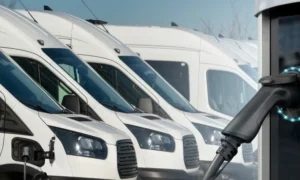
Alongside the boosts for electric car drivers, the government is also launching a major new grant scheme to help businesses install charging points at depots nationwide, supporting the nation’s heavy goods vehicles, vans and coach drivers in the transition to zero emissions.
The action follows recent updates to the Zero Emission Vehicle (ZEV) Mandate to make it easier for the sector to switch to electric as part of government’s ongoing work to back British manufacturing. With over 1.2 million people employed in the freight and logistics sector in the UK alone, today’s announcement is the latest in a series of Government initiatives to keep industry at the forefront of international competition.
Over 1,200 new charging sockets will deliver a more efficient, modern health system whilst generating millions in cost savings over the next two decades for the taxpayer on maintenance and fuel costs – valuable savings that can be prioritised for patient care and help rebuild the NHS.
The UK was also the largest EV market in Europe in 2024 and the third in the world with over 382,000 EVs sold – up a fifth on the previous year. There are now more than 82,000 public chargepoints in the UK – with one added every 30 minutes – ensuring that motorists are always a short drive from a socket.
Vicky Read, CEO of ChargeUK said:
“With 82,000 public charge points already installed across the UK, this positive action on strategic road signage will help more drivers see the extensive charging network that’s rapidly being built across the country. This has been a priority for our industry and will boost consumer confidence in making the switch to electric vehicles.
“Our members are investing £6 billion to ensure the deployment of charging infrastructure stays ahead of demand. Today’s announcement shows government recognising the vital role charging plays in the transition, and we look forward to working together to maintain the UK’s position as Europe’s leading EV market.”
Kerbo Charge co-founder Michael Goulden commented.
“We are delighted by the news of the Government grant for cross-pavement charging solutions. For far too long, over 40%of UK households have faced an unfair barrier to EV adoption because they don’t have a driveway. Currently, they must choose between paying high prices to charge their car at inconvenient public charge points, or holding on to their polluting petrol or diesel vehicles and directly contributing to the climate emergency.
“The ability to charge safely, cheaply and conveniently at home will make a huge difference to these motorists and should significantly boost the rate of EV adoption. Kerbo Charge has a waiting list of 12,000 drivers all desperate to have one of our channels installed outside their home, but are currently unable to do so either because of affordability or because their local authority has not yet authorised it. This funding announcement addresses both of these issues head-on, demonstrating the Government’s backing for cross-pavement charging and subsidising the cost for tens of thousands of UK households.”
(Pic: Kerbo Charge)