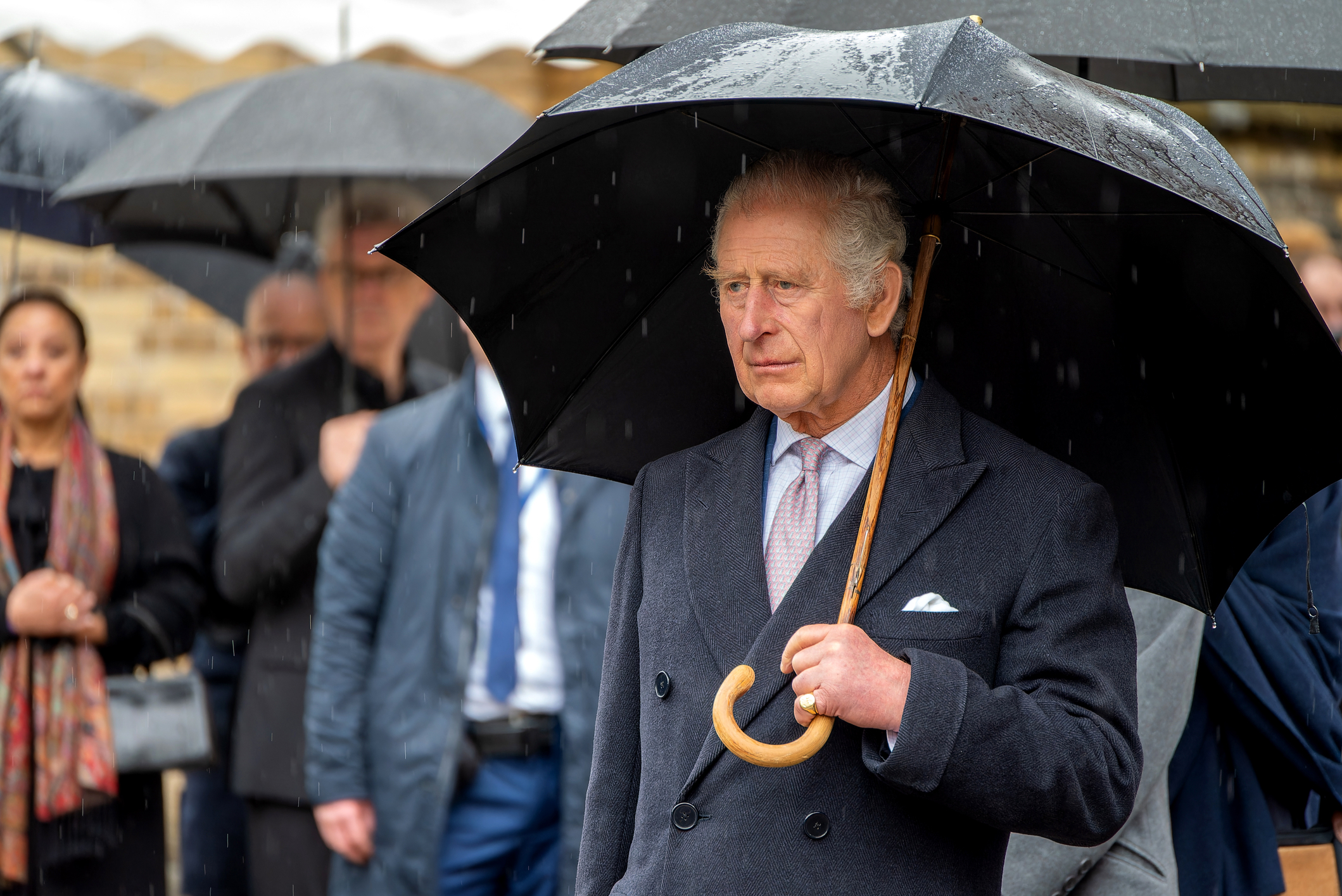
King Charles has laid out the government’s law-making plans for the coming year in a speech to the House of Lords, with particular relevance to the transport sector.
The speech gave an outline of 37 bills ministers want to pass in the next parliamentary session, including eight previously introduced to Parliament.
“The United Kingdom’s economic security depends upon world class infrastructure. Legislation will be introduced to unlock the benefits of airport expansion [Civil Aviation Bill]; enable roads to be built at pace including the Lower Thames Crossing [Highways (Financing) Bill]; and deliver a fair deal for the North of England through Northern Powerhouse Rail [Northern Powerhouse Rail Bill].”

“Legislation will be introduced to increase confidence in the security of the immigration and asylum systems [Immigration and Asylum Bill]. My Government will improve critical infrastructure with legislation to clean-up the water industry [Clean Water Bill] and establish Great British Railways [Railways and Passenger Benefits Bill].”
In terms of infrastructure and transport, the King highlighted the creation of a draft Taxi and Private Hire Vehicle Bill that will introduce a national database of all licensed taxis and hire vehicles, in a bid to improve passenger safety, and announced that the financing model used to fund nuclear projects will be extended to new road projects in England through the aforemnentioned Highways (Financing) Bill
“My Ministers will also proceed with the introduction of Digital ID that will modernise how citizens interact with public services [Digital Access to Services Bill],” he continued.
“My Ministers believe that energy independence must be a long-term goal of national security and that the nation’s energy security requires long-term investment and reform, as demonstrated by recent events in the Middle East.”
“My Ministers will therefore introduce an Energy Independence Bill to scale-up homegrown renewable energy and protect living standards for the long-term [Energy Independence Bill].”
“My Ministers will also take forward recommendations of the Nuclear Regulatory Review and encourage a new era of British nuclear energy generation [Nuclear Regulation Bill].”
Reacting to the King’s Speech, Ben Peecock, partner at Eversheds Sutherland, said:
“The Highways Financing Bill points to a more pragmatic approach to funding large-scale road infrastructure. A Regulated Asset Base (RAB) model offers a credible path forward and provides the long-term certainty projects of this scale need, giving government a structured way to share risk with the private sector. Today’s Speech shows a willingness to confront the funding gap in roads, and RAB could be the mechanism that finally unlocks progress.”
Max Sugarman, Chief Executive of ITS UK, commented:
“The King’s Speech contains some positive proposals for legislation, including progressing much needed infrastructure projects like Northern Powerhouse Rail and the Lower Thames Crossing, whilst reintroducing previous bills on cybersecurity and resilience and GBR. These proposals will be welcomed by the transport tech sector.
“However, we note the absence of legislation relating to the Road Safety Strategy and the long-term legal framework for e-scooters. Both remain important areas for the sector, and we would welcome further clarity from Government on next steps to support progress towards the road safety ambitions set out earlier this year.”
(Picture: Heidi Pinkall)