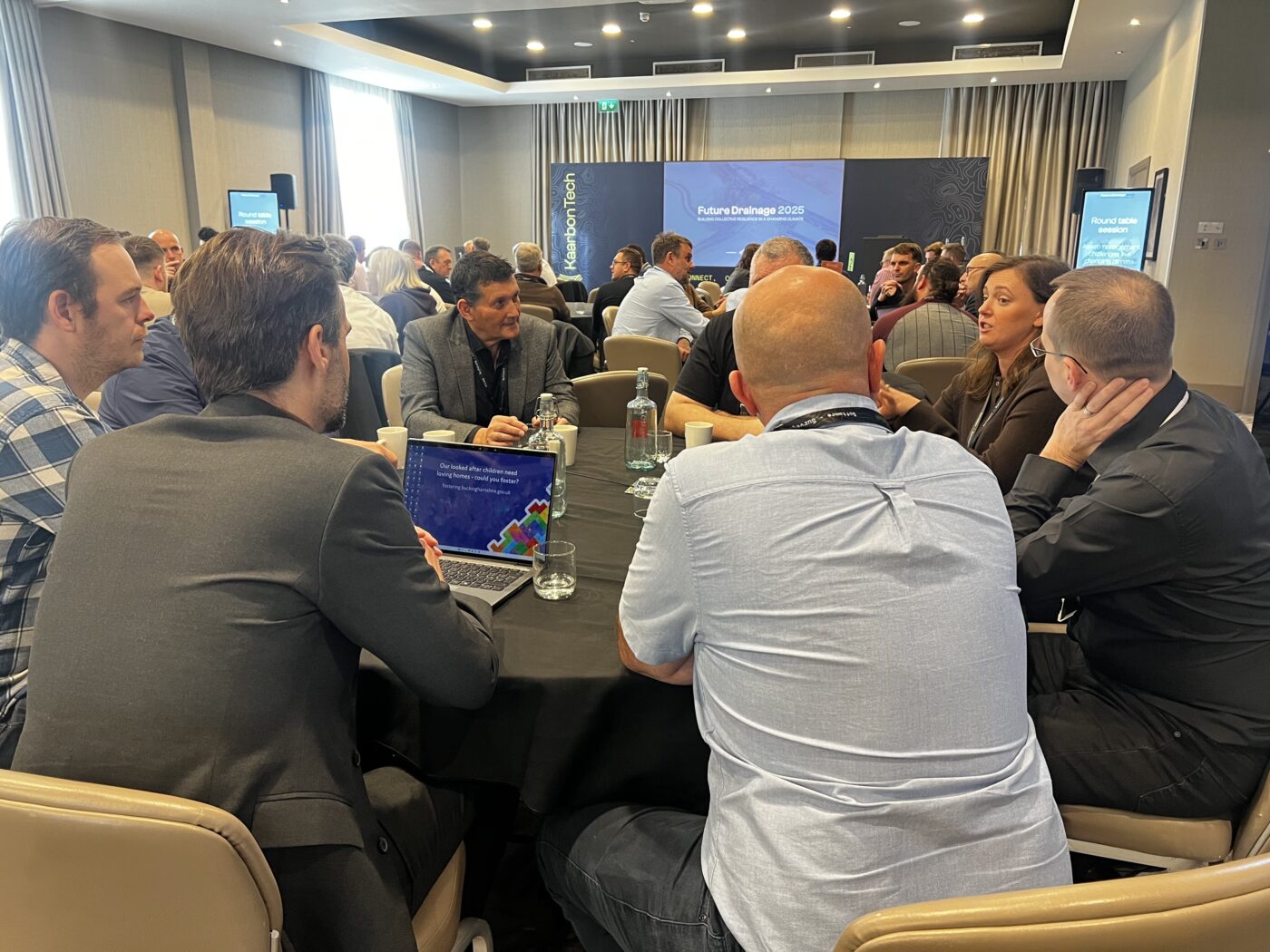
Local authorities across the UK have identified reliance on short-term funding and reactive budgets as the biggest barrier to long-term drainage and flood risk planning, according to insight gathered during a roundtable at KaarbonTech’s Future Drainage 2025 event.
The discussion, focused on future preparedness, brought together highways, drainage and flood risk professionals to explore how ready organisations feel to manage increasing flood risk, how approaches are evolving, and what still limits progress.
Live polling during the session showed that most authorities feel only moderately confident in their ability to respond effectively to a major flooding event. While many organisations reported making changes in response to more frequent extreme weather, none felt their approach had been fully transformed.
Delegates described a sector that is becoming more realistic about preparedness, but still constrained by funding structures that prioritise short-term response over sustained investment. Gaps in data, modelling and evidence were also highlighted as limiting factors, making it harder for authorities to plan ahead and justify
longer-term decisions.
Several participants noted that experience of recent flooding has strengthened response capability, but that this confidence is often tied to individuals rather than systems. Others reflected that change still tends to follow incidents rather than anticipate them.
Alongside these challenges, the roundtable highlighted a growing shift towards resilience and “living with risk”. Delegates discussed the role of public engagement and shared responsibility, with examples including community-based initiatives such as gully adoption schemes, leaf wardens and clearer public reporting tools.
Commenting on the discussion, KaarbonTech said:
“Local authorities are learning from experience and becoming more realistic about future flood risk. But long-term preparedness remains difficult to deliver within short-term funding models. Building confidence through better evidence, data and planning will be critical to moving beyond reactive approaches.”
The full roundtable insight summary is available HERE.
(Picture: KaarbonTech)