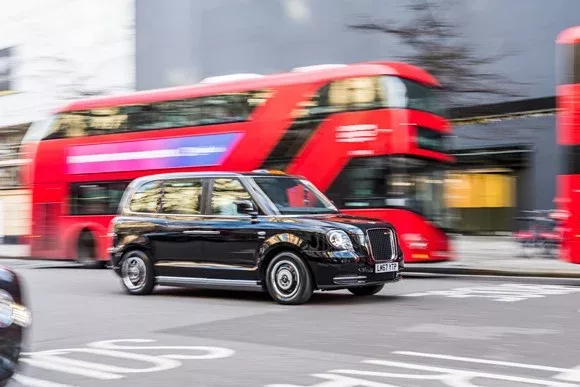
London’s taxi drivers have called for protection as Waymo prepares to launch its driverless cab service. According to a report by Hyphen, many London cab drivers are warning that autonomous vehicles could “run us off the road” and destroy livelihoods built over decades, says DMNews.
But while government ministers hail the move as innovation, local drivers see it differently. Among those interviewed by Hyphen, some described the plan as a potential “disaster” for working-class communities, arguing that the tech threatens to “replace experience with algorithms.”
Waymo recently confirmed plans to expand into London, marking what could become its first European launch.
The rollout is expected to begin in 2026, pending approval from UK regulators. The Department for Transport has already introduced legislation to support Level 4 automation – vehicles capable of operating without a human driver under specific conditions.
Unions and trade bodies are urging the government to ensure driver protections and fair competition, warning that driverless fleets could sidestep traditional taxi licensing and safety checks.
Representatives also raised concerns about data collection, insurance liability, and safety accountability if something goes wrong. As one driver told Hyphen, “If there’s no one behind the wheel, who’s responsible when something happens?”
Waymo, however, insists its vehicles are safer than human drivers, claiming over 100 million miles of autonomous testing without a single fatal collision, according to company data shared on its official Waymo blog.
Driverless taxi technology has been in limited testing in Milton Keynes, Oxford, and Cambridge, with small-scale pilots involving self-driving delivery vehicles and private hire concepts. But London’s density, narrow streets, and complex traffic systems make it one of the hardest cities in the world to automate safely.
Cabbies fear the trial could open the floodgates to AI-controlled fleets, potentially reducing driver demand by tens of thousands of jobs. If that happens, the UK’s largest urban transport trade could face its most significant restructuring since Uber’s arrival in 2012.
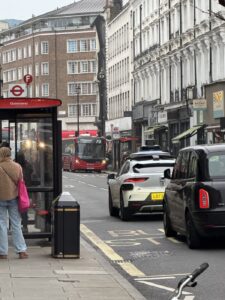
(Picture: TfL)