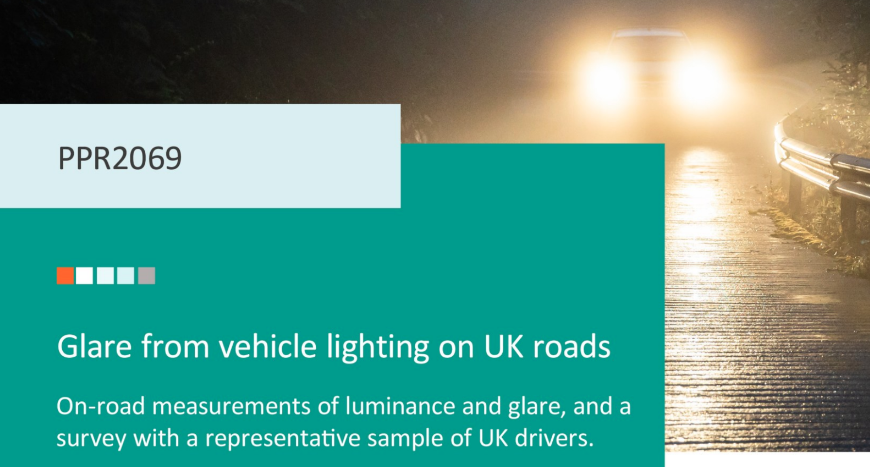
A study by TRL presents findings showing both measurable on-road effects from bright headlamps, and how glare from these affects drivers.
In response to growing concern around the perceived dangers from bright headlamps, the Department for Transport (DfT) funded an innovative study into the subject. The research project combined on-road data collection with a national driver survey via the RAC Motorist Opinion Panel. TRL’s report provides new insights into how vehicle lighting and road conditions contribute to glare.
Public concern: More than half of UK drivers reported that they have reduced or stopped driving at night (or would do so if possible) because of the brightness of headlamps. Headlamp brightness: Drivers perceive modern vehicle headlights to be “too bright”, with whiter lights and those fitted to taller vehicles such as SUVs often cited as problematic.
On-road evidence: Analysis of over 50 hours of on-road testing in a car instrumented with a luminance camera and other sensors found a strong link between higher levels of luminance and glare experienced by observers in the car.
Influencing factors: Different vehicles, road geometries (such as hills and bends), and the pitch and roll of the instrumented car were all shown to increase the likelihood of glare being experienced.
The findings underline that glare can be objectively linked to bright lights, and to certain road conditions and vehicles, in real driving. While some factors, such as road geometry, are outside the control of DfT, the study suggests that vehicle design and updated vehicle lighting standards could play a role in mitigating the problem.
In the report, TRL proposes several considerations for government and industry, including:
•Establishing regular national surveys to monitor trends in drivers’ experiences of glare.
• Running public information campaigns to help drivers better understand risks from glare and suggest the things they can do to make driving at night less stressful.
• Conducting further research into vehicle design features such as novel LED headlamps and vehicle height.
Dr Shaun Helman, who led the research at TRL, said:
“This research provides compelling evidence that glare from vehicle lighting is a genuine issue for UK drivers, and can be measured in real driving conditions. By combining scientific measurement with driver perspectives, we now have a clearer understanding of the conditions under which glare occurs and the factors that contribute to it. These objective findings are a first step to take glare from anecdotal complaints into the realm
of scientific evaluation. Continued research will help inform UK road safety and transport policy. The long-term goal is to improve public confidence and safety when driving at night.”
Following the publication of TRL’s report, RAC senior policy officer Rod Dennis said:
“Having campaigned hard for this study, we welcome its findings which independently confirm what drivers have been telling us – that rather than being an imagined phenomenon, some bright headlights do cause a glare problem.
“While drivers clearly benefit from high-performing headlights, it’s important this doesn’t lead to others suffering the effects of dazzle, so a balance needs to be struck.
“We don’t yet have all the answers, but this report undoubtedly helps moves us towards tackling the complex problem of glare from vehicle headlights. It’s vital the report and its considerations are now reviewed carefully to put us on a path towards changes that ultimately benefit all road users.”
(Pic: TRL)