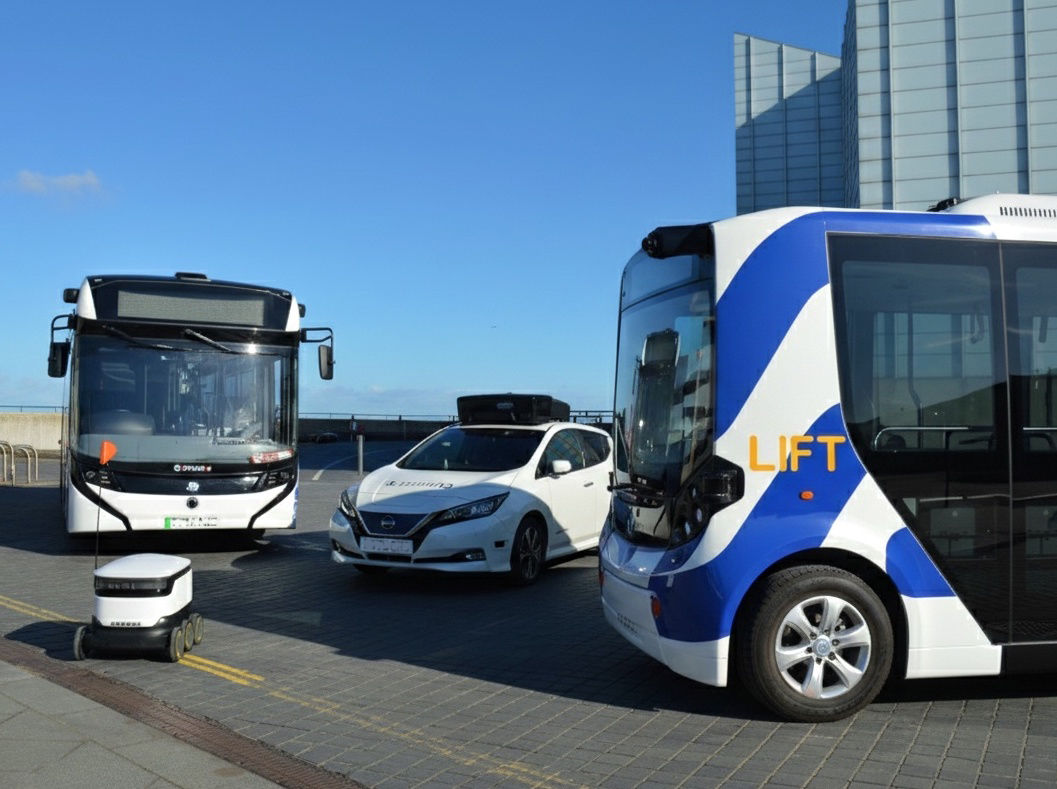
The Department for Transport’s Centre for Connected and Autonomous Vehicles has announced that starting from spring this year companies will be able to apply to run commercial services using self-driving vehicles without a safety driver on roads in England, Scotland and Wales.
This guidance is to help first responders (blue light services) to prepare for the deployment of self-driving vehicles under this pilot scheme, and it will also be helpful for other parties, such as traffic authority officers, front-line vehicle inspectors, border force and other non-blue light emergency services.
The deployment on automated vehciles (AVs) on Britain’s roads will be regulated by the Automated Vehicles Act 2024 (AV Act). This act introduces a comprehensive legal framework with safety at its centre which will fully come into force from late 2027. This builds on the Automated and Electric Vehicles Act 2018 (AEVA 2018).
The deployment of pilot vehicles will deliver valuable learnings regarding automated vehicles which will help inform development of the regulatory framework under the AV Act. This could also help inform usage patterns and preferred service provisions and enable the general public to gain confidence in the deployment of these vehicles while their deployment is at a relatively small scale.
Before a pilot deployment, piloting organisations are encouraged to engage with local first responder organisation(s). Engagement with relevant first responders is expected to form a key part of developing a robust incident management plan.
Where an APS permit is being sought, piloting organisations are strongly advised to engage with first responders. While it is not mandatory for first responders to respond to this engagement, it is highly encouraged that they do so.
The self-driving vehicles pilot scheme: information for applicants sets out the information that applicants will be expected to provide as part of their application. First responders may wish to consider what additional material they would seek from pilot organisations ahead of deployment and should reach out directly to the piloting organisation for further details. Examples might include the following.
The piloting organisation incident management plan.
The information that is required for safe interactions with pilot vehicles, which could include:
- how to identify a vehicle, including a list of registration plates
- how to make the vehicle safe for engagement including stopping a vehicle moving
- how to move a vehicle including recovery
- any specific circumstances that a piloting organisation needs to be aware of and engage – for example, horse-mounted officers or special protection units
The operation details and area and conditions of the application (VSO or APS). This should include times of operation, vehicle numbers and type of vehicles.
The full guidance can be viewed here.
(Picture: Self-Driving Industry Awards)