
The Parliamentary Advisory Council for Transport Safety (PACTS) has published a major new report examining how the UK monitors and enforces two persistent high-risk behaviours: not wearing a seat belt and using a mobile phone while driving.
Supported by Acusensus and informed by evidence from police forces, researchers, technology providers, and legal experts, the report highlights that both behaviours remain serious and under-detected risks on UK roads.
• In 2023, 64.9% of fatal collisions in Great Britain involved at least one Fatal Four factor.
• Official roadside surveys report high seat belt compliance, yet unbelted occupants remain heavily over-represented in fatalities.
• Mobile phone distraction is culturally normalised, but detection remains very low.
High-risk behaviours on UK roads continue to have devastating impacts. In Durham on the A1(M) in 2021, a lorry driver distracted by his phone killed a mother and three children. In Newbury on the A34 in 2016, another lorry driver caused the deaths of four people while using a mobile device. In Dumfries in 2018, a lorry driver was jailed for five years after a fatal collision caused by checking his phone. These examples highlight that despite high compliance rates reported in surveys, unbelted occupants and distracted drivers remain significantly over-represented in serious collisions, underlining the urgent need for more effective detection and enforcement.

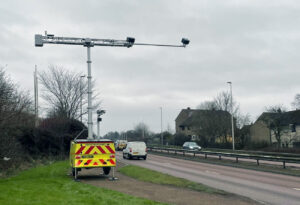
Emerging technologies provide a credible opportunity to address these under-detected risks. AI-enabled roadside cameras, in-vehicle monitoring systems, and phone-limiting apps are already showing potential to detect and deter dangerous behaviour at scale. Trials in the UK, including those run by Acusensus with National Highways and police forces, have demonstrated that AI systems can identify thousands of offences within hours. When the findings are publicised, they also create a measurable deterrent effect, helping to change driver behaviour and support safe roads across the country.
To reduce risks within a Safe System framework, PACTS recommends:
Modernise the legal framework to enable automated detection, with mandatory human verification
Review penalties, including educational diversionary courses
National coordination for consistent deployment, data governance, and evidential standards
Scale up technology-based enforcement with transparency on accuracy, fairness, and privacy safeguards
Strengthen employer and fleet action using telematics, in-vehicle alerts, and robust driving-for-work policies
Use aggregated data to provide richer national insights into risky behaviours
Companies have a duty of care to protect workers and the public, yet many fail to act to prevent collisions. Unlike most work-related incidents, road traffic collisions are not usually RIDDOR-reportable, meaning government data on deaths and serious injuries caused by company failings is limited.
To read the full report, click HERE.
(Pictures: PACTS)