New data released by TfL shows that the Silvertown Tunnel is easing congestion for Londoners, boosting public transport use and improving journeys. However, the figuers relate to weekday traffic, and the data suggests that weekend trips through Blackwall and Silvertown are up 3.7 per cent, suggesting that the new tunnel has induced some extra traffic on Saturdays and Sundays. The new tunnel accounts for about 24 per cent of crossings at Blackwall and Silvertown across the week.
The 1.4km tunnel that opened on 7 April and connects Silvertown to the Greenwich Peninsula in east London, is the first new road crossing east of London’s Tower Bridge in 33 years.
Latest monitoring data from three months of operations has confirmed that the Tunnel is achieving the objectives it was designed for, says the London Assembly. These include supporting economic and population growth, in particular in east and south-east London, by providing improved cross-river transport links, and, through road user charging, managing congestion in this area of London.
The report shows that, since the tunnel’s opening just over three months ago, the performance of the road network has improved and there is significantly less congestion around the Blackwall Tunnel approaches. This is particularly noticeable on the northbound A102 approach to the tunnels which was previously a hotspot for congestion. Now, during weekday morning peak hours, average speeds on the approach road have increased from 9mph in March 2025 – prior to the tunnel opening – to 30mph. These faster journeys mean that there has also been a 70 per cent decrease in journey times in the morning peak when compared with before the Silvertown Tunnel opened (March 2025).
Currently, there are around 91,000 vehicles using the Blackwall and Silvertown tunnels combined in both directions on a typical weekday, with almost 22,000 of these vehicles using the Silvertown Tunnel. It compares with around 96,000 vehicles per day using the Blackwall Tunnel before the Silvertown Tunnel opened – this is a reduction of six per cent despite a 50 per cent increase in road capacity for cars and vans. Of all the vehicles crossing the river at this point, only around four per cent are HGVs.
The data published today covers the first 11 weeks of operation of the Silvertown Tunnel. TfL will continue to closely monitor and report on the scheme’s impact on congestion, resilience and air quality, in line with their obligations under the Development Consent Order for the scheme’s construction.
There has been a 39 per cent reduction in the number of unplanned closures at the Blackwall Tunnel since the Silvertown Tunnel opened. When the Blackwall Tunnel was closed in both directions on 14 May due to a road traffic incident, there was minimal impact to traffic flow because drivers were able to use the Silvertown Tunnel, demonstrating the additional resilience that the new tunnel provides to the road network.
Use of bus services operating through the Blackwall and Silvertown Tunnels has also increased.
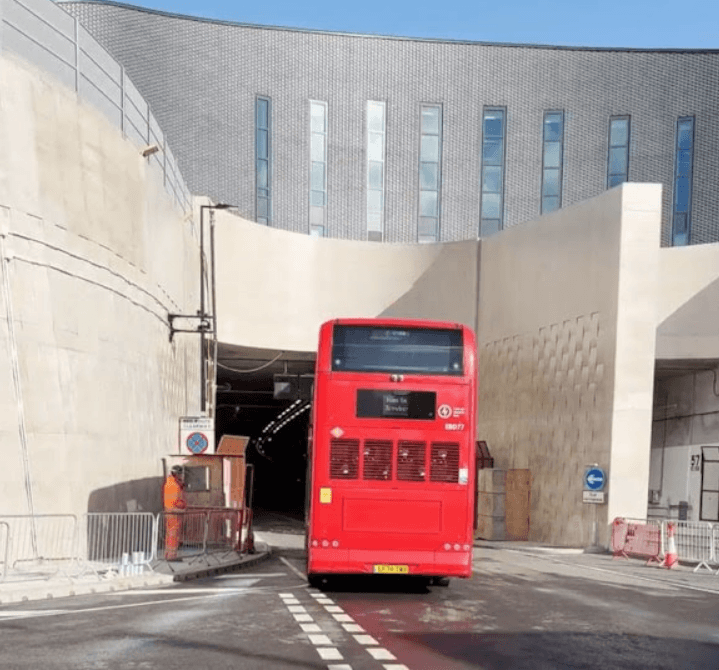
Now, almost one in ten (nine per cent) cross-river trips through the two tunnels are being made by public transport. With new double-deck, zero-emission buses running through the Silvertown Tunnel and making use of the dedicated bus and HGV lane, more than 20,000 journeys are being made each day across new route SL4, the extended 129 and the existing 108 service, an increase of 160 per cent compared to before the scheme opened. It is estimated that around 7,000 of these journeys, which are free on pay as you go for at least the first 12 months, are crossing the river using one of the tunnels.
(Pic: TfL)