An innovative Somerset Council scheme to replace a deteriorating 51-year-old concrete road and motorway junction broke new ground and saved 200 tonnes of carbon emissions in the process.
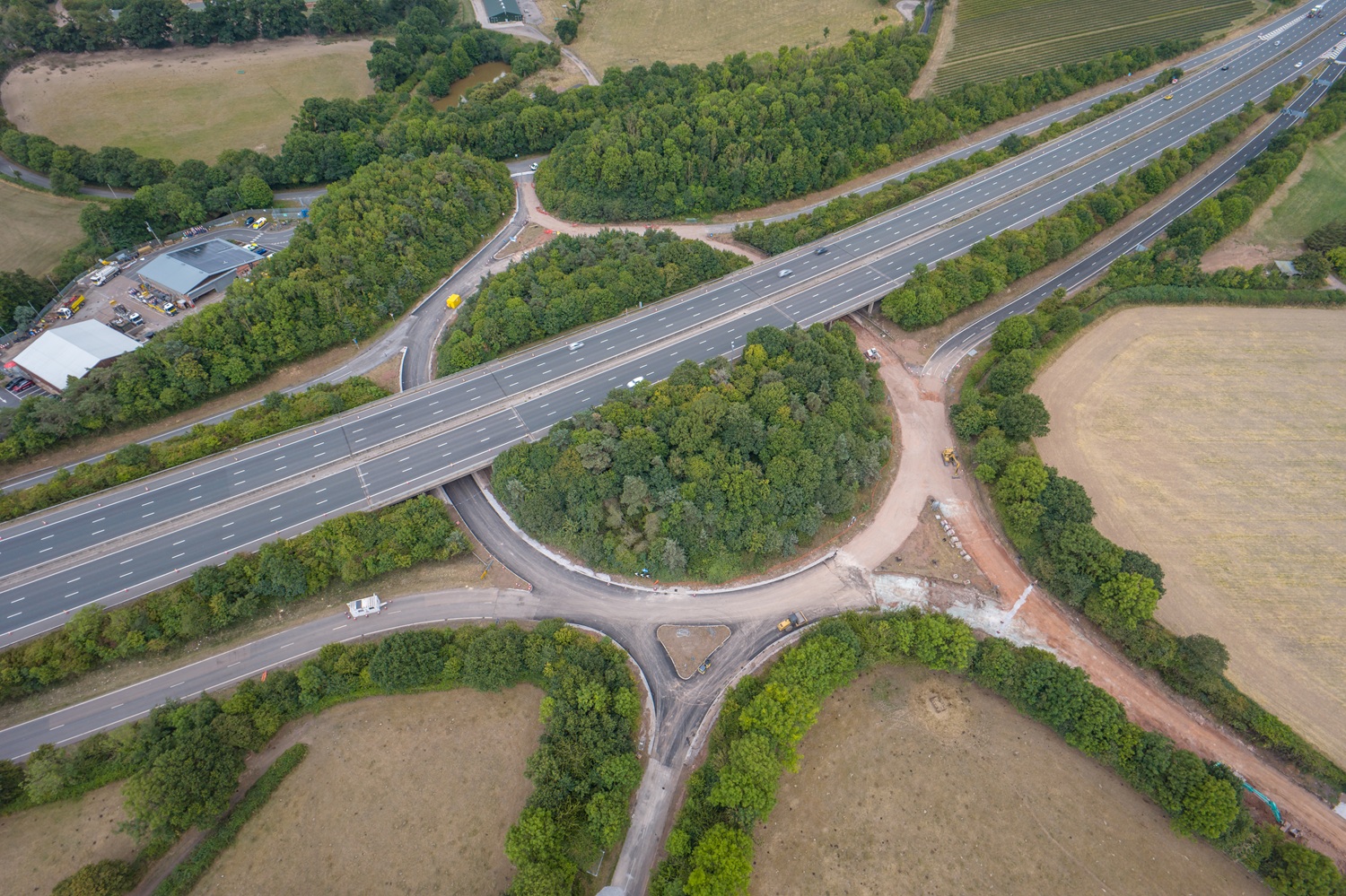
The refurbishment of Junction 26 of the M5 along with the A38 Chelston link road near Wellington finished on budget ahead of schedule this month.
Both were built in 1974, and presented major challenges in terms of how to deal with the thousands of tonnes of concrete in situ. The challenge became the solution in that that the concrete – after being pounded into fragments – formed the basis for the new link road, saving tonnes of emissions by cutting lorry movements and avoiding the use of virgin aggregate.
The scheme is linked to Live Labs 2, a three-year, £30m, UK-wide experimental programme funded by the Department for Transport in partnership with The Association of Directors of Environment, Planning and Transport (ADEPT), that will run until March 2026, aimed at decarbonising roads.
Somerset is part of the Wessex Live Lab team along with Cornwall Council and Hampshire County Council – the councils are experimenting by aiming to reduce road maintenance carbon outputs in ‘corridors’ in their respective areas.
Highways works are the most carbon intensive activity a local authority undertakes and from the outset the Somerset Council project team and contractor Heidelberg Materials were focused on not only delivering a major rebuild as quickly and efficiently as possible on the motorway junction and link road, but also ensuring there are major carbon savings in the process.
Both the link road and the J26 gyratory needed to be closed for 12 weeks to deliver the £5.7 million Government-funded scheme which saw Heidelberg use a method known as rubblization on the A38 link stretch to break up the existing concrete road surface with specialist equipment developed by US sub-contractor Antigo.
The rubblizer is essentially a collection of heavy-duty pneumatic hammers which pound the surface into fragments. Instead of 7,300 tonnes of concrete being removed from site by lorry and delivered to a quarry however, it remained in place to be recycled as the new sub-base of the road.
Not using virgin aggregate and taking the concrete away, saved 200 tonnes in carbon emissions and around 1,130 lorry movements, compared to traditional road construction methods
Somerset Council’s Lead Member for Transport and Waste Services, Councillor Richard Wilkins said:
“This project presented significant challenges – not least delivering a new road and junction quickly, to minimise disruption. We’re delighted with the work of our contractor Heidelberg – it is on time and on budget, and they have risen to another important challenge, that of reducing the carbon outputs, which in turn protects the environment.
“It’s fantastic being involved in a major nationwide scheme like Live Labs 2, working with our partners in Wessex, Hampshire County Council and Cornwall Council, which has the potential to transform how we maintain and build our roads in the future in a cleaner and greener way.”
Heidelberg’s Somerset Framework Manager, Tim Doyle added:
“ It was a pleasure being involved with a project with such positive environmental credentials.
“Recycling so much of the existing network is essential if targets are to be met and this scheme demonstrated this could be achieved without compromising durability.”
(Pic: Somerset Council)