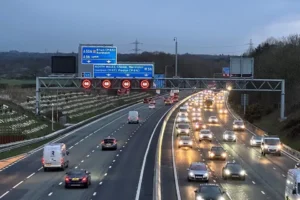
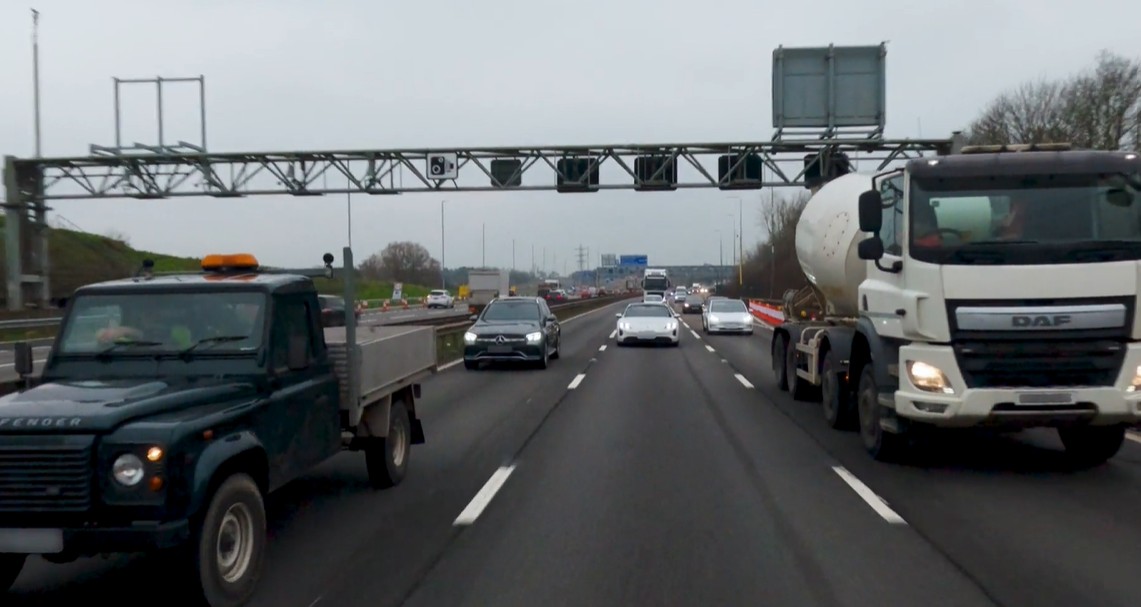
National Highways is urging drivers to leave sufficient space as new research reveals widespread tailgating and declining road etiquette. Britain prides itself on politeness and consideration, yet millions of drivers feel their day-to-day manners worsen when they get behind the wheel.today manners worsen when they are driving.
Key findings included:
- Around 4.9 million drivers say their manners slip behind the wheel when they’re under pressure, especially running late.
- Around 10 million drivers say they sometimes unintentionally follow too closely, and 2.4 million admit closing up to encourage slower drivers to speed up.
- Running late is the biggest trigger for poor driving etiquette (27%), followed by tiredness (20%) and peak‑time commuting (16%).
- Regional picture: drivers in the South West score highest for road etiquette, followed by those in the North West. Drivers in London and the South East are rated as having the poorest road manners.
The new research forms part of National Highways’ ongoing campaign to improve driving etiquette, supported by a regional ‘manners map’ that highlights where behaviours are better, and where they fall short.

While some drivers tailgate deliberately, many say their etiquette slips under everyday pressures.
Road casualty statistics show that following too closely contributes to around 8% of people killed or seriously injured (KSI) each year on England’s motorways and major A-roads. An average of around 147 people annually, based on five years of data from 2016 – 2023 (excluding 2020/21).
As part of its campaign focused on improving driving etiquette, National Highways – which manages England’s motorways and major A-roads – has analysed driver attitudes and behaviours across the country to develop a new ‘manners map’.
The South West emerged with the strongest overall score for considerate driving, followed by the North West. London and the South East recorded the lowest scores, while the Midlands and the East of England fell below the national average – highlighting that tailgating is a widespread issue across the country.
Colin Stevenson, Road Safety Information Lead at National Highways, said:
“Tailgating may seem harmless, but it can put everyone on the road at risk. Following too closely means there is less time to react and stop safely if the vehicle in front slows down or stops.
“Leaving a safe gap makes driving safer, keeps traffic moving more smoothly, and is a simple courtesy that helps everyone feel more relaxed behind the wheel. A good rule of thumb is the two second rule, which should be doubled in wet conditions or when visibility is reduced.”
Nationally, one in ten drivers rate their road etiquette as poor, underlining the need for change.
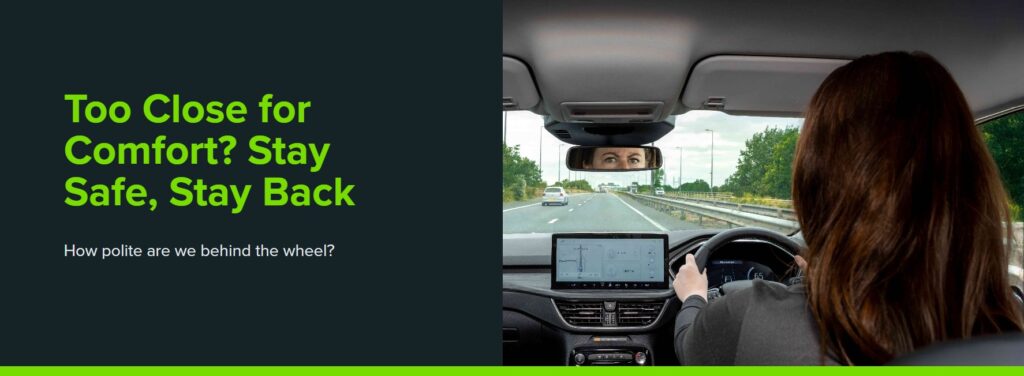
Dr Neale Kinnear, a behavioural psychologist specialising in driving behaviours, said:
“Most of us see ourselves as considerate people, but driving is a unique context. It’s goal-focused and often time-pressured. When we’re running late or behind other traffic, frustration can build. In that moment, closing the gap can feel like taking control or making progress.
“The reality is different. Drivers tend to overestimate how much time, if any, they save by pushing on. As frustration rises, perspective on the importance of keeping a safe margin, and the impact it has on others can be lost.”
Dr Kinnear added:
“Leaving space isn’t just polite, it’s practical. A simple two-second gap keeps traffic flowing more smoothly, reduces stress, and makes the road a better place for everyone.”
(Pictures: National Highways)