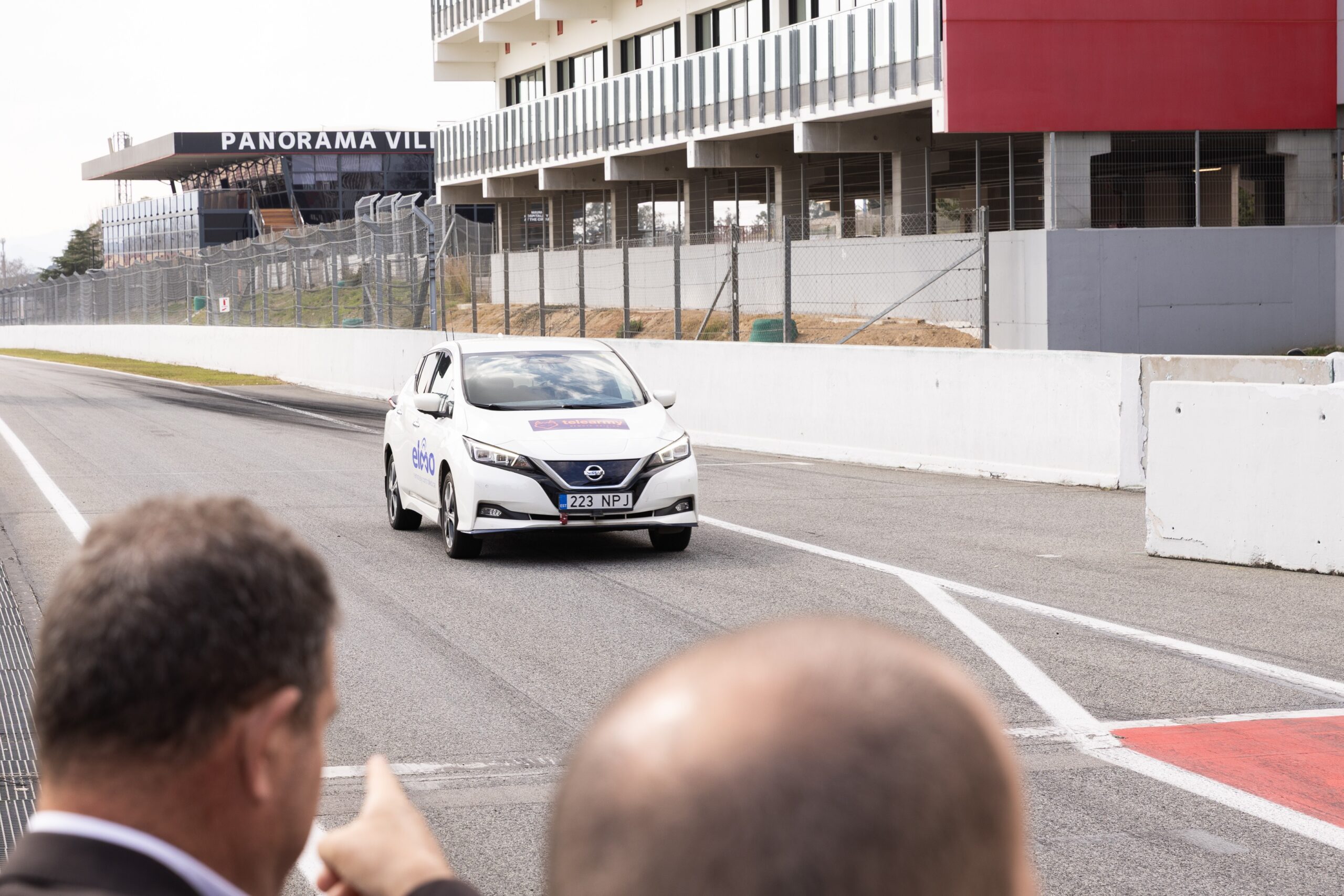
As a part of the CircuitX showcase held alongside Mobile World Congress 26 in Barcelona (2-5 March), European mobility technology company Elmo has set a new global remote driving speed record, reaching 157km/h with a street-legal Nissan Leaf at the iconic F1 Circuit de Barcelona-Catalunya.
The previous record of 115 km/h has now been significantly surpassed, twice, confirming that high-speed, road-legal remote driving is already in active public operation.
The first record-breaking run reached 150 km/h and was performed by licensed remote driver Risto Parri, who controlled the vehicle from a Generation 1 remote driving station located trackside at Circuit de Barcelona-Catalunya.

“It’s actually pretty crazy to become a new world record holder – even if only for a moment – and to do it on the legendary F1 circuit in Barcelona. Driving 150 km/h with no one sitting in the car proudly demonstrates the high level and maturity of our technology,” said Risto Parri, licensed remote driver at Elmo.
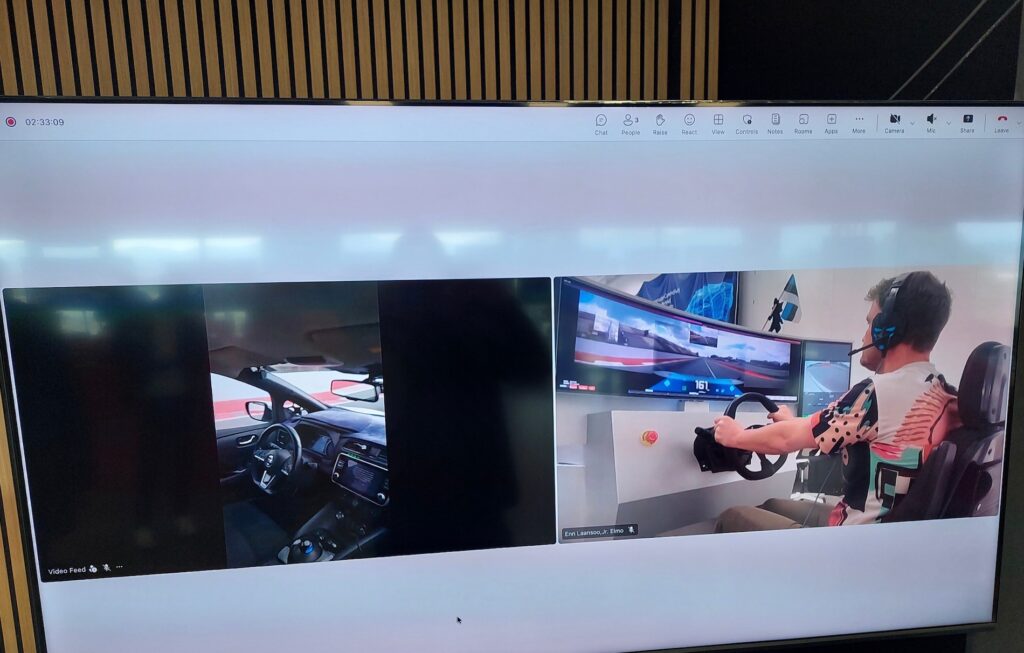
The record was broken again shortly after, when Enn Laansoo, Jr., licensed remote driver and CEO of Elmo, controlled the same street-legal Nissan Leaf with Generation 3 remote driving station from Elmo’s headquarters in Tallinn, Estonia, 3,300 km away, reaching 157 km/h – effectively the maximum speed officially permitted for the vehicle.
This high-speed cross-border remote driving test demonstrates that modern commercial mobile networks (5G) are already capable of supporting globally scalable teleoperation, including high-speed applications.
“Driving a vehicle at 157 km/h from 3,300 kilometers away proves that distance is no longer the limiting factor for high-speed remote driving. This is further evidence that remote driving is a practical and scalable alternative to full autonomy in many use cases,” said Enn Laansoo, Jr., adding, “I am extremely proud of the team effort and the result of six years of dedicated development of our remote driving technology.”
The demonstration was conducted in collaboration with Telefónica, providing local connectivity; Nokia, monitoring network performance and quality parameters in real time; and GSMA, organizer of the broader MWC26 ecosystem.
Richard Cockle, Head of GSMA Foundry, said:
“Huge congratulations to the Elmo team on their incredible achievement. Breaking a land‑speed record at the CircuitX demo showcase provides a glimpse into the future of connected mobility. What we saw at the Circuit de Barcelona‑Catalunya proves how advanced connectivity, real‑time data and engineering excellence can come together to push the limits of performance and safety. Elmo’s record‑setting run captures the spirit of innovation that CircuitX was built to showcase, and we’re proud to celebrate this moment with them.”
GSMA Fusion and Elmo have also been collaborating closely with the mobile industry through the GSMA Open Gateway initiative to validate network capabilities for remote driving. As part of this work, the companies have been exploring how Open Gateway network APIs – including Quality on Demand, location, and edge compute – can support the consistent, low-latency connectivity required for teleoperation. By enabling common, standardized network interfaces across operators, Open Gateway helps ensure that remote driving solutions can scale globally without bespoke integrations, aligning with broader automotive industry calls for interoperable, future-ready connectivity frameworks.
Unlike fully autonomous vehicles requiring complex AI stacks, high hardware costs and additional remote drivers support, Elmo’s remote driving modular platform enables low latency real-time human-in-control operation, integration into existing vehicles, immediate regulatory compliance, and rapid deployment across urban, logistics, and defense use cases.
(Pictures: Elmo)