The UK head of road safety compliance company Acusensus says a major new study into seatbelt and mobile phone offences across Scotland is a major step forward on the road to improving driver behaviours, through the use of automated camera technology.
Acusensus, which was founded in Australia in 2018, has developed its ‘Heads-Up’ solution which uses Artificial Intelligence-enabled cameras to work out if drivers are using a hand-held phone at the wheel, or if any occupants are travelling without wearing a seatbelt.
This study comes after more than three years of use across Devon and Cornwall, which has seen a long-term 80% decrease in seatbelt and mobile phone detections, as drivers improve their behaviours. Now this six-month survey is getting underway at 12 sites across Scotland to collect data on the scale of problems there, to inform enforcement strategies in the future, help drivers understand the risks of mobile phone use and not using seatbelts, and ultimately guide road safety investment. Many different road types will be analysed: urban, rural, trunk and local roads, as well as in roadworks, covering multiple speed limits, making it the largest survey of its kind ever undertaken in the UK.

“We all know there is a problem with people not wearing seatbelts and using their mobile phones whilst driving,” explained Acusensus UK General Manager Geoff Collins. “The lagging indicators around deaths and serious injuries show they are a significant factor in the casualty statistics. However, by running this detailed survey project, we will be able to demonstrate exactly how big the issue is day to day, through the analysis of thousands of vehicle journeys across multiple sites. Indeed, the DfT also recognises the importance of leading indicators, with mobile phone and seatbelt identified as two of the three risk factors to be actively monitored through their recently published Road Safety Strategy.”
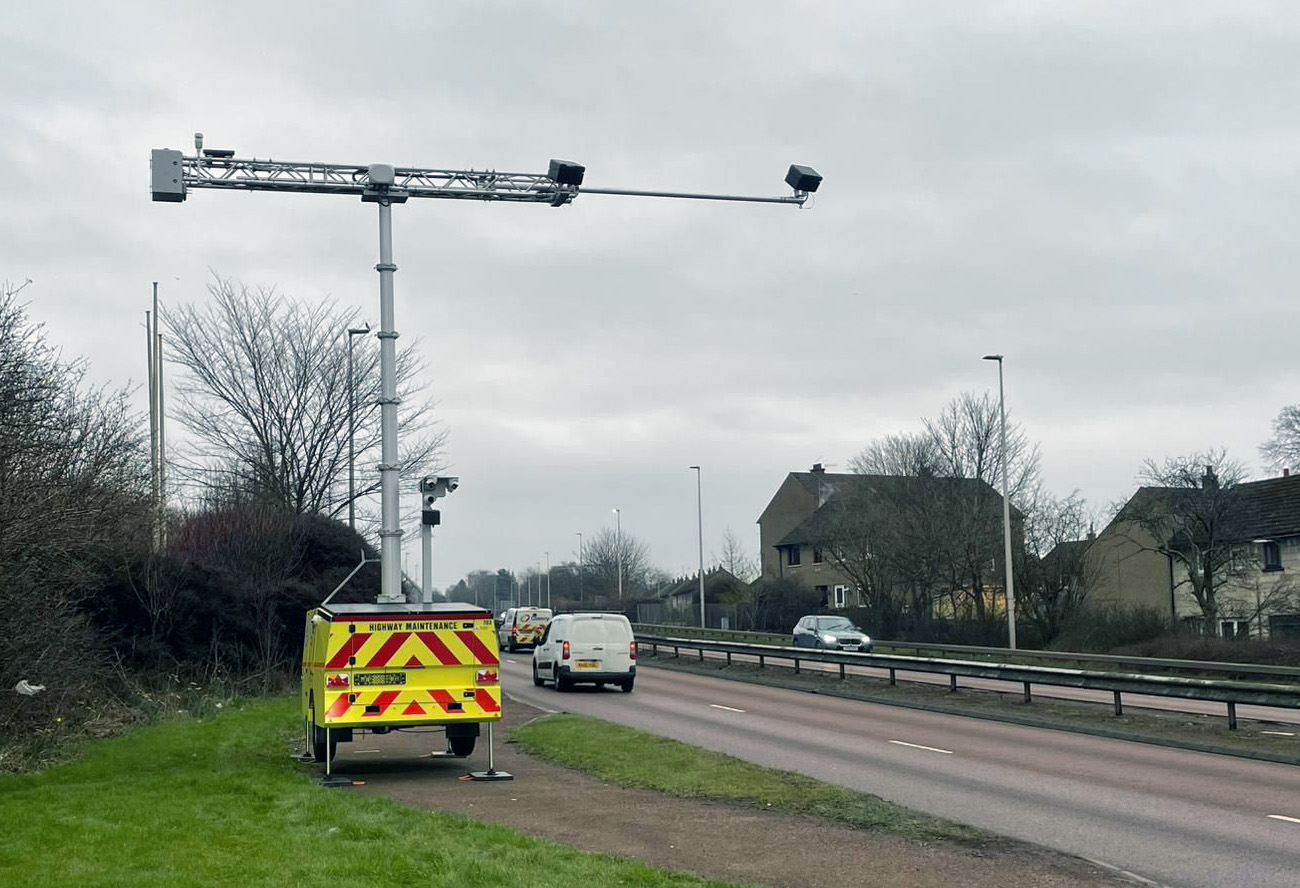
The ‘Heads-Up’ system uses two cameras to take high-speed front-facing and overhead images of vehicles, operating 24/7, with AI applied to flag any potential seatbelt or mobile phone offences. The images are then verified by at least two human reviewers to determine whether an offence has taken place.
“Although we’ve been proving the effectiveness of our technology in our long-term, fully operational scheme in Devon and Cornwall and various other pilots, large reductions in poor driving behaviours along with huge support from our partners are yet to translate into long-term deployments across the UK.” Mr Collins added. “I am convinced this major deployment in Scotland will be a step change, proving the magnitude of the road risks we face every day, whilst also offering a practical solution to make things safer for everyone.”
Scotland’s Cabinet Secretary for Transport Fiona Hyslop added: “The Scottish Government remains absolutely committed to our goal of making Scotland’s roads the safest in the world by 2030. The use of new technology to tackle some of the most dangerous driver behaviour will help us achieve that goal.”
(Picture – Acusensus)