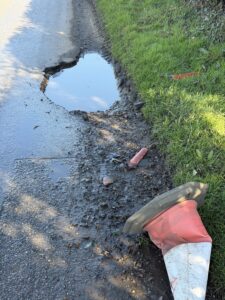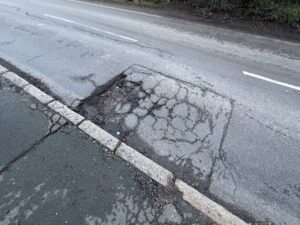
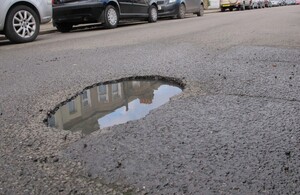
Councils will face new rules on how they spend funding to fix potholes and maintain local roads, under new requirements set out by the government.
Under the new measures, local highway authorities that fail to demonstrate they are maintaining roads effectively could lose around a third of their £1.6 billion funding for the next year.
Pothole damage already costs the average driver around £500 in avoidable repairs at a time when every pound in people’s pockets matters, and the government is determined to ease that financial burden by ensuring councils fix roads properly.

The changes will ensure that record investment in local roads is used as intended, with a total of £525 million held back from councils across England unless they are transparent and prove they are performing.
Councils must publish reports proving they are spending all of their highways cash purely on road maintenance, showing long-term plans for looking after roads and better training for their highways teams.
This follows the government’s first-of-a-kind red, amber or green ratings to grade 154 local highway authorities (LHA) based on current road condition and how effectively they are spending the government’s record £7.3 billion funding. This includes a map showing the public how well councils are doing in delivering the improvements they want to see in their local area. Councils now have record multi-year funding to get on with the job of delivering safer, smoother journeys.
The government is also commencing its new support for the 13 red-rated local highway authorities. Each will be supported with a total of £300,000 worth of expert planning for over two years, designed to help councils raise standards, fix more roads and deliver better results for road users.
The government is also backing local highways authorities with a record multi-year investment to improve the condition of their roads, after years of them calling for long-term certainty.
Roads and Buses Minister, Simon Lightwood, said: “Drivers deserve smooth, safe journeys and we’re making sure every pound goes straight into fixing roads and tackling potholes, not being spent elsewhere. Potholes aren’t just an inconvenience — they cost drivers hundreds, if not more, every time they cause damage to a vehicle. Fixing our roads is one of the most impactful things we can do to reduce the cost of owning and driving a car and we’re making sure every pound goes straight into doing exactly that. We’ve made it crystal clear that councils that fail to maintain their roads will now risk losing up to a third of their funding. And for the first time, we’re giving councils multi-year funding so they can plan properly and reverse a decade of decline in our roads.”
The Asphalt Industry Alliance’s chair, David Giles, has responded to the Department for Transport’s announcement concerning new pothole funding rules. He said: “Local authority highway engineers need sustained investment in highway maintenance, supported by a long-term funding horizon and greater transparency. This would allow them to carry out the most appropriate maintenance intervention at the right time.
“That’s why we welcomed the Government’s commitment to increase funding to 2030, and we support its new measures to ensure it is spent on our local roads and not diverted elsewhere. “However, with this year’s Annual Local Authority Road Maintenance (ALARM) survey report highlighting that the backlog of repairs now stands at £18.62bn, it is not the silver bullet that will allow local highway engineers to fully deliver the necessary resurfacing and proactive programmes that will prevent potholes forming in the first place.”
The DfT recently announced a new £7.3bn funding package for local road maintenance across England, spanning from 2026 to 2030, with strict new transparency and performance rules for councils.
Key components of the new funding rules include:
- Transparency Requirements: To unlock the full funding, councils must publish annual reports detailing the number of potholes filled, amount spent on repairs, and the overall condition of local roads.
- Incentive-Based Funding: As part of the 4-year plan, a portion of the funding (around £500m annually) is designated as “incentive funding,” tied to councils demonstrating best practice and performance in road maintenance.
- Withholding Funds: At least 25% of the incentive funding will be withheld if councils fail to publish these reports, with 50% subject to performance measures in 2026/2027.
- Performance Ratings: The DfT has launched an interactive “traffic light” rating system to grade 154 local highway authorities (LHAs) on their performance, allowing the public to see how councils spend their funding.
- Focus on Prevention: The funding aims to shift councils away from short-term fixes and towards long-term, proactive, and preventative maintenance.
- 4-Year Funding Certainty: The £7.3 billion package is set over four years, which is intended to provide authorities with the long-term certainty needed to plan maintenance effectively.
RAC head of policy, Simon Williams, said: These measures should go a long way to addressing the poor condition of local roads, which we know from research for the RAC report on motoring is drivers’ number-one concern. Ensuring money that is given to councils to improve their roads is actually spent on roads is critical, so the government’s focus on this will be welcomed by drivers. And, while fixing dangerous potholes is vital, it’s also very positive to see councils being encouraged to carry out preventative maintenance work, which will stop potholes forming in the future. Having the certainty of funding over the next 5 years for councils to plan proper maintenance programmes should result in better quality roads for all.”
Edmund King, AA president, said: “Fixing potholes remains the number one motoring issue for drivers, so it is right that councils are being scrutinised over their repair plans. We urge local authorities to use their funding to resurface roads rather than simply patch up their streets. Proper investment in the road network helps create safer, smoother journeys for everyone.”
PIC-.gov.uk