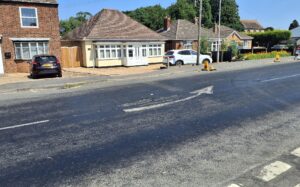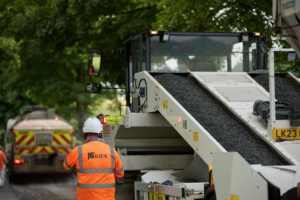
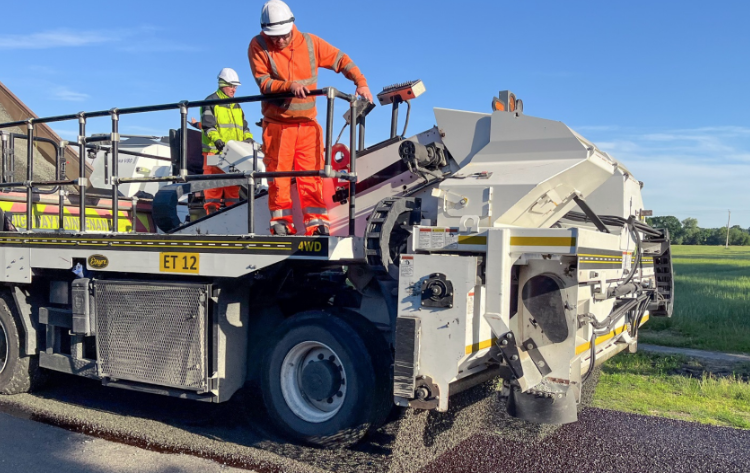
Since early April, Lincolnshire County Council’s surface dressing crews have covered 872,894 square metres of roads and, the council says the programme is not even half-way through.
Cllr David East, executive member for highways, said:
“The scale of what’s being delivered right now is huge. We’re protecting roads across the county in a practical, cost‑effective way, and it means smoother journeys now and longer‑lasting roads for the future. It’s exactly the sort of investment and work being done by Highways that makes a real difference to people in their day-to-day travels.”
However, insists the council, surface dressing isn’t solely about fixing a failure on the road, it’s about preventing it from happening in the first place. Sealing the road is the best way to keep water out which lets the road itself hold everything together so potholes don’t get the chance to form. It’s quick, cost‑effective and it can add years to the life of a road. Even the leftovers get reused – loose chippings are collected and kept, ready to go back out as part of the council’s 2027 programme.

Crews are also concurrently carrying out grip digging along the verge to help further improve the areas.
A council spokesperson said:
“It’s not the most visible part of the job, but it matters. Grip digging helps water drain away from the carriageway and into nearby ditches, reducing standing water and protecting the road structure underneath. It’s an all-encompassing method of road improvement; Surface dressing to protect good roads early, In‑situ recycling to rebuild the ones that need it and drainage work to stop problems coming back.
“Most of it passes by in seconds when you’re driving through but, across the county, it’s adding up mile-by-mile to improve Lincolnshire’s road network.”
(Picture: Lincolnshire County Council)