
The Chartered Institution of Highways & Transportation (CIHT) is urging the UK Government to ensure that transport infrastructure investment remains a national priority following the publication of the Government’s Defence Investment Plan Funding Explainer, which outlines reductions to elements of the Department for Transport’s capital programme to support increased defence spending.
The policy paper, published by HM Treasury and the Ministry of Defence on 30 June, sets out how the Department for Transport (DfT) will contribute savings towards the Government’s additional £15 billion
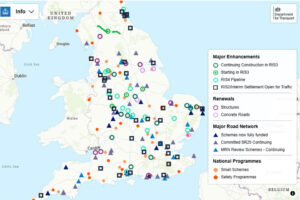
investment in defence. This includes savings of up to £700 million from roads funding through proposed reductions to the third Road Investment Strategy (RIS3), including consultation on the potential cancellation of
the A38 Derby Junctions and A46 Newark Bypass schemes, alongside reductions to some uncommitted roads funding.
CIHT recognises the importance of increased investment in the UK’s national defence but emphasises that transport infrastructure should be viewed as a complementary strategic asset rather than an alternative
funding source.

Sue Percy CBE, Chief Executive, CIHT, said:
“CIHT recognises the need for increased defence investment, but transport infrastructure should not be seen as an alternative to defence spending. Modern roads, bridges and transport infrastructure and networks are
critical national assets. They support economic growth, community resilience, connectivity and national security. Decisions on RIS3 should fully consider these wider strategic benefits before planned investment
is reduced.”
“Transport investment delivers significant economic, social and environmental benefits and requires long-term funding certainty if those benefits are to be fully realised. Stable, multi-year funding settlements and a stable pipeline of infrastructure projects enable infrastructure owners, local authorities and the wider supply chain to
plan effectively, invest in skills and innovation, achieve better value for money and deliver more resilient transport networks.”
“Frequent changes to investment programmes or uncertainty over future funding can undermine confidence, increase costs and make it more difficult to deliver the outcomes that government seeks in areas such as
economic growth, housing delivery, decarbonisation and climate resilience.”
(Picture: CIHT)