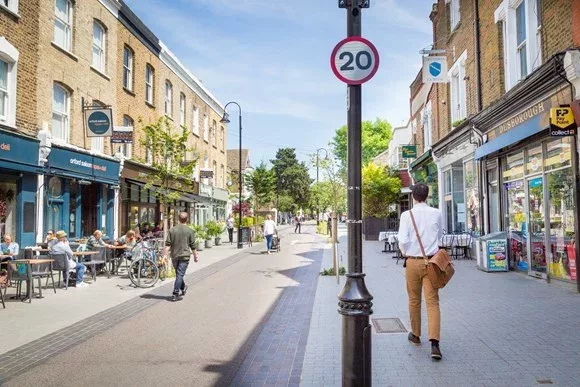
Lilli Matson, TfL’s Chief Safety, Health and Environment Officer, has told MPs that Ministers should learn from London and impose a 20mph limit across England as they are ‘working’ in the capital.
The government’s road safety strategy, announced earlier this year, sets targets of a 65 per cent reduction in people killed or seriously injured (KSI), and a 70 per cent reduction in child KSIs, by 2035, says MyLondon.
To do this, Department for Transport (DfT) officials have drawn up new regulations including a minimum learning period for new drivers, mandatory eyesight testing for drivers aged 70 and over, and further regulation of vehicle design. However, MPs were told last week that ministers are being far too “hesitant” in their approach to road safety, and should look to the Mayor of London for inspiration on how to be more ambitious.
Ms Matson told the House of Commons Transport Committee that a lack of guidance around speed reduction represented a “missed opportunity” for the government. Over half of London’s roads now have 20mph speed limits as part of City Hall’s strategy to achieve Vision Zero – meaning there will be no deaths or serious injuries on the network – by 2041.

TfL research shows that fatalities and casualties reduced by 34 per cent on such roads following the implementation of the 20mph speed limit between 1989 and 2013.
Under current rules, local authorities and National Highways play the lead role in ensuring safe speed limits are set on England’s roads. The default limit is 30mph, but ministers could yet advise reducing this to 20mph in built up areas.
Ms Matson told MPs:
“In Central London, we made 20mph the default on the main road network in 2020. That has delivered very tangible reductions in people being killed or seriously injured very quickly and changed the feel of the roads for people who want to use them. There was a missed opportunity in the strategy itself, but the guidance could pick up that opportunity and clarify that reducing speed is at the heart of road safety, and is the first and most important systemic change that government can make.
“That was not pulled through clearly enough to put that at the heart of the strategy. To move forward, you need clear and unequivocal determination you’re actually going to do something, which is what we are [doing] at the London level.
“This strategy is a bit hesitant at the national level, and there is the potential to go further – if you don’t do that, you will find people finding reasons not to do it.”
“It is very welcome to have a strategy that discusses this. I would support the calls that it could and should have gone further and been more consistent about the benefits of reduced speed in civilising towns and cities, in particular, and making them places where people want to live, walk, cycle and play.”
Ms Matson also said the Vision Zero Action Plan was “considered quite audacious” at the outset but she argued the “tone of the debate” has changed and “it has fundamentally changed the decisions we have made as a city”.
(Picture: TfL)