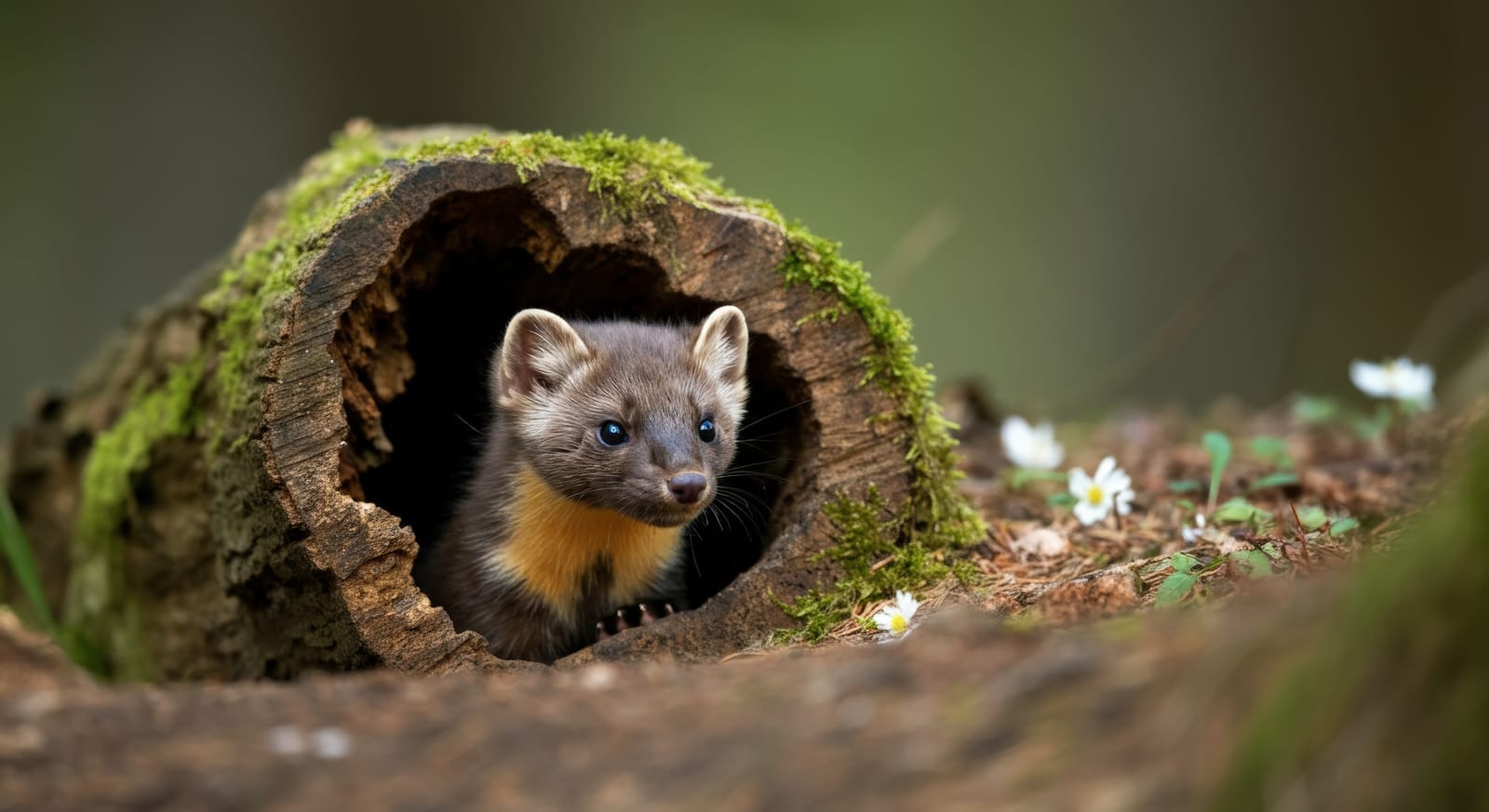
As part of Devon’s Two Moors Pine Marten Project, 15 pine martens were released into eastern Dartmoor last September, with the reintroduced animals dispersing across South Devon, including the Haldon Forest area.
Pine martens have large territories and move quickly through the landscape covering large distances, which can bring them into contact with roads and fast-moving traffic – the highest risk factor for this species in the UK.
In order to understand where the returning pine martens cross the road network, and in an effort to protect the newly reintroduced species, National Highways, Devon Wildlife Trust, Animex International and Devon County Council have installed cameras in locations around the A38 and A380, and are advising drivers to be wary of animals crossing around the Haldon Forest area.
As this video footage shows, conservationists at Devon Wildlife Trust recently celebrated the first births of pine marten kits in a pioneering reintroduction project which has returned the species to the South West of England after a 100-year absence.
Sadly, though, a small number of pine marten deaths have been recorded on Devon’s roadsides in recent months, prompting action to monitor the animals’ crossing movements.
Ben Hewlett, National Highways’ Senior Environmental Advisor, said:
“While roads have always connected people and places, they are too often a barrier for nature, severing habitats and contributing to the decline in biodiversity. At National Highways, we are committed to protecting and enhancing the ecology and environment around our road network, whether that be nationally or regionally. And to assist our conservation partners in Devon, we are working with them to identify any movement patterns of the recently released pine marten population, which could help pinpoint any mitigations needed in the long term.
“This particular area is abundant with wildlife, such as deer, otters and dormice, and we’d also like to raise awareness with the travelling public making their journeys along these routes – for their own safety and the safety of wildlife in these locations.
“Animals can use culverts under our roads, and by installing cameras, we can help to plot their movements and record particular locations where they are likely to look for crossing points.”
The Pine Marten Highways project is exploring how pine martens cross Devon’s main road network, with the view to installing safe crossing structures in key high-risk areas, and the first phase of the initiative involves the installation of camera traps at key sites to understand where and how martens cross the road.
Ed Parr Ferris, Conservation Manager for the Devon Wildlife Trust, said:
“Pine martens returning to the South West is an exciting demonstration of how we can reverse nature’s decline. But we have altered our landscapes tremendously and we need to keep finding solutions to give wildlife the ability to thrive. We know that wildlife will cross roads safely using culverts, underpasses and bridges, where they are available and easy to find and use.
“This project will identify where and how pine martens and other wildlife are crossing our roads, with the view to installing safe crossing options at the highest risk locations.
“In the meantime, we can all do our bit to help wildlife on our roads by being aware of places that are important for wildlife, like Haldon Forest, and slow down, especially if driving at night, dusk or dawn when wildlife are most likely to cross the road.”
(Pic: Yay Images)