One of the UK’s most knowledgeable automated enforcement experts says it’s vital the government embraces technology to make our roads safer and save lives.
Geoff Collins, who leads the ITS UK Enforcement Forum and manages the AI camera company Acusensus in the UK, was responding to a report by The Parliamentary Advisory Council for Transport Safety (PACTS) which highlighted how not wearing a seat belt and using a mobile phone while driving remain serious and undetected risks on UK roads.
The report made a series of recommendations around modernisation of the legal framework to enable automated detection, with mandatory human verification, a review of penalties, including educational diversionary courses, and national coordination for consistent deployment, data governance, and evidential standards. It also called for the scaling up of technology-based enforcement with transparency on accuracy, fairness, and privacy safeguards, a strengthening of employer and fleet action using telematics, in-vehicle alerts, and robust driving-for-work policies, and using aggregated data to provide richer national insights into risky behaviours.
“With the long-awaited road safety strategy expected sometime around the New Year, I believe we have a rare opportunity to assist our police and highway authorities in making our roads safer,” Mr Collins told Highways News. “We have seen how speed cameras have changed driver behaviour when it comes to breaking the limit, and we now have technology that will do the same to deal with two other members of the “fatal four”: driving without a seatbelt on and using a handheld mobile phone at the wheel. In our work with Devon and Cornwall Police, we have shown behaviour dramatically improves when people know they can be monitored, and that can only be a good thing for road safety.
“The government should be confident that mandating wider use of technology to improve driving will be a popular move – our research finds that people hate seeing others on their phones when behind the wheel, so are in favour of solutions that reduce this. PACTS have found mobile phone misuse (including hands-free) is viewed as culturally normalised by a substantial minority, so as the breathalyser changed people’s attitude to drink driving, roadside technology needs to be used to change attitudes to phone use.
“Furthermore, the toll associated with unbelted journeys on UK roads is alarmingly clear. It is a persistent, preventable risk with profound human and societal costs. We must make every effort to change poor driving behaviours, which will prevent suffering and save lives.”
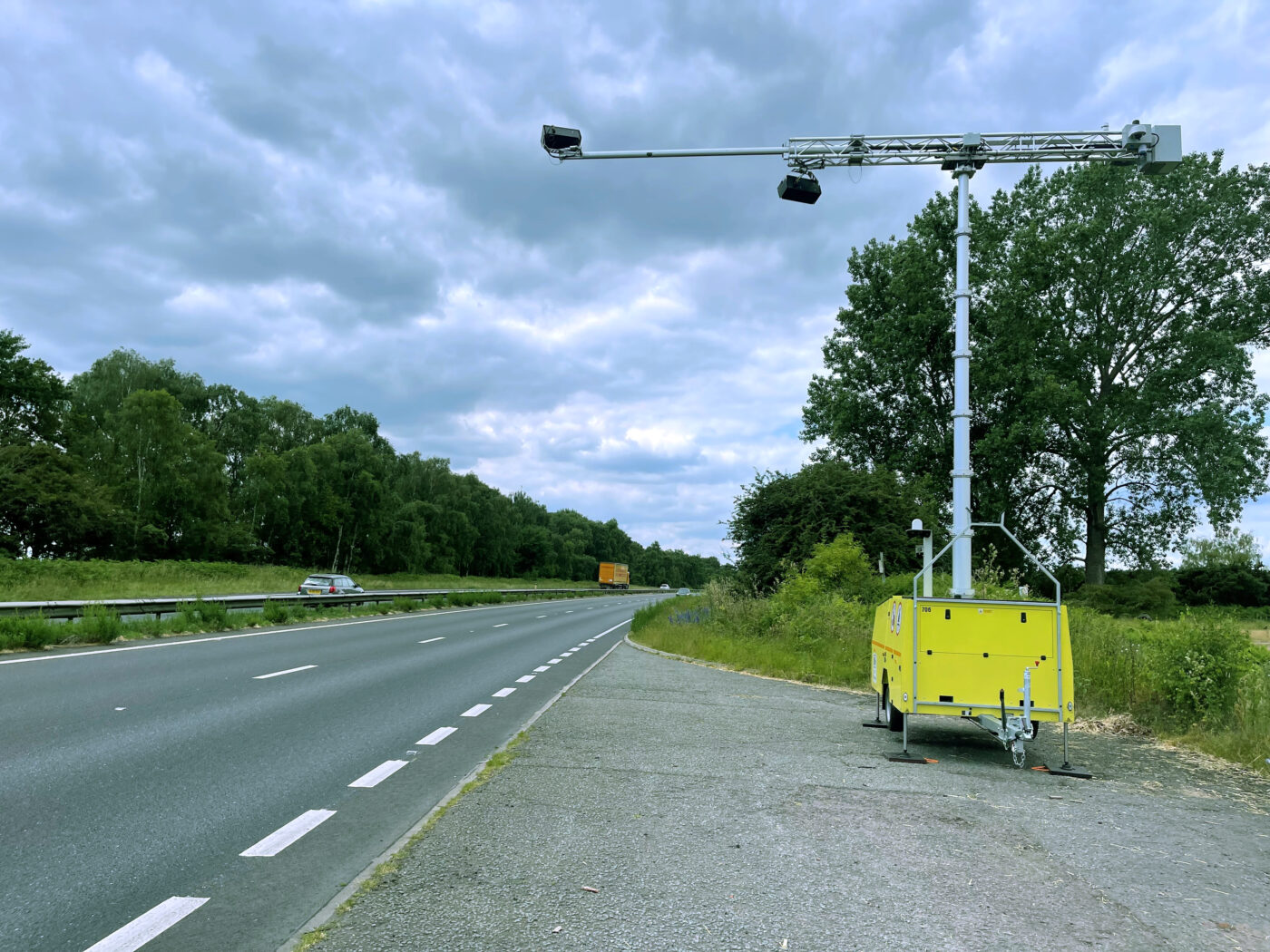
Initially developed in Australia, Acusensus’ ‘Heads-Up’ technology uses specially equipped cameras to see through the windscreen and into the vehicle, to identify cases where people are not wearing a seatbelt or are using a mobile phone as they drive past.
Over the last three years, the Devon and Cornwall force area has seen a reduction in the number of people killed and seriously injured (KSI) on its roads, through a range of Road Safety interventions, including the use of ‘Heads-Up’. In 2022 their KSI figure was 790, which dropped to 754 in 2023 and then down to 678 in 2024, with these latest figures in contrast to the national picture which has plateaued over this time.
Furthermore, the latest analysis of its installations across Devon and Cornwall show a long term 80% decrease in seatbelt and mobile phone detections, as drivers improve their behaviours.
(File picture – Acusensus)