Independent road safety campaigner Meera Naran MBE, whose son was killed in a road traffic collision, is calling for better use of the in-vehicle safety system, eCall, after a major report found its benefits have not been maximised in the UK.
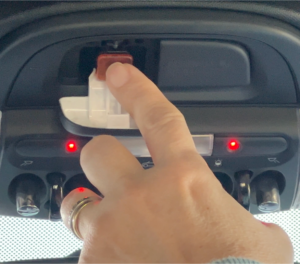
The eCall system automatically raises the alarm in the event of a crash when the airbags are deployed, and it can also be manually activated by the driver or passenger by pressing the SOS button. Dr Nick Reed’s recent study for the RAC Foundation found eCall to be “a powerful tool that can save lives by accelerating emergency responses to collisions involving vehicles fitted with it,” but that “there are improvements that could be made to the UK’s current implementation of eCall that could enable greater exploitation of underused data resources, and reduce false alarm rates, thereby improving trust and efficiency.”
After reading the report, Mrs Naran, whose son Dev died when he was eight years old, commented: “Following a road crash, immediate, high-quality intervention is essential to improve clinical outcomes. I propose integrating eCall awareness into the driving theory test to embed life-saving knowledge from the outset.
“Secure anonymised data sharing could support insights and learning, enabling meaningful impact analysis and targeted prevention strategies. This joined-up approach would improve emergency response, reduce long-term injury impact, save lives and alleviate pressure on the NHS through better informed interventions.”
In his report, Dr Reed suggested awareness campaigns should be developed, and for eCall education to be integrated into driver training. He also identified a need for a review of the workflow from the triggering of an alert to dispatch of the emergency services, and for an expansion of data sharing to include other responders. He said there also needed to be an analysis of the value of eCall’s impact on crash outcomes.
Mrs Naran’s comments were echoed by the founders of VESOS Solutions, the specialist eCall data company, who say the report confirmed their belief that the data it can provide is underused. They called the RAC Foundation’s report “a significant independent body of work,” and that “Dr Reed’s conclusions strongly support our own findings and messages.”
“Since 2018, hundreds of thousands of eCall alerts have been connected, of which tens of thousands were automatic airbag deployments,” commented VESOS Director and co-founder Danny Woolard. “However, it has been a frustration that we haven’t yet maximised the benefit of the data that is a hidden key benefit of eCall. This is thanks to a lack of awareness of eCall, a misunderstanding about data and a fixation with privacy which perceives problems which do not exist.”
VESOS has developed its TeCall Alerts solution, which almost instantly provides emergency services and highway operators with enhanced incident alerts detailing a vehicle’s exact location, the vehicle make and model and its propulsion type. This also potentially includes other data indicating vulnerable people that enables the emergency services and road operators to respond more effectively and better prepared.
One of the findings of Dr Reed’s report was that around two-thirds of eCall activations are currently false alarms, which is something TeCall directly addresses.
In the report’s foreword, Director of the RAC Foundation Steve Gooding called eCall, “A tool with untapped potential,” and added that there were benefits that could be attained not as a “matter of technical or regulatory change, but rather one of working practices, practices that could be reviewed and refined at relatively minimal cost.”
“The RAC Foundation Report shows that now is the time to really embrace the benefits of eCall data and to quash the myths around data protection that stop us from maximising its value,” added fellow VESOS Director Andy Rooke, who has worked on the development and implementation of eCall for more than 20 years. “As a former police officer dealing with the aftermath of collisions this is very close to me. While progress in the UK has been slow, we have had interest and success in other countries, notably Ireland, which prove eCall’s value. At VESOS, we have developed effective ways to reduce false alarms using AI. And although our focus has always been on the value of the data generated by eCall, we do agree with Nick that there are quick wins from improving voice calls which could help organisations such as National Highways, for example in alerting it dangers on smart motorways, eCall was developed for the emergency responder community but very much with road authorities in mind.”
(Picture – VESOS)