
Government Ministers have removed National Highways of its responsibility for the £10bn Lower Thames Crossing project. The move is seen as part of Prime Minister Keir Starmer’s drive to take tight control over important infrastructure projects for fear of cost overruns and delays, according to The Guardian.
Oversight of the Lower Thames Crossing – the UK’s largest planned infrastructure project – has been given to the Department for Transport (DfT). Internal consultation documents, seen by the Guardian, said the costs of the Lower Thames Crossing would be overseen by the DfT, leaving National Highways to “focus on managing, maintaining and renewing the network”
However, campaigners warned that the move could in fact lead to HS2-levels of overspending and ministers approving developments behind closed doors that would harm the environment.
Treasury officials are thought to be behind the shift to centralise the management of large infrastructure projects after the chancellor, Rachel Reeves, made clear her frustration at “bats and newts” delaying major schemes and adding to the final costs.
The consultation documents showed that the “Tier 1” project – which is considered by the DfT to be “one of the largest, highest risk, novel and/or contentious” schemes now being undertaken – would be overseen by the transport secretary, Heidi Alexander.
Reeves and Starmer have put planning reform at the heart of their growth plans after drafting legislation earlier this year to make it easier to build without paying as much for expensive wildlife protection.
The chancellor is keen to include a number of initiatives designed to allow developers to build houses and infrastructure projects, in the hope that higher economic growth will fill about £3bn of an estimated £30bn shortfall in the Treasury’s finances.
Earlier this week, Reeves was taped claiming that she had unblocked a development of 20,000 homes that was being held up by a rare snail.
The new Thames crossing has received final planning consent and secured £590m for early-stage excavation, surveys and consultations. In addition, the construction firm Balfour Beatty has landed a £1.2bn contract to build roads connecting to the tunnel.
However, funding for the full project has been delayed while the chancellor searches for a partner that could contribute as much as £2bn to the scheme in return for charging a toll. Work is expected to get under way before the end of the decade.
The site lies east of the Dartford crossing, which takes traffic from the M25 and lorries travelling to and from the ports of Dover and Folkestone.
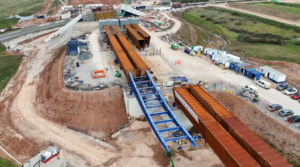
(Pic: National Highways)