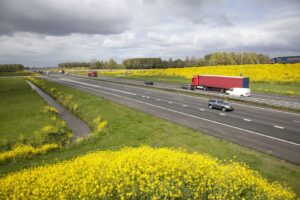
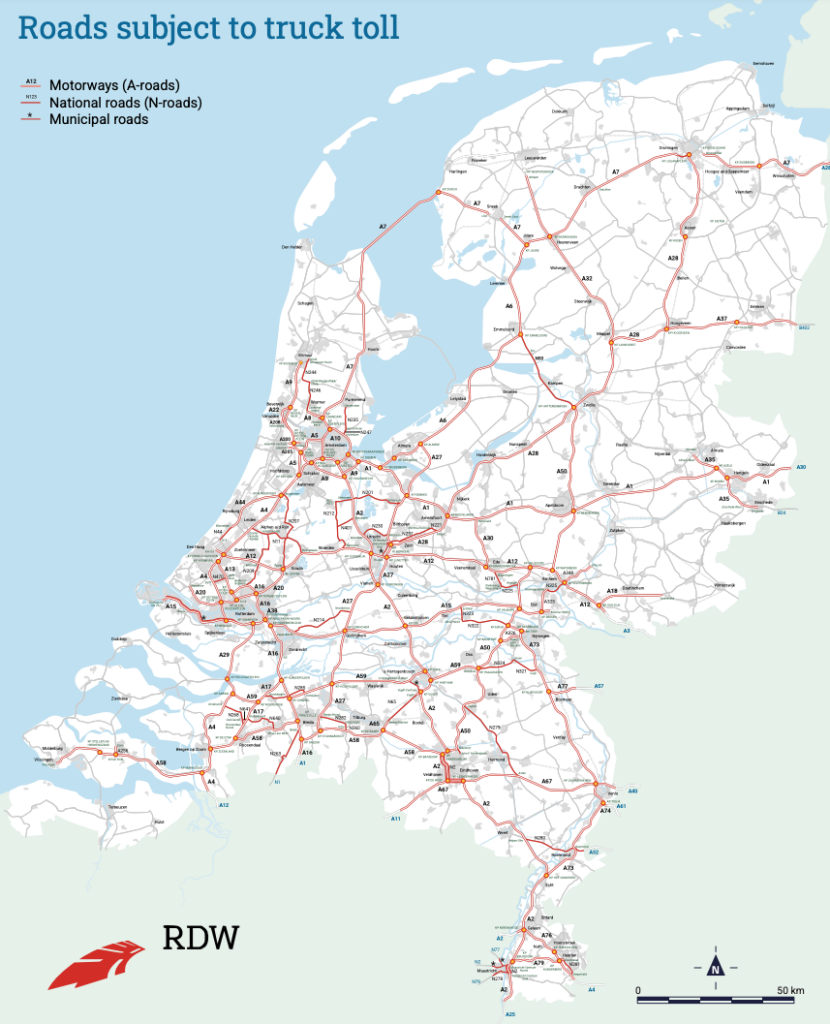
The Netherlands will implement its truck tolling scheme on 1 July 2026, from when owners will pay per kilometre drvien. This also applies to foreign vehicles, as is already the case in several other European countries. The truck toll applies on almost all Dutch highways and on some provincial and municipal roads.
The Eurovignette for the Netherlands will end on the same day. According to estimates, over 725,000 unique foreign trucks use Dutch roads every year.
The truck toll applies to Dutch and foreign vehicles in categories N2 and N3. They have a maximum authorised mass exceeding 3,500kg. Vehicles must be equipped with a working onboard unit (OBU) to pay the toll. The unit records the distance travelled.
To obtain an OBU, truck owners must have a contract with a service provider. The provider supplies the necessary OBU and handles truck toll payments. The OBU must be activated at all times while driving in the Netherlands. It is not possible to purchase tickets for individual routes in the Netherlands.
As in Germany and Belgium, the Netherlands has two types of providers.
- EETS providers offer an OBU that works in multiple countries. In practice, these onboard units are often supplied by fuel card providers.
- NedLinq offers an onboard unit that works in the Netherlands only. This provider also offers replacement units if an onboard unit breaks down.
Most OBU providers will allow for the expansion of the service area into the Netherlands. OBUs from national service providers in Germany and Belgium, Toll Collect and Satellic, will not work in the Netherlands.
The truck toll is designed to charge truck owners per kilometre. The toll also contributes to making transportation more sustainable and efficient. The cleaner and lighter the vehicle, the lower the amount per kilometre. As a result, the truck toll stimulates investments in clean and efficient vehicles. The rate per kilometre is based on the maximum authorised mass (of the vehicle combination), the CO2 emission class and, in some cases, the Euro emission class. The rates and a tool to calculate them can be found at www.trucktoll.nl. A large part of truck toll revenue goes to subsidies for improving the sustainability of the sector.
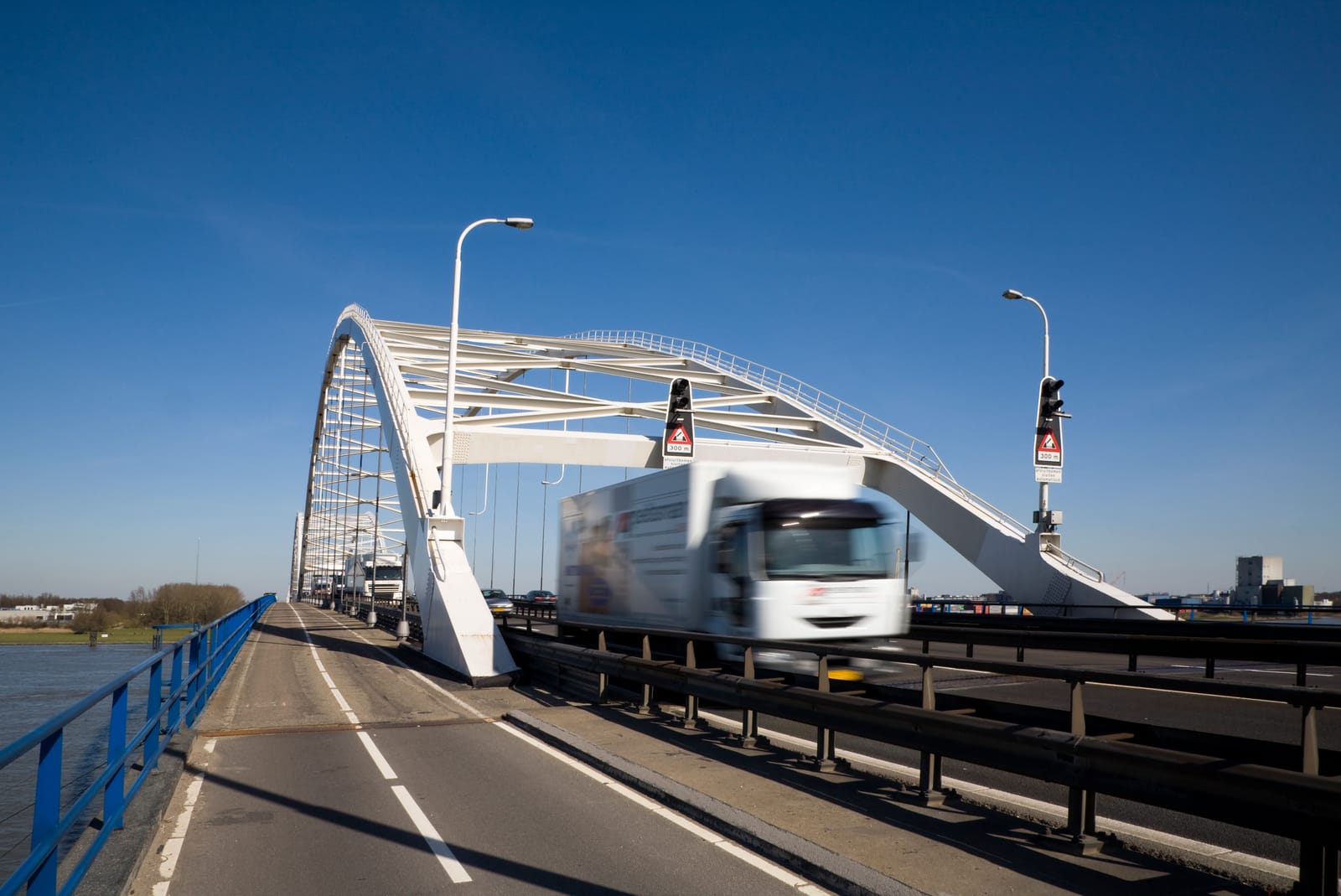
(Picture: Yay Images)