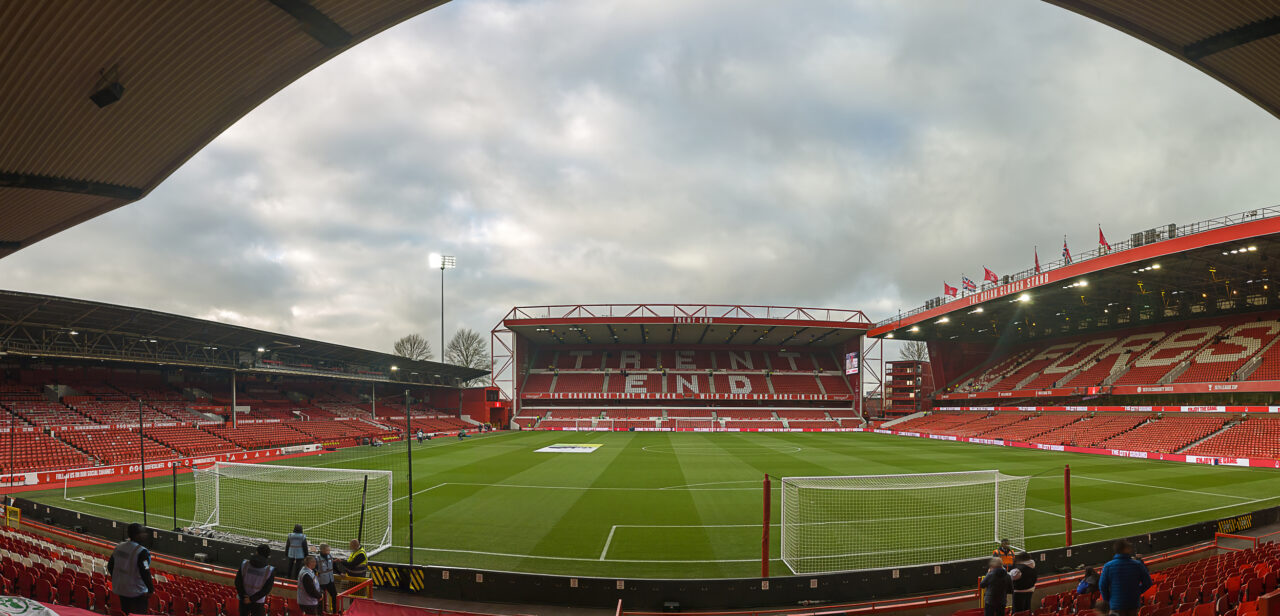
Nottingham Forest’s City Ground expansion must clear further transport and crowd-safety requirements after councillors backed redevelopment plans and added safeguards for neighbouring residents. The scheme would the stadium’s increase capacity to around 45,000.
According to West Bridgford Wire, Rushcliffe Borough Council’s planning committee voted by 10 votes to one to approve the Peter Taylor Stand and Trent End application on Wednesday 16 September, subject to conditions and completion of a Section 106 legal agreement.
During a lengthy debate, councillors questioned how thousands of additional supporters would reach the ground, where they would park and how they would cross the River Trent safely.

Members also secured a requirement for a community liaison group with local representation and brought forward the deadline for works to protect a house adjoining a property due to be demolished.
Planning officers supported the redevelopment because of its economic benefits, improved sporting facilities and new public spaces. However, they made clear that their recommendation depended on securing an acceptable river-crossing and crowd-management solution.
The committee heard that existing footways on Trent Bridge could not accommodate the additional pedestrian demand identified by the club’s consultants.
A proposal to permanently remove two traffic lanes to create more pedestrian space was not supported by either Nottinghamshire County Council or Nottingham City Council as highway authorities. Officers said the loss of road capacity would affect bridge users throughout the year, including bus services on which the stadium’s transport strategy would depend.
A new pedestrian bridge was discussed as a possible alternative, but officers repeatedly stressed that the agreement did not secure a bridge.
Instead, the Club would have to submit an acceptable river-crossing and crowd-flow scheme, supported by an updated assessment, for approval before starting development under the permission.
Preparatory work could then proceed up to slab level, but construction could not move beyond that stage until delivery and funding of the agreed solution had been secured.
(Picture: Rob Atherton)