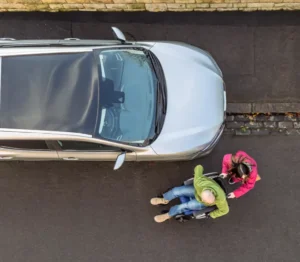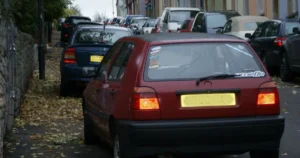

The Local Government Technical Advisers Group’s (LGTAG) January newsletter includes a particularly interesting item on the Government’s plans to curb (excuse the pun) pavement parking.
Last Autumn, says the newsletter, the DfT consulted on measures to assist local authorities in tackling pavement parking in England (excluding London, where it is already prohibited). On 8 January, the results were issued. The consultation received over 15,000 responses, with a clear majority of individuals (81%) and organisations (96%) reporting pavement parking as a problem in their area. Notably, 41% of individuals said they would leave home more often if pavement parking were addressed.
The consultation set out three options of which Option 3 (to Introduce a national prohibition on pavement parking, with local exemption) received the most support from individual and organisational respondents to the consultation (71% and 54%), while local authority respondents preferred Option 2 (to enable local authorities to enforce against ‘unnecessary obstruction’ of the pavement), though this was largely due to concerns about costs. Only 5% of respondents proposed alternative approaches, most of which were variations or combinations of the 3 options.
The full pavement parking consultation results can be found on the Government website HERE.
The Government also announced that it proposes to stop short of a national ban and allow local discretion in using new powers to control pavement parking. Living Streets preferred a consistent national ban as can be seen in their press release responding to the Government available HERE. Supporters of the proposed way forward are quoted in the DfT press release HERE.
The LGA, who represent elected council members, are in favour as illustrated by this quote from Councillor Tom Hunt, Chair of the LGA’s Inclusive Growth Committee, who said:
“These new powers – something the LGA has long called for – will help councils keep pavements clear. Pavement parking is one of the most complained about issues by residents – it can cause a lot of disruption and block access, particularly to those with mobility issues or parents who are pushing their children in buggies. They also cause cracked slabs and therefore increase maintenance costs and trip hazards. While these new powers are positive, they must be accompanied with requisite resources to implement and enforce effectively, at a time when council budgets are already stretched.”
The DfT has opened a consultation on reviewing the law for powered mobility devices, This seeks views on changing the rules for using powered mobility devices, including powered wheelchairs and mobility scooters, on public roads and pavements.
This includes:
• Updating the words used in law to describe powered wheelchairs and mobility scooters and who can use them
• Where these devices can be used – on roads, pavements or elsewhere
• Changing the rules around size, speed and age for using larger devices
• Whether people should be allowed to carry a passenger
• Whether other types of devices should be allowed on public roads or pavements when used by disabled people or a person with reduced mobility. This consultation closes on 31 March 2026.
The full consultation material, with 31 questions, is available HERE.
(Picture: Road Safety Scotland)