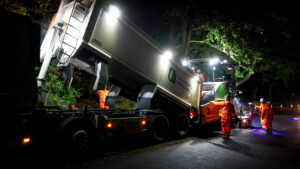
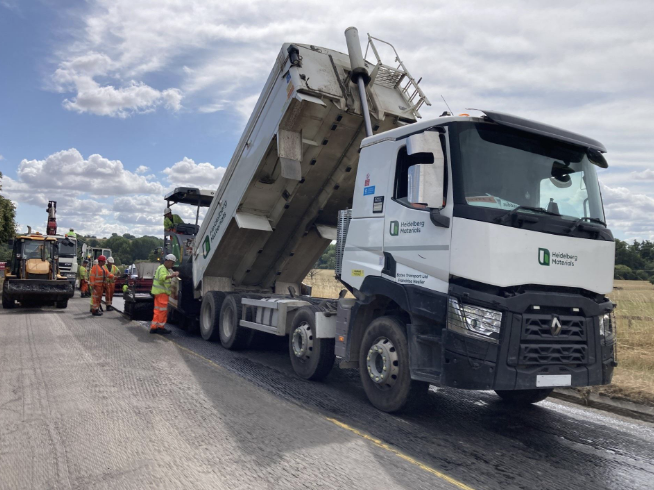
One of Dorset County Council’s aims is to ensure that the roads are in good condition, however, maintaining and fixing roads can cause disruption, such as closures and diversions, and it creates carbon emissions, especially when using hot asphalt.
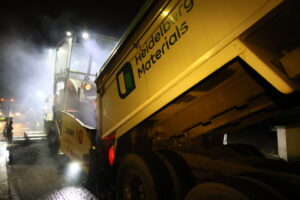
Since 2021, the Council have been working with highways maintenance partners, Heidelberg Materials, to reduce the environmental impact of road repairs and maintenance. One of the ways in which Dorset is doing this is by using their innovative Energy Reducing Asphalt 140, or ERA140.
Traditionally, asphalt needs to be heated to 180°C to reach the right consistency, but this new version works at a cooler 140°C, making a big difference to how we maintain our roads.
By using an additive with the asphalt at manufacture, it can be laid at a much lower temperature and more used in one visit.
Among the products benefits are:
- Less disruption – because the energy reducing asphalt cools faster, we can reopen roads more quickly, reducing delays and inconvenience for drivers.
- Reduced carbon emissions – producing asphalt at a lower temperature means less greenhouse gases are released than the hot mix asphalts. This is helping us to build a greener future for Dorset.
- Stronger, longer-lasting roads – our asphalt helps to support more durable surfaces, meaning fewer potholes and better resistance to bad weather, which reduces maintenance needs.
- Better air quality – fewer polluting gases and emissions are released during production and laying of the asphalt, helping to improve our air quality.
Cllr Jon Andrews, Cabinet Member for Place Services, said:
“Since 2021, we’ve laid 138,000 tonnes of this new asphalt in Dorset, enough to resurface around 45 miles of standard two-way roads. That’s the distance from Bournemouth to Bridport.
“Benefiting from Heidelberg’s innovation means we are leading the way when it comes to reducing the carbon impact of highways work, helping us be more efficient, reduce our environmental impact and save money. By making the switch to low energy asphalt, we’ve already cut our carbon emissions from highways maintenance by around 15% compared to traditional methods.”
Gareth Cooksley, Regional General Manager for Heidelberg Materials, said:
“At Heidelberg Materials we are focused on the decarbonisation of our materials and processes as we drive toward our net zero ambition. We are fortunate that within the Dorset Highways Strategic Partnership we have a client in Dorset Council who are willing to innovate with us to improve our products and services.
“Having worked with Dorset Council for more than 20 years, we are invested in supporting them reach their own decarbonisation goals and to that end have been supplying and laying ERA140 materials for the last 5 years. These have also been laid in conjunction with recycled material to further reduce the carbon footprint.
“The materials are laid using standard paving and compaction equipment, with no cost increase to our client and provide a range of additional benefits in terms of durability, reduced bitumen oxidation, faster cooling and therefore quicker opening to traffic, plus the material is fully recyclable at the end of its service life.”
(Pic: Dorset County Council)