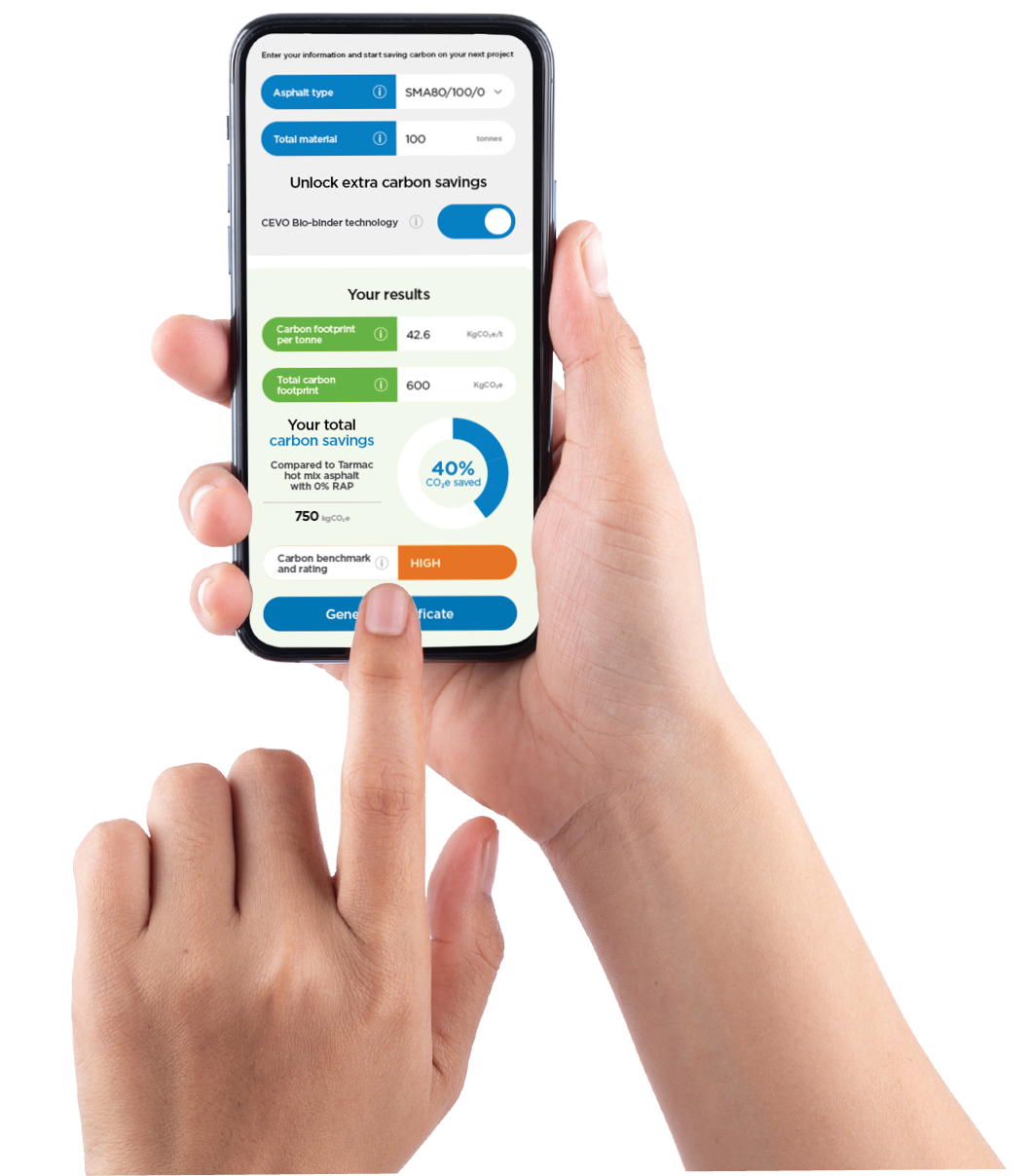
A new digital carbon calculator from Tarmac gives specifiers and highways contractors the power to enhance decision making and sustainability reporting by providing an instant calculation of embodied carbon for asphalt mixes.
As the focus on lower carbon construction continues to grow, Tarmac’s CEVO Asphalts Carbon Calculator provides ‘cradle-to-gate’ carbon data in seconds, based on asphalt product type and input tonnage.
For each mix, the tool provides carbon savings compared with a traditional hot-mix asphalt up to the point that the product leaves the asphalt plant. Users can select a bio-binder version to see further carbon reductions if applicable. Figures are based on Tarmac’s internal data, using industry-recognised asPECT methodology developed by National Highways, verified by Tarmac’s carbon experts.
The CEVO Asphalts Carbon Calculator generates a downloadable certificate, showing the carbon footprint of the material, carbon savings, the date of calculation and methodology used – all of which can be used to demonstrate sustainability in tenders, highlight potential for further carbon savings, and help contractors with their Scope 3 emissions reporting.
It is designed for use with Tarmac’s CEVO Asphalts solution, which uses plant-based bio binders, warm mix technologies and higher levels of recycled asphalt planings (RAP) to deliver a lower carbon product.
Jess Tuck, National Technical Director at Tarmac, said: “At Tarmac, we recognise the need to reduce embodied carbon in highways projects as we strive for Net Zero roads, and we remain committed to leading the industry with our low carbon toolkit.
“We’ve already successfully launched CEVO Asphalts, engineered solutions that combine advanced binder technology, circular economy principles and low energy manufacturing to reduce carbon emissions by up to 45% compared with traditional hot mix asphalts. Adding biogenic aggregates to our CEVO low carbon asphalt toolkit we can go further with net zero asphalt.
“Now we can offer an additional tool that promotes transparency, clarity and credibility, showing exactly what customers are specifying. This is key because we all need to be transparent if we are to meet national regulations and testing requirements.”
(Picture: Tarmac)