TfL has become one of the first highway authorities in the UK to successfully run a trial mixing 50 per cent of recycled carriageway material or Reclaimed Asphalt Pavement (RAP), into the top layer of new road surfaces. This approach reduces both construction waste and the need for importing new raw materials, as well as helping to lower carbon emissions. The trial ran for nine years from 2016.
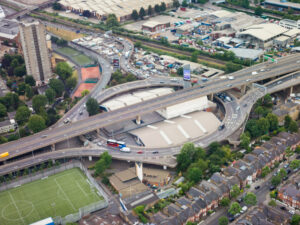
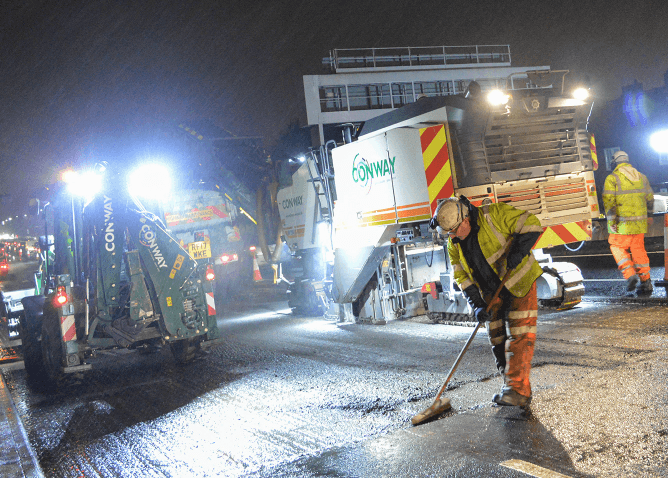
Carried out with supplier FM Conway, the trial monitored the performance and durability of RAP in road surfaces on the A1 at Mill Hill, a key strategic road into and out of London. It found that the material can endure frequent, heavy traffic and matches the performance of traditional asphalt, in terms of quality, texture, safety, and maintenance. Alongside intensive monitoring, laboratory testing on the material’s structural behaviour and response to force and load, showed it maintained its firmness and integrity over the trial period, which are indicators of its durability. This challenged the industry standards of the time, which involved restricting the use of RAP in the top layer of roads to just 10 per cent and shifted a long-standing industry perception that the use of recycled content belonged in the lower layers of roads, as it was believed that it could not match the durability or performance of fresh material mixes.
Building on the success of the pilot, TfL has carried out further trials on A40 Westway and promotes high RAP asphalt as an option in future highways works on its network. As an early adopter, TfL is well positioned to share findings, guidance and outcomes to support wider industry learning and innovation to encourage broader implementation of 50 per cent RAP mixture proportion. Increased adoption will not only reduce carbon and cost throughout the project but also increase national investment in the infrastructure and technologies needed to process and separate RAP effectively.
The trial contributes to TfL’s wider sustainability goal to decarbonise its operations and supply chain in order to help London be a net zero carbon city by 2030.
Isabel Coman, TfL’s Director TfL Engineering and Asset Strategy, said:
“We are committed to reducing carbon emissions across our assets and infrastructure to help us meet our net zero targets. By trialling a higher proportion of recycled asphalt on the A1 at Mill Hill, we’ve become one of the first authorities in the UK to successfully incorporate 50 per cent RAP in the top layer of one of our major roads and proved its ability to withstand heavy traffic loading. This trial demonstrates our commitment to sustainability and gives a strong signal to the supply chain that we are seeking innovative solutions to reduce the embedded carbon in our major construction materials. We hope this encourages other highway authorities to conduct similar trials and continue to drive improvements in the sustainability, reliability and durability across the sector.”
Mark Flint, FM Conway’s Technical Director, said:
“The use of high levels of recycled asphalt has grown significantly but there’s still a long way to go to making it standard practice. The results of our work with TfL validate what we’ve known all along: that RAP can deliver comparable results to mixes made entirely with virgin materials. The trial has proven that sustainability and innovation advances can be made without compromising the quality and durability of our roads. Partnerships built on trust, like the one we have forged with TfL, are key to continuing this progress.”
TfL now incorporates recycled asphalt where feasible and works closely with supply chain partners at the project level to identify and implement opportunities for increasing RAP usage wherever applicable. Alongside this, TfL is developing and implementing decarbonisation plans for concrete and steel, the two highest carbon-emitting materials in construction. TfL has joined other UK infrastructure organisations in committing to the Construction Leadership Council’s Five Client Carbon Commitments, setting out actions under a common framework on how to reduce carbon emissions from its construction activities.
(Pic: FM Conway/TfL)