
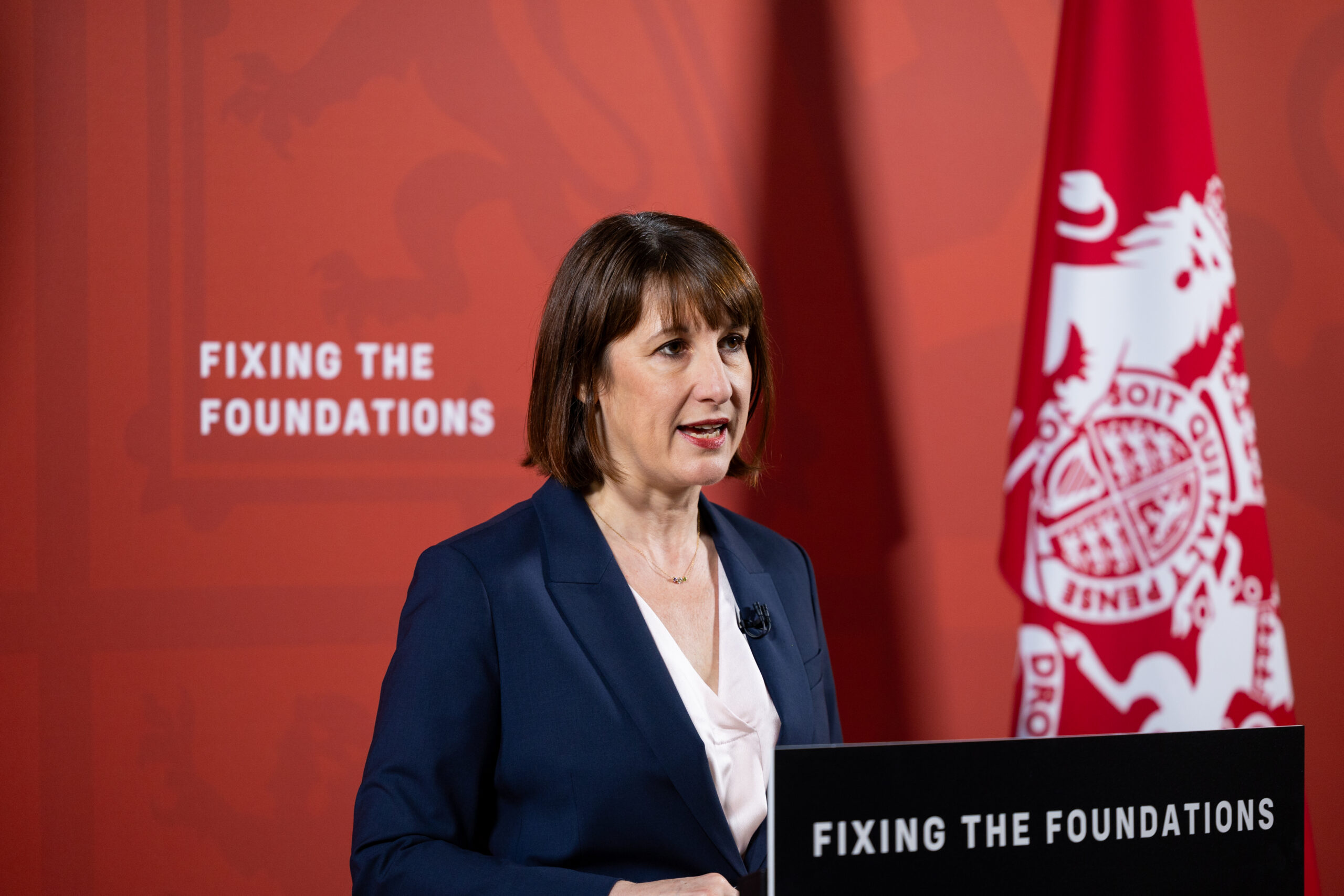
Transport industry leaders have been responding to how the sector fared in Chancellor Rachel Reeves’ second Autumn Budget – while most are largely positive, the introduction of a pay-per-mile scheme for electric vehicles and fears of the ramifications of the tax rises evinced in her statement are a clear thread running through the replies.
Andy Milner, Chief Executive, CEO of Amey, said:
“The Chancellor has delivered a Budget that aims to provide much-needed stability and certainty for the UK economy. In a period marked by economic headwinds and ongoing global uncertainty, this focus on stability can only be welcomed. However, the tax rises announced will be felt by both businesses and individuals, and it will be important for government and= industry to work together to manage these impacts.
“We welcome the Government’s renewed commitment to major infrastructure projects such as Northern Powerhouse Rail and the Lower Thames Crossing. As the government progresses with its infrastructure spending priorities, we would like to see further clarity and commitment to the recently published NISTA pipeline, including clear funding commitments and a greater role for public-private partnership models to accelerate delivery and maximise value.”
The Chartered Institution of Highways & Transportation (CIHT) has analysed the government’s Autumn Budget and reviewed the Chancellor’s measures to look at the wider implications for the highways, transportation and infrastructure sector.
Sue Percy CBE, Chief Executive, CIHT said:
“Transport has again emerged as a key theme and we welcome the government’s acknowledgement that prioritising investment in the highways, transportation and infrastructure sector enables significant wider economic, societal and health benefits.”
“CIHT looks forward to continuing to work with the Treasury, the Department for Transport, and the government on the creation of transport networks that are fit for all our futures.”
According the to CIHT, the key implications for the highways, transportation and infrastructure sector are:
• The government is introducing Electric Vehicle Excise Duty (eVED), a new mileage charge for electric and plug-in hybrid cars, which will come into effect from April 2028. Drivers will pay for their mileage alongside their existing VED.
• Fuel Duty accounts for around 4% of all government tax receipts and will slowly decline to zero as the UK transitions to an electric and hydrogen vehicle fleet. Proceeds are not hypothecated to support the highways systems so currently it does not “pay for roads”.
• If the government wishes to continue with its current policy of raising revenue directly from drivers, it is fair that owners of electric vehicles contribute, although care needs to be taken to ensure the level of any charge does not undermine the push for transport decarbonisation.
• A pay per mile scheme for electric vehicles is one way to achieve this goal- and there are schemes in operation in New Zealand and several US states from which the UK can learn. CIHT have explored the role of mobility pricing in more detail in our report ‘Charging for Road Use’.
Angela Jones, President of ADEPT, commented:
“We welcome the government’s commitment to invest over £2 billion annually by 2029-30 in local roads maintenance. This will enable local authorities to make progress in improving the condition of local roads across the country.
“However, while this investment is welcomed, further sustained long-term funding commitments will be essential to meaningfully reduce this backlog and allow local authorities to proactively improve the network rather than simply managing decline. The latest Annual Local Authority Road Maintenance (ALARM) survey data shows the carriageway repair backlog in England and Wales has reached almost £17 billion – the highest figure in 30 years of reporting.
“While we welcome the £200 million investment in EV charging infrastructure, including the £100 million resource funding for local authorities to deploy specialist staff, this funding spread across all authorities simply doesn’t go far enough. To truly accelerate the rollout of public chargepoints and support the transition to electric vehicles at the scale and pace required, government will need to go much further with future investment.
“We also welcome the £48 million investment to boost capacity in the planning system: local government is experiencing a workforce recruitment and retention crisis, leading to skills gaps that seriously impact service delivery.
“The recruitment of 350 additional planners, the new Planning Careers Hub, alongside the commitment to recruit 1,400 professionals directly address a critical issue that ADEPT has been highlighting for some time.
“We look forward to understanding more detail on the implementation of the broader Planning and Infrastructure Bill reforms.”
Meanwhile, the Asphalt Industry Alliance’s chair, David Giles, said:
“With the backlog of local road repairs currently at an all-time high of £16.8bn, and less than half the local road network currently in a good state of structural repair, it was heartening to hear the Chancellor announce that the Government intends to double local road maintenance funding by 2029-30.
“Investing in our local roads will not only help deliver better conditions for the benefit of all road users, but will also help support the Chancellor’s growth ambitions – with DfT research highlighting that every additional £1 spent on road maintenance results in a return on investment of between £2 and £9. We have long advocated for substantial, sustained, and targeted funding for highways maintenance so that local authority highway teams can plan ahead and deliver lasting improvements, rather than having to use the funds to repeatedly fill potholes. We look forward to understanding more about how additional funds will be allocated for the most effective delivery and benefit and hope it means the end of the pothole patch and mend cycle that has characterised our local roads for far too long.”
In response to the Chancellor’s speech, Arcadis London City Executive and Senior Council Chair of the Confederation of British Industry Peter Hogg said:
“This budget demonstrates what business already knows to be true: the government alone cannot drive growth. It needs private investment, and it needs to facilitate that investment now.
As it is, this feels like another budget that talks about growth but acts against it. There was no material government commitment to capital expenditure above the CSR, no support for house building and a position
on business rates that will be a brake on investment in commercial property – this against the backdrop of six months of negative framing of this announcement, which has not helped consumer confidence or growth. This budget does at least align with Arcadis’ mission of improving quality of life – addressing, for example, childhood poverty, with the lifting of the two-child benefit cap – but we believe that this should be delivered because of economic growth not at the expense of it.
“Arcadis will continue to work with our partners in business and in government to deliver the infrastructure, housing, and resiliency improvements but much work will be required to achieve the government’s growth objectives.”
Rachel Ellison, managing director for advisory and programme delivery for UK and Europe at Mott MacDonald, has responded to the announcements:
“The Chancellor has shown continued support for infrastructure in her Budget. The certainty that this creates is essential to enable businesses to confidently invest in order to realise the ambitions set out earlier this year in the 10-Year Infrastructure Strategy.
“Announcements today about the private funding approach to projects such as Lower Thames Crossing and Heathrow give even greater clarity – both for project pipelines and on how the government intends to fund its
planned infrastructure investment. The funding piece is essential as delays to major programmes of work affect the ability of our industry to deliver efficiently and attract and retain people into the sector, too.”
The Confederation of Passenger Transport has also responded to the Chancellor’s Budget. Alison Edwards, Director of Policy and External Relations, commented:
“The increase to the National Living Wage, alongside recent changes to employer National Insurance, will intensify wage pressures across the industry, where labour already makes up more than half of bus operating
costs. At the same time, although extending the freeze on fuel duty offers welcome short-term breathing space, those pressures will return once the staged reversal of the 5 pence cut begins, particularly given
the Government has again missed the opportunity to exempt bus and coach operators from any rise.
“Bus and coach account for under 6 per cent of fuel duty receipts, and exempting the sector would avoid placing £142m per year of pressure on already tight margins, protecting operators’ ability to invest in higher frequencies, new routes and modern, environmentally friendly vehicles. Ensuring that essential public transport remains viable will require a realistic approach to the cost base we face, stability in long-term planning, and recognition of the critical role buses and coaches play in the UK’s economic and social fabric.
“The big news for the long-term future of transport though is the introduction of a new pay-per-mile road user charge on electric cars. Road user charging which reflects usage can be fairer and can help accelerate the shift towards more sustainable public transport by encouraging people to think twice before making unnecessary car trips.
“Switching more journeys from car to bus or coach will ultimately mean fewer jams, faster moving traffic and improved productivity, as a single double-decker bus can take as many as 75 cars off the road. We look
forward to working with Government as it manages the inevitable shift from charging motorists at the pump to charging them as they drive.”