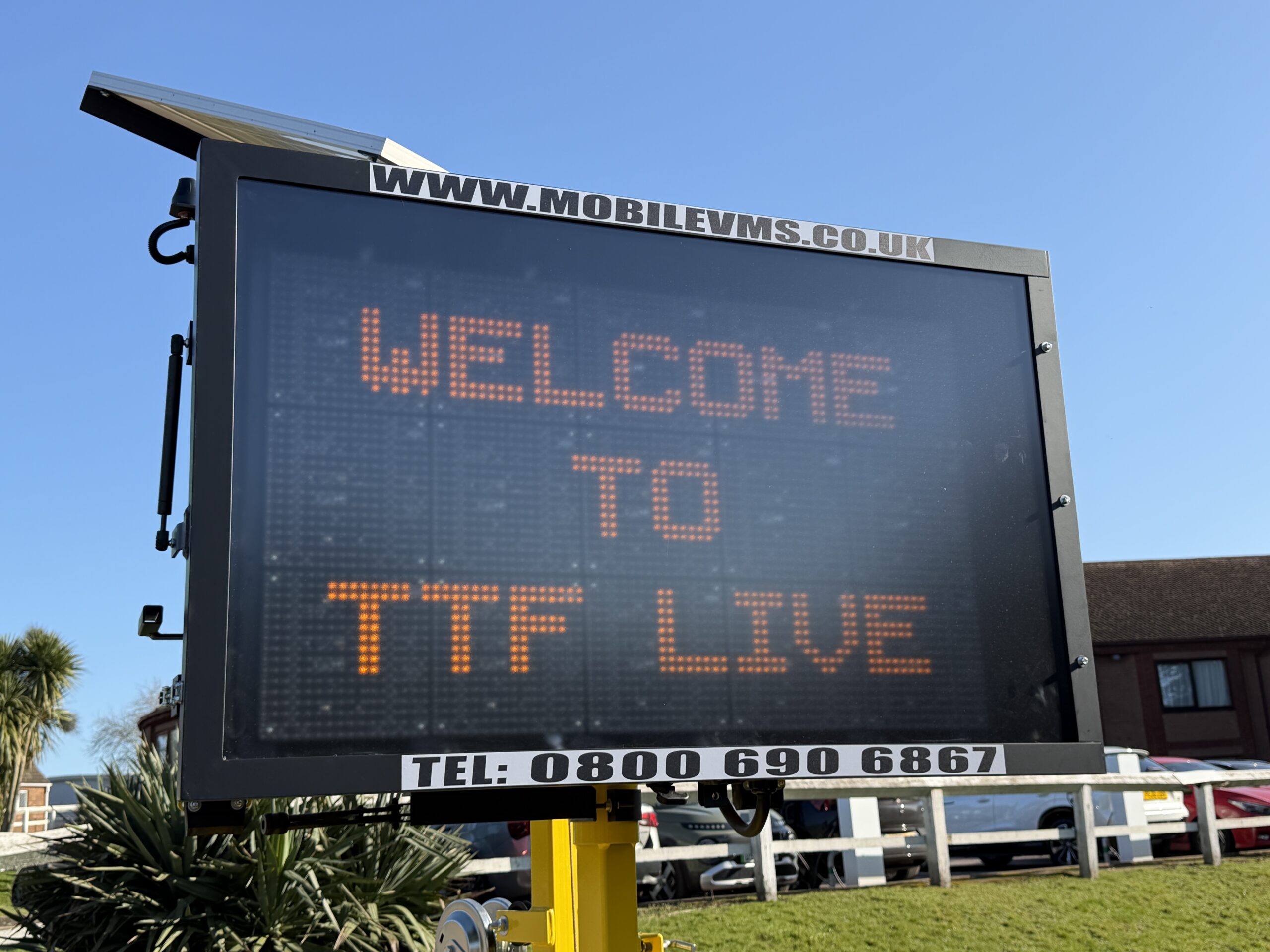
Highways News is back at the Transport Technology Forum Live conference at Hinckley Island in Leicstershire.
It’s a day of demos showing the latest in connected vehicle services.
We’ll update you on it all day.
9.40
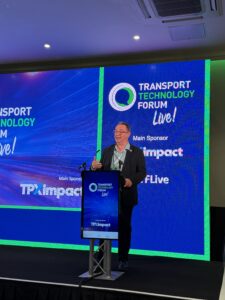
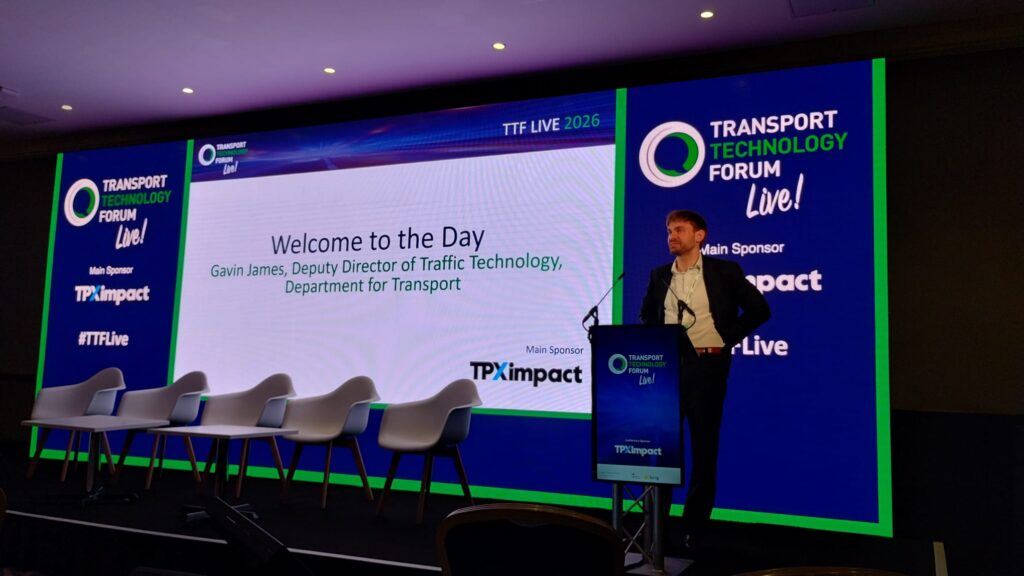
We start with the Deputy Director of Traffic and Technology at the Department for Transport, Gavin James. He’s new to the role and this is his first TTF Conference, and he gives a keynote address.
Mr James began by explaining that he was new to the role, following his predecessor, Anthony Ferguson, whom he described as a key advocate for the Forum. He said it was his first visit and added that he was already struck by the value of the event, highlighting the strong mix of public and private sector attendees and the wealth of ideas being shared.
Reflecting on his background, he said he first met Anthony Ferguson around nine years earlier while working on telecoms in the railway sector and later setting up a digital service within the DfT. He explained that his current team is unusual in government because it brings together policymakers and delivery specialists, enabling them to both shape legislation and implement practical solutions. He added that part of his role is to communicate the sector’s priorities to ministers and generate political support.
He highlighted recent work, including legislation on pavement parking, and described the team’s “entrepreneurial mindset,” pointing to innovations such as the national parking platform and earlier successes like the UK’s multimodal journey planner, Transport Direct. He said government’s role is often to collaborate with industry to solve problems, then step back once solutions are established.
He also noted challenges, such as the unintended impacts of navigation technologies on local roads. He concluded by emphasising the importance of “connected local services,” adding that future innovation must remain open, collaborative, and focused on public good, before encouraging attendees to explore the technology demonstrations.
10.00
All the demonstrations begin.
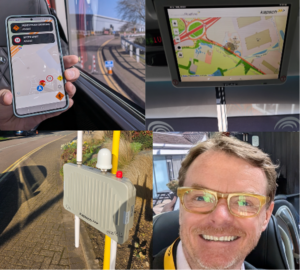
The first group have gone out on three coaches to see connected vehicle demos both on the hotel’s perimeter road and on Leicester City and Leicestershire County Council roads. We’ll have footage from there soon.
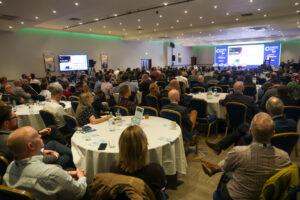
Meanwhile, “under the bonnet”, companies behind the data are chatting to delegates about how it’s all gathered and used. There’s a real buzz about the place:
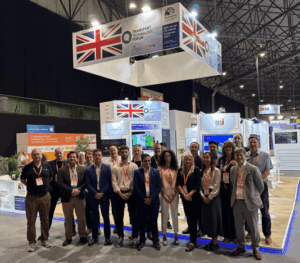
The companies involved in the demos are:
The companies involved are:
- HAAS Alert – showcasing Safety Cloud®
- Immense Simulations – simulating traffic scenarios
- INRIX – Signal Analytics
- AECOM and Kapsch – C-ITS Services
- MobileVMS – intelligent traffic management
- Portsmouth City Council and KL Systems – Digital Transport and Connected Vehicle Services
- Rennicks – Integrated Radar and HD CCTV
- SkyFarer and Coventry City Council – drone-supported incident response and network management
- SRL – REMOS remote monitoring and traffic signals management
- Standby Group – Emergency Services Blue Light Response
- SWARCO – AI Forecasting
- VESOS – eCall TeCall Alert platform
- Westcotec – Intelligent roadside technology
The whole of the Live element of the TTF Conference is supported by WSP.
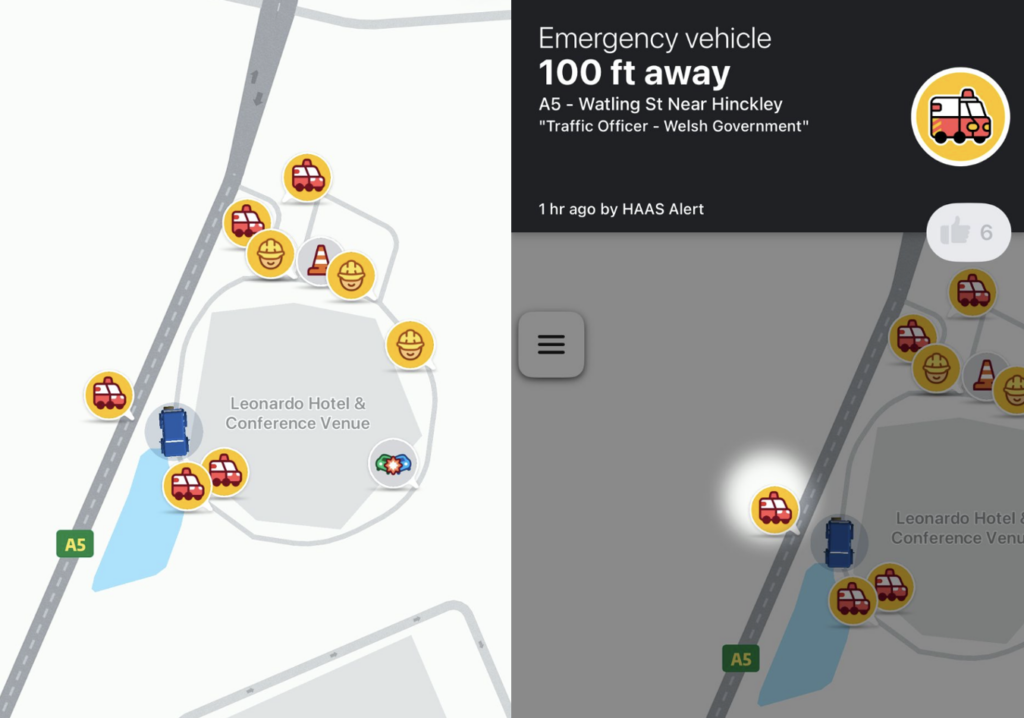
The HAAS Alert software means data from the demonstrations is showing up on WAZE:
11.00
The TTF’s Connected Vehicle Services Lead, Andy Graham has spent more than three months putting the demos together, in partnership with KL Systems’ George Brown.
“After all this work that George and I have done, along with the superb support of all our demo partners, seeing it come together in the sunshine in Leicestershire is great,” he said. “We’ve had a variety of people from Traffic Wales to Portsmouth City Council supporting us too,” he added, “and the support of Leicestershire County and Leicester City Councils to use their roads brings it all to life. We’ve moved from PowerPoint to the real world showing connected vehicle technology in the here and now.”
Mr Graham stressed the value of the demos in “helping local authorities and the DfT see the technology that can make a real contribution to achieving the road safety strategy’s ambitions targets and we look forward to doing bigger and better demonstrations at next year’s ITS World Congress in Birmingham.”
11.19
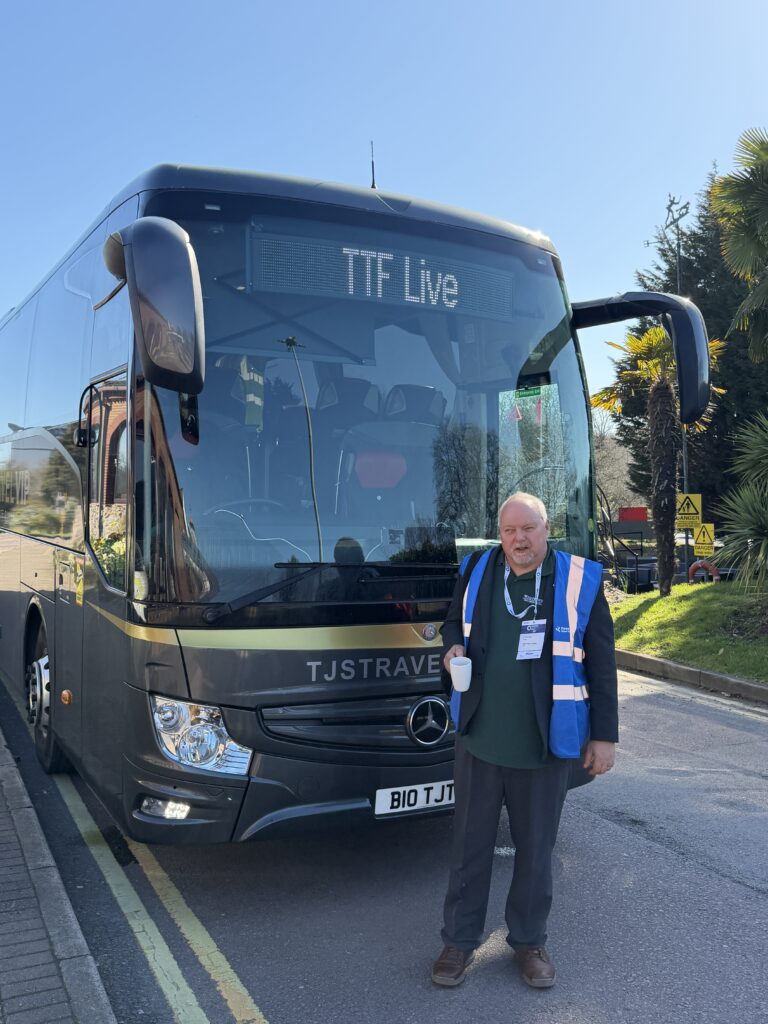
We’re on one of the three coaches now to do the demo around the hotel perimeter road and then onto the local highways. We’ll take some shaky video and share it here, but Highways News’s videographer Luke Dudley and his colleague Matt are working for TTF this week to get footage for you and proper recordings will be shared in due course and we’ll flag it here on Highways News.
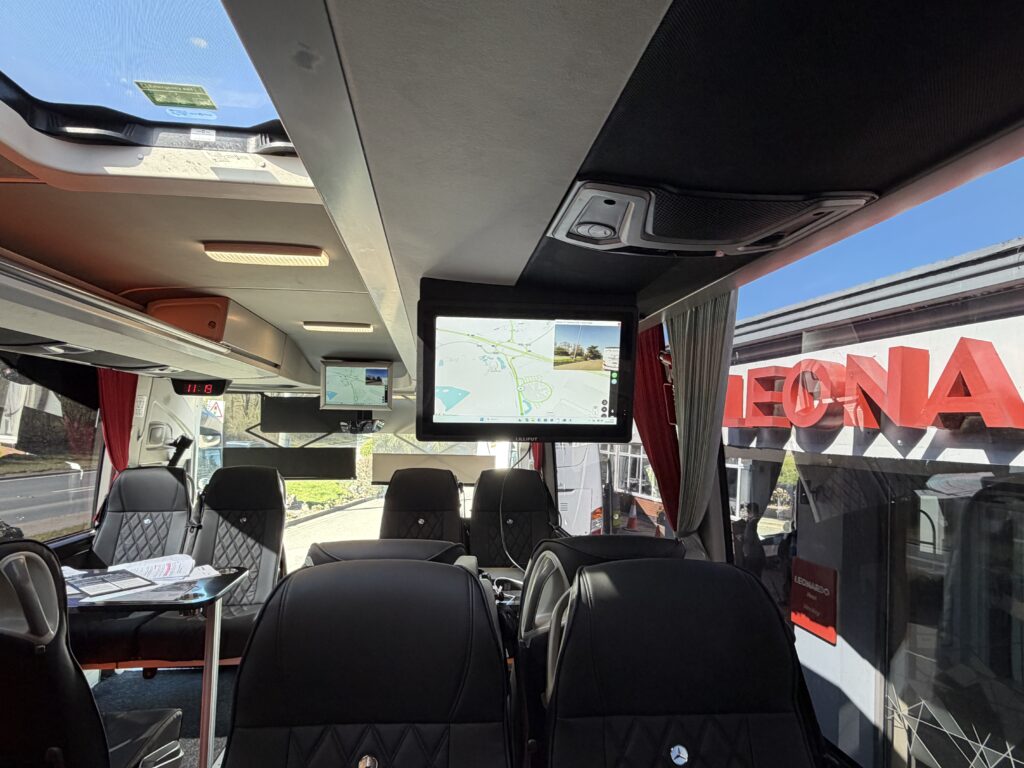
Industry veteran Steve George of SGTI is on the bus and says he’s thrilled to see how much he’s followed from concept over the decades is now happening and making a difference on the roads: “I think this event is great in showcasing the technology and what can be done, and we need to now work hard to turn all the brilliant concepts into standard features on our road networks – we have the concept and it needs to be widespread reality,” he tells Highways News.
Highways News’s Libby McMahon is our commentator on the tour:
And a taste of the tour:
There’s a demo of the AECOM/Kapsch solution on the perimeter road.
We’re now out onto the local road network with a number of live demonstrations. The video of all of them will follow, but here’s a taste as we see an example of GLOSA, Green Light Optimal Speed Advisory.
We’ve had bridge height warnings, roadwork alerts and speed limit advisories too – all this here and now on the network using data that is being generated through partners demonstrating back at Hinckley Island. Look out for the full video about it to come, but these videos are being uploaded as we’re on the tour (ain’t technology great!)
12.11
There are a number of FAQs shared about the data that has been seen:
- Who supplies all this stuff
- Go and see them in the engine room
- What about data FROM vehicles
- There’s a big di[play of using data in the engine room and exhibition – everything from rough roads to traffic signals
- Some of the signal junctions we went through have been monitored by using vehicles like us
- All this seems to be for cars
- AT previous demoes we have shown more pedestrian detection, data from cycles and other emobility and other sources on a close test track
- All of these services apply to logistics and buses eg low bridge warning
- How is the data collected from the roadside kit
- APIsCellular links
- What about distraction
- Everything we do is speech alerts primary, and People like TomTom already have little devices that warn you of hazards by flashing a stick on tag on your windscreen in your line of sight
- How much DTROs are there
- KL Systems has a map with all the DTROS in Leicestershire available to inspect
- Companies like Causeway are sucking the data in
- Is all this is new cars only?
- Nope, we have shown this on a 1900 Daimler on the RAC Veteran car run, and much of this can go into Waze and Apple maps already
- ITS -G5 via beacon does depend on vehicles being fitted and a national security model in place (done in Europe but not yet In the UK )
You can watch details of the connected veteran cars on this video here.
12.40
The third part of the TTF Live demo involves delegates discussing “making it happen”. They are split into different groups and discuss Advanced Services, real-time information, safety services and other road users. Delegates are asked to give their judgement on whether the first priority services identified by the DfT in the Connected Vehicle Services framework are the right ones. Giving their expert opinion, which will be used to inform future decisions.
14.15 – after lunch
White Willow Consulting’s Andy Graham now discusses the demonstrations he co-ordinated that delegates have seen out on the road and in the “engine room”.
He discusses what former DfT Director and Chair of the TTF, Steve Gooding would ask: “What has to happen to make this true?”
“Of course, the first answer that everyone would give is some money, some funding to make all this happen,” Mr Graham said. “I think we also need to have that funding in order to sustain some of the innovations we see. So since we’re starting our new tech test days, two of our suppliers have gone into administration – people weren’t able to buy their stuff. That’s not they didn’t want to buy their stuff, but it was around procurement.
“And I think you also need to have a bit more connection to some of those high level PowerPoints that we’ve seen about policy and some of the systems that we’re thinking about, and what you saw in the nuts and bolts.
“We shouldn’t take forever to do that, because there’s a road safety strategy. And if you see the targets, they are pretty ambitious.
“Hopefully you’ve seen that they move from ideas through to PowerPoints through to small scale stuff and test tracking now big scale stuff with 297 of you. So hopefully the scenes and understanding that helps you understand a bit more about what might be.”
14.25
We’re now reviewing the “making it happen” section of the day with Jo Britton, Director, PACE Development who led that session. She’s joined by Jonathan Mann from WSP.
They say the majority of delegates are confident or highly confident that connected services could become part of mainstream traffic operations.
The takeaways are around funding, modal shift, working with utilities, obsolescence and scaleability.
14.31
Now Kerry Winstanley, Managing Director of LCRIG comes onto the stage to discuss LCRIG in Action: Insights and Forthcoming Initiatives.
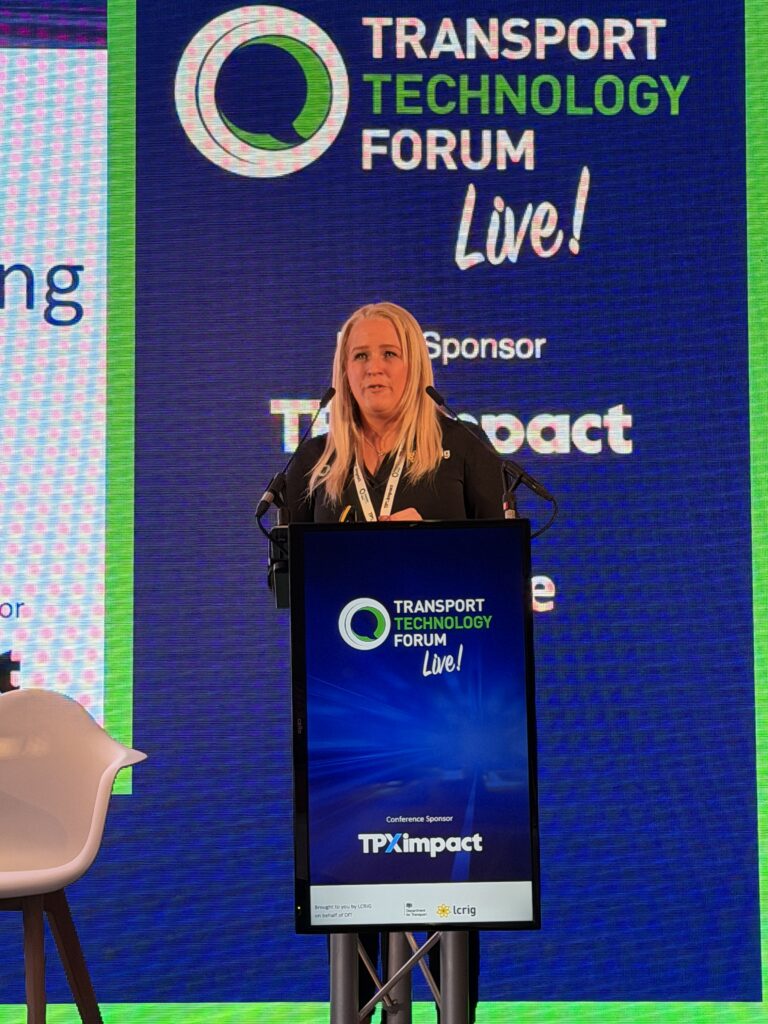
LCRIG now has every English Highway Authority as a member. They are expanding into Wales and Scotland, and have more than 400 members.
You can find out more about LCRIG here.
Kerry Winstanley discusses a range of supports around RAG Ratings, the incentive fund, Connected Vehicle Services, a structures survey, the ALARM Survey, Competition Markets Authority Report and Round Tables with DfT, Treasury and Ministers.
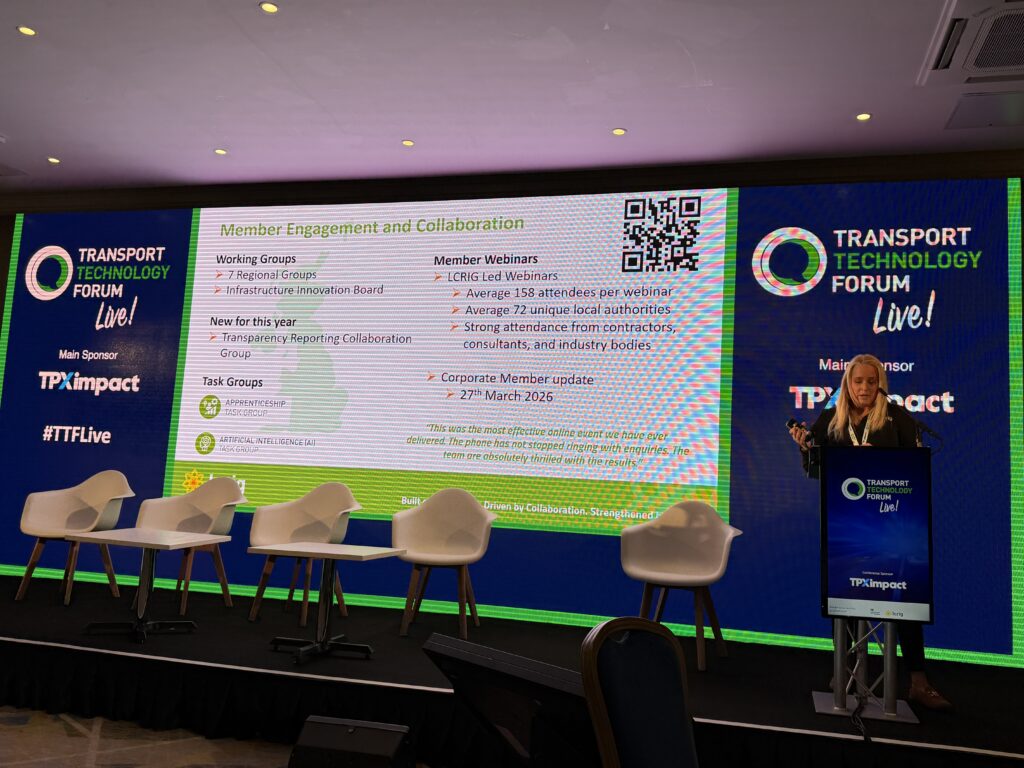
There’s also detail about the Knowledge and Innovation Network, and the recruitment of Kim Harper as Head of Highways Policy, Innovation and Knowledge for LCRIG.
She finishes by plugging the Innovation and Learning Festival, Strictly Highways and the UK’s participation in the ITS European Congress in Istanbul next month.
14.45
Next up, it’s Steve George who’s been working on the update to the Code of Practice for management of electronic traffic equipment.
He’s talking about updating the code around things like DCIS, communications technology, migration to LED signal heads, data security and temporary signals.
14.55
Finally, Max Sugarman, CEO of ITS UK is speaking. He’s reflecting on a year of change 2025,
He talked about the spending review, Bus Services Act, English Devolution changes, Data Use and Access Act, Road Safety Strategy and others.
He said he surveyed members and found nearly two-thirds were confident about future growth of the sector.
He then talks about the survey which estimated the value of ITS to the UK economy which has £3.2 billion in economic value, supports 45,000 jobs and provides £510 million in tax revenue.
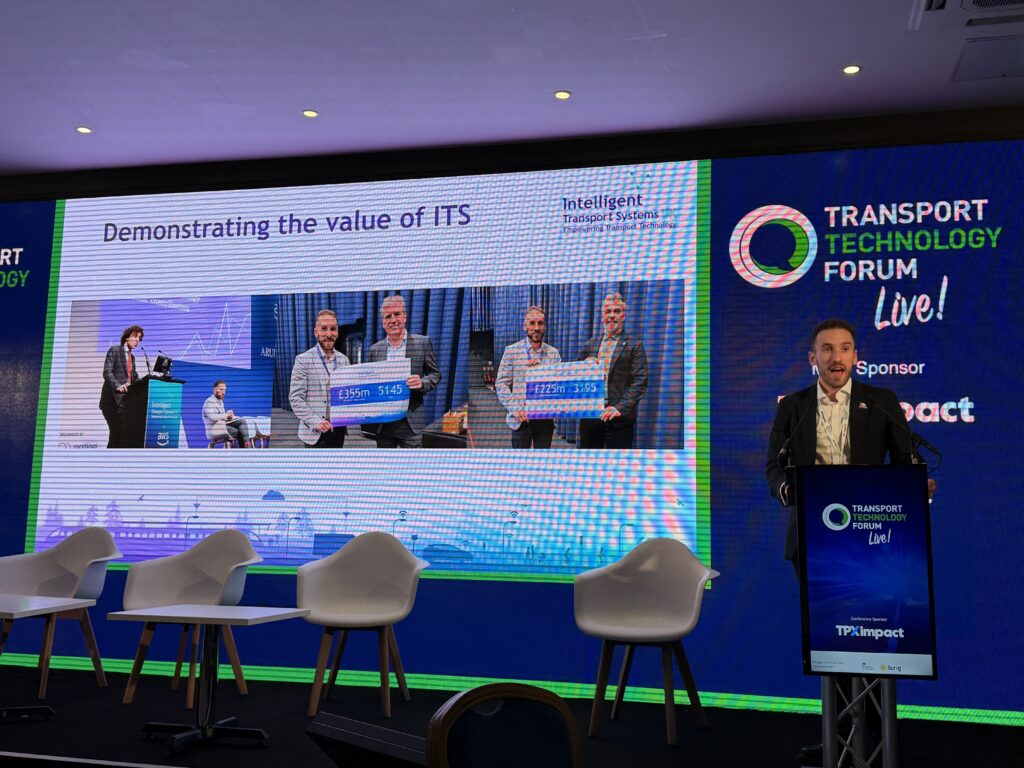
He also talked about traffic signal obsolescence, and how ITS UK has brought the main equipment manufacturers to talk to the DfT and Transport Minister.
Max Sugarman also discusses road pricing for electric vehicles, with a charge per mile for driving, and discusses technology options for this, and discusses skills too.
15.10
And that’s it! The event closes with final remarks from Darren Capes.
He hails the demonstrations and showing that connected services are here and now, and that there were great discussions of the two days. He hopes there will be funding announcements soon. He also thanks the exhibitors and sponsors for supporting the event and making it possible to bring along so many local authorities. He looks forward to future events and the value of the company.
(All pictures and video – TTF)