Greater Manchester residents are walking and cycling more than ever, with over 700 million active travel trips recorded in 2025 – thanks to major investment in the Bee Network.
The latest Active Travel Annual Report has now been published, and highlights that where infrastructure has been completed, active travel rates have surged – demonstrating how transformational infrastructure is
helping more people choose to walk or cycle..
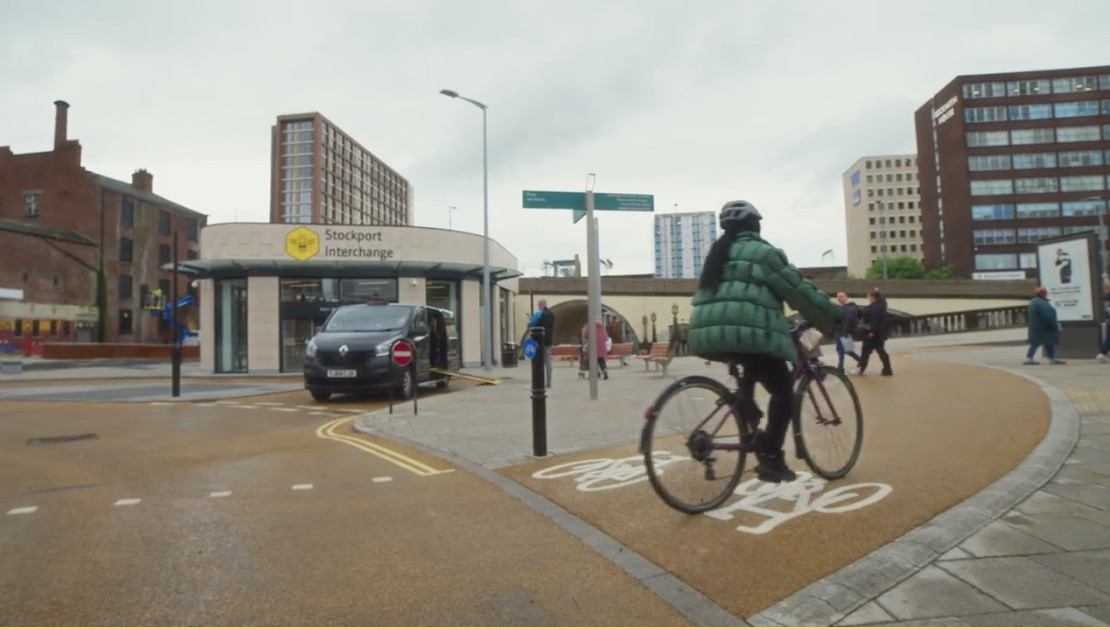
This includes a 62% increase in cycle trips on Chorlton Cycle Way in 2025 compared to 2021. On Oxford Road there were 7,000 cyclists a day in October 2025 – up from 2,000 a day before there was a segregated
cycleway.
The total number of active travel trips in Greater Manchester was over 700 million in 2025 and has increased each year between 2021 – when the total number of active travel trips stood at just over 510 million – and
2024. This has been supported in part by a post-pandemic recovery in overall travel demand, and population growth.
Active travel currently accounts for around one-third (33%) of trips by Greater Manchester residents, with an ambition for 50% of all journeys in Greater Manchester to be made by walking, cycling and public transport by 2050.
This will mean one million more sustainable journeys every day contributing to a healthier, greener and more productive city-region. Improving access to cycles through the Starling Bank Bike fleet has also been key – with a 30% increase in the number of rides made from January to October 2025. E-cycles are in significantly higher demand than standard cycles and half of the city region’s bike hire fleet is now electric.
Future investment includes improvements to footpaths, junctions, crossings and cycle facilities that will eventually lead to around 2,700km of Bee Network routes for walking, wheeling and cycling.
Active Travel Commissioner, Dame Sarah Storey, said:
“It’s great to see the progress being reported in the 2025 Active Travel Annual report. The goal is to enable a greater choice for people in how they make their journeys, with walking and cycling being the glue that binds all the modes of the Bee Network together.
“This is demonstrated by the fact 90% of people are walking as part of their public transport journeys, but walking is also important to the Mayoral commitment on School Streets and progress has been made during
2025 on the ambition of having 100 permanent School Streets by 2028.
“As with every year, the report highlights specific areas of focus for the upcoming year and takes stock of whether plans from previous years need to be adjusted. There is still a great deal of work needed, especially on the perceptions of safety and satisfaction of journeys, but the underlying message is that where segregated infrastructure is built for cycling, and streets are designed around the needs of pedestrians, then the numbers of people choosing to travel actively increases.”
Richard Nickson, Active Travel Network Director at TfGM, said:
“Providing high-quality active travel infrastructure has been at the core of our Bee Network vision from the beginning, and with strong increases in walking and cycling on completed Bee Network routes, the way forward for Greater Manchester is clear.
“At TfGM we will continue to work closely with our Active Travel Commissioner, the Greater Manchester Mayor and the 10 local authorities to ensure we’re doing everything we can to enable people to travel actively as part of their day-to-day journeys.”
(Picture: TfGM/Bee Network)