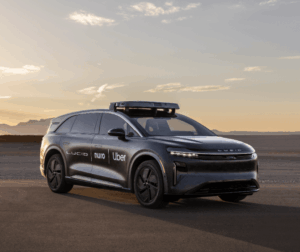

With the news that Waymo will be bringing its autonomous ride-hailing services to London next year still fresh in minds, the legal liability questions this development will create have started being asked already.
Lawyer Andrew Sanderson, a partner at Kingsley Napley LLP, says that with autonomous and connected vehicles expected on British roads by 2026, legal frameworks around road safety and liability are evolving rapidly.
“The Automated Vehicles Act 2024, which received Royal Assent earlier this year, sets out a comprehensive regulatory scheme for self-driving vehicles,” he says. “It introduces the concept of “authorised self-driving entities” and mandates that automated vehicles meet safety standards equivalent to – or better than – careful and competent human drivers. This marks a significant shift in how liability will be assessed.
“Under the Automated and Electric Vehicles Act 2018, insurers are already liable for accidents involving automated vehicles. However, the new legislation goes further, addressing complex issues such as transitioning between manual and automated modes, cybersecurity risks, and data sharing obligations.”
For manufacturers and fleet operators, this means liability may no longer rest solely with the driver.
Says Sanderson: “Responsibility could extend to software developers, OEMs, and even infrastructure providers. The Association of British Insurers has outlined key requirements for safe automated driving, including robust cyber resilience and clear user obligations.”
Insurers are adapting too.
“New policy models are emerging that separate human-driver liability from system failures. In commercial contexts, such as autonomous taxis or freight, vehicles are increasingly treated as mobile software platforms, with system-centric coverage,” he explains. “Legal professionals must now navigate a landscape where liability is shared across a complex ecosystem. Proactive risk management, contractual clarity, and regulatory engagement are essential. The Law Commission’s guidance, now embedded in UK policy, reinforces the need for a safety-first legal framework.”
As the UK prepares for services such as Waymo’s autonomous taxis, the legal and insurance sectors must keep pace.
“Road safety remains paramount but understanding where liability lies in a driverless world is now a strategic imperative.”
(Pic: Kingsley Napley LLP)