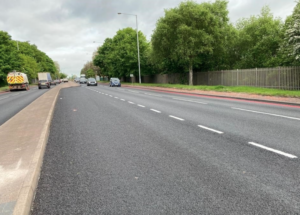
WJ Group is calling on local authorities to invest more heavily in sustained preventative maintenance, highlighting surface dressing as a cost-effective solution to maintain the UK’s road network.
New data suggests that surface dressing work on Britain’s local roads has increased by 15% in 2025 compared to 2024, with around 44.4 million square metres of road treated between April and September.
Although this is a positive step towards maintaining the UK’s highways infrastructure, WJ believes local authorities should embed long-term preventative maintenance strategies to reduce potholes and deliver better quality roads that last longer.
While surface dressing is a proven sustainable method to extend road life by sealing cracks, it only works effectively on well-prepared surfaces. WJ’s surface defect repair and hydro retexturing services play an important role in getting roads ready for dressing and must be implemented consistently.
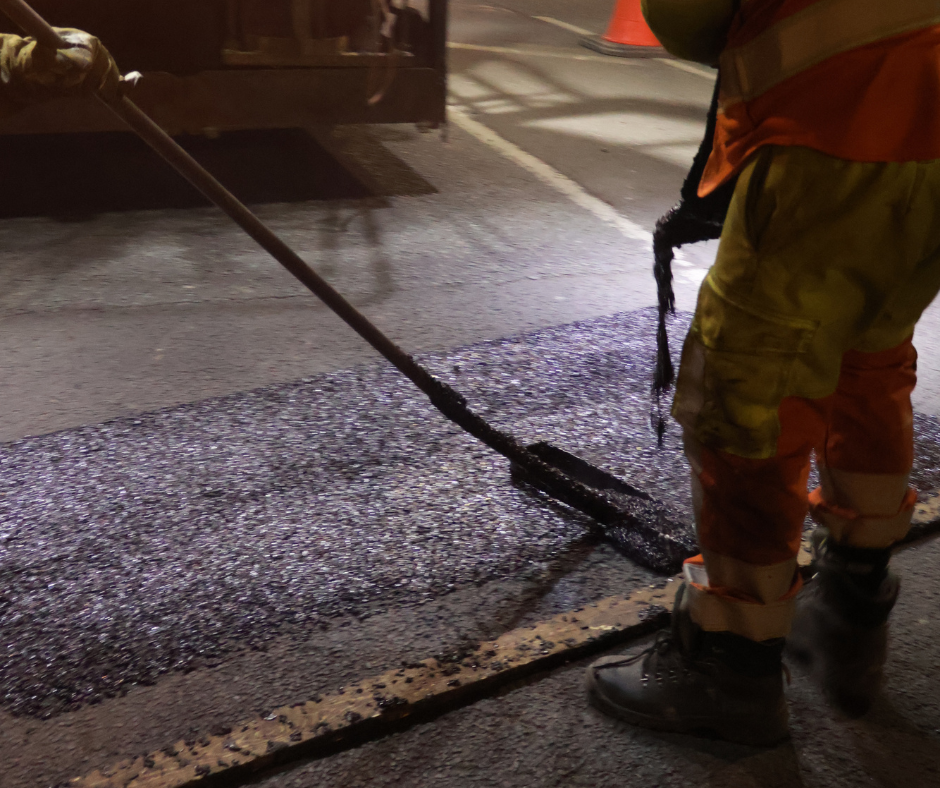
WJ’s surface defect repair team are able to address potholes and damage, stabilising the road structure, while its hydro retexturing process gently removes unwanted binder, restoring the surface’s texture so that the dressing may be applied without the risk of further bitumen bleed failure.
Gerald Byrne, Head of Sales at WJ Group, said:
“If we want to continue to reduce the number of potholes and see better quality roads, preventative maintenance must be carried out consistently. There is growing evidence across the sector that councils adopting this long-term, preventative model are seeing noticeable improvements in road performance.
“Authorities that integrate early-stage surface repairs, timely retexturing and regular surface dressing into their annual programmes are reporting surfaces with fewer defects and a reduction in rapid deterioration following winter weather. With this approach, we will be able to see significant improvements to the condition and resilience of the UK’s road network.”
Because WJ can deliver both services simultaneously, it reduces the need for multiple contractors, minimises disruption, lowers cost and simplifies permitting processes, the company added.
A sustained approach is especially important as surface dressing is most effective when applied at the right point in a road’s life cycle. If the treatment is delayed until deterioration has progressed too far, the opportunity to prevent potholes is lost and more extensive interventions become necessary.
By consistently carrying out preparation and dressing at regular intervals, local authorities can keep networks in better condition for longer and avoid the cycle of decline that leads to costly reactive repairs.
(Picture: WJ Group)