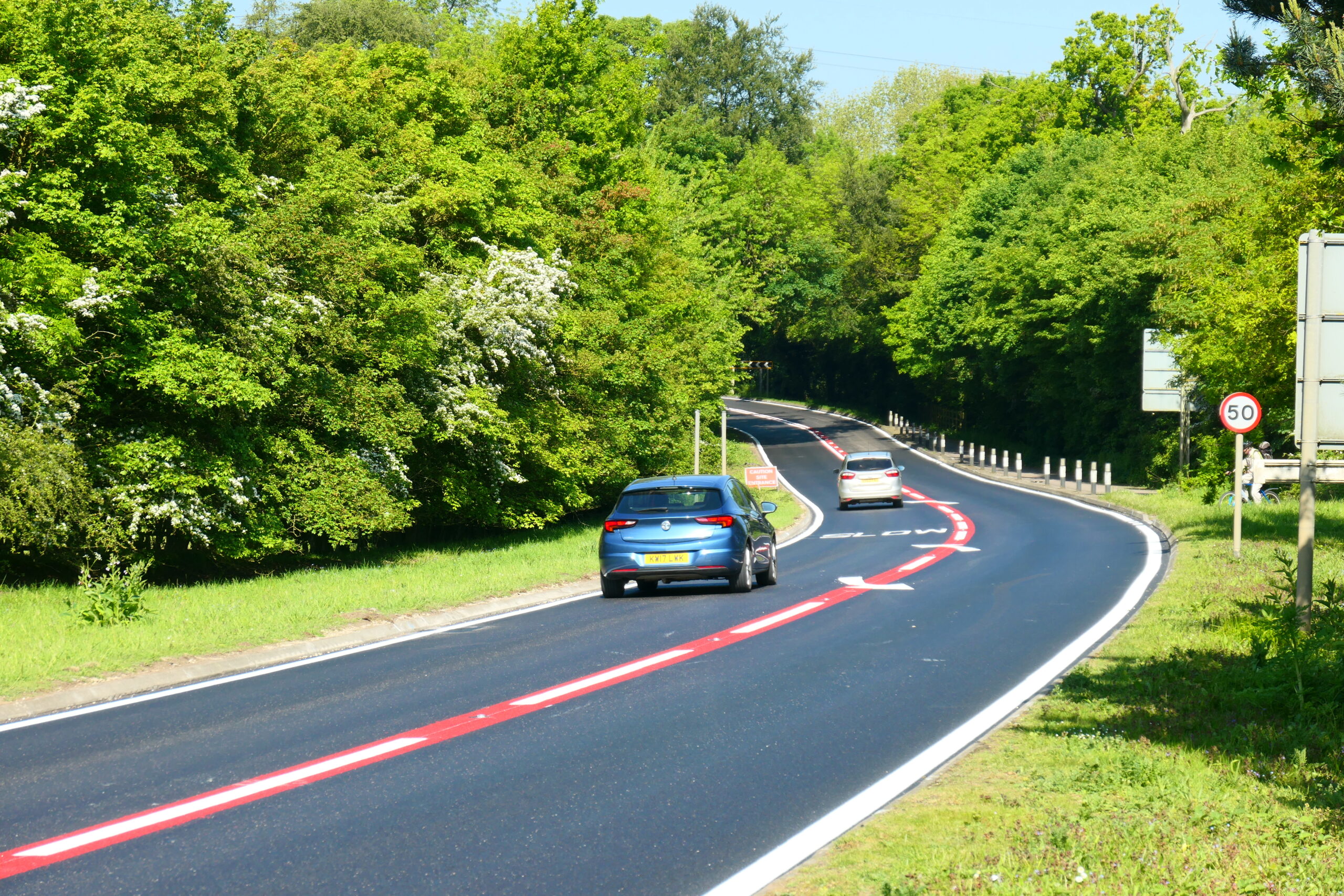
WJ Group is highlighting road markings potential as one of the most effective behavioural road safety interventions available to highway authorities.
Drawing on behavioural psychology and evidence from real world projects, the company says intelligent road marking design can positively influence how people drive and ride, improving safety without the need for major
infrastructure changes.
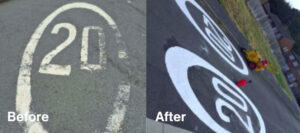
While road markings are often viewed as a way of directing traffic and providing instructions, they also influence how road users perceive the road ahead. Through carefully designed visual cues, markings can encourage safer speeds, improve lane positioning and help drivers and riders respond more effectively to hazards.
Behavioural psychology shows that people naturally react to visual information, often without consciously realising it. On the road, this means markings can shape behaviour by influencing perception rather than relying on enforcement or structural traffic calming measures. Features such as optical speed reduction markings, edge lines and “gateways” encourage road users to adapt their speed and positioning instinctively, making them a cost-effective way of improving safety.
For example, the effectiveness of this approach has been demonstrated through Project PRIME (Perceptual Rider Information for Maximising Expertise and Enjoyment), an initiative created by Professor Alex Stedmon and delivered by Transport Scotland and BEAR Scotland with support from WJ. Developed to improve
motorcycle safety on rural roads, Project PRIME used gateway road markings informed by behavioural psychology to encourage riders to adopt safer positioning and approach bends at more appropriate speeds.
During the three-year phase one trial, more than 32,000 motorcyclists were monitored across 22 locations in the Scottish Highlands. The results showed measurable improvements in rider behaviour, including better positioning through bends, smoother braking and reduced entry speeds. No motorcycle collisions were
recorded at the treated accident cluster locations during the trial, demonstrating how simple, low cost road marking interventions can deliver meaningful safety benefits.
Phase 2 has continued to show significant improvements, with the analysis showing a 61% reduction in annual average motorcycle injury collisions across all trial sites, and a 46% reduction in annual average motorcycle collisions where someone is killed or seriously injured across all trial sites.
Further evidence comes from research by Montella et al , which used a dynamic driving simulator to assess how different systems influenced driver behaviour at tight bends on rural two-lane roads. The study found that perceptual treatments, including coloured transverse strips, dragon’s teeth markings and a coloured median island, produced the strongest effects, reducing speeds both on the approach to and through the bend.
By helping drivers recognise the bend earlier, the treatments also encouraged earlier, more gradual deceleration. Whilst only a simulator, these findings reinforce the potential for markings to prompt safer behaviour through visual perception.
Research from the Road Safety Markings Association’s Safety Between the Lines report, based on a survey of 2,000 UK drivers, found that 73% of motorists feel safer on roads with edge lines. The research also revealed that 23% avoid using certain roads at night at least once a week because of visibility concerns, while one in five (20%) regularly plan routes to avoid roads they believe have inadequate markings.
When drivers feel uncertain, they may hesitate, reduce speed unexpectedly, adopt poorer road positioning or avoid a route altogether. 67% of drivers surveyed said they would be more willing to drive on rural roads at night if edge lines were present, underlining the role clear, well maintained road markings play in improving
confidence as well as safety.
Rob Elsby, Group Marketing Manager at WJ, said: “Road markings are one of the most important ways we communicate with road users, influencing how they interpret the road environment and the decisions they make every time they get behind the wheel or onto a motorcycle.
Project PRIME demonstrated how behavioural science and highway engineering can work together to improve road safety. Combined with wider research showing the impact road markings have on driver confidence, the evidence is clear that effective road markings help shape safer behaviour.
As highway authorities continue to look for effective, value for money solutions, road markings should be recognised as strategic safety assets that support long-term road safety objectives.
As highway authorities continue to balance constrained budgets with ambitious casualty reduction targets, WJ believes greater emphasis should be placed on behavioural road marking design as part of a wider safe system approach. By influencing not only how people drive, but also how confident they feel using the road
network, well designed road markings can reduce risk, improve the driving experience and help authorities make better use of existing infrastructure.”
(Picture: WJ Group)