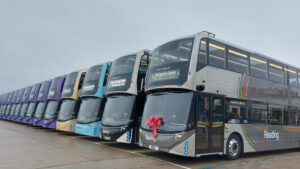
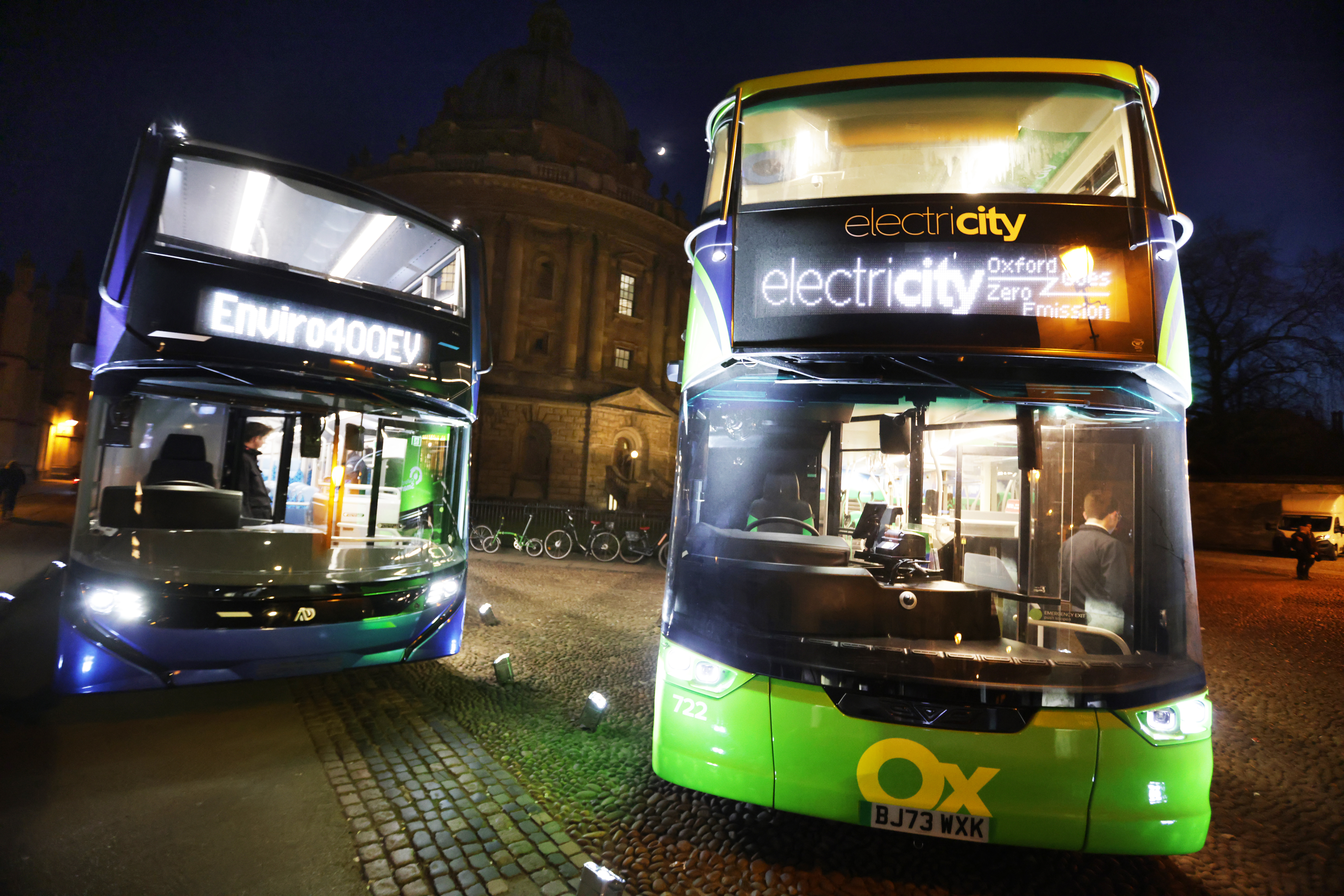
The introduction of 159 electric buses to serve the Oxford area has led to significant reductions in air and noise pollution.
In 2023, a deal worth £82.5 million was agreed between Oxfordshire County Council, the government, Oxford Bus Company and Stagecoach to fund the fleet of new battery electric vehicles. Provisional data suggests that bus fleet electrification has reduced roadside citywide nitrogen dioxide (NO2) concentrations across Oxford by an average of 10 per cent from 2023 to 2024, and up to 24 per cent in areas of high bus traffic such as St Aldates and High Street.
The transition from diesel to electric buses also cut roadside traffic related noise in central Oxford by an average of 5.1 decibels – comparable to the reduction in noise you would experience by moving three times further away from a road.

Councillor Andrew Gant, Oxfordshire County Council’s Cabinet Member for Transport Management, said:
“We are proud and thrilled that we were able to back our ambitions with political and financial capital, alongside our partners, to deliver a safer, cleaner, greener, better county for residents and visitors. This provisional data shows what a difference these electric buses are making to people’s lives already.”
The analysis by the National Institute for Health and Care Research (NIHR) funded Public Health Intervention Responsive Studies Team (Universities of Birmingham, Warwick and Keele), in partnership with the University of Oxford, investigated air and noise pollution changes before, during and after the introduction of battery electric buses in Oxford.
It also explored people’s experiences of introducing and using the new fleet, including key stakeholders, bus passengers, residents and commuters.
Dr Suzanne Bartington, Clinical Associate Professor in Environmental Health at the University of Birmingham, said:
“The transition to electric buses has had a measurable and meaningful impact on air and traffic related noise quality in Oxford. Importantly, we found that people noticed these changes – including less diesel fumes and fewer sleep disturbances, suggesting a real benefit for people’s lives.”
The zero emission bus regional area (ZEBRA) funding scheme is a national initiative contributing to transport decarbonisation and improved bus quality and provision. It has supported the deployment of over 4,000
zero emission buses in England since 2021.
Chris Hanson, Managing Director of Stagecoach West, said:
“The introduction of our 55 electric vehicles in Oxford has been truly transformational. These buses are delivering greener, zero emission journeys right across the city’s network, while also offering a noticeably smoother, quieter and more comfortable experience for our customers.
“The response from passengers has been overwhelmingly positive and, just as importantly, this investment marks a vital step towards our pledge to operate a fully zero emission fleet by 2035.”
(Picture: Ed Nix)