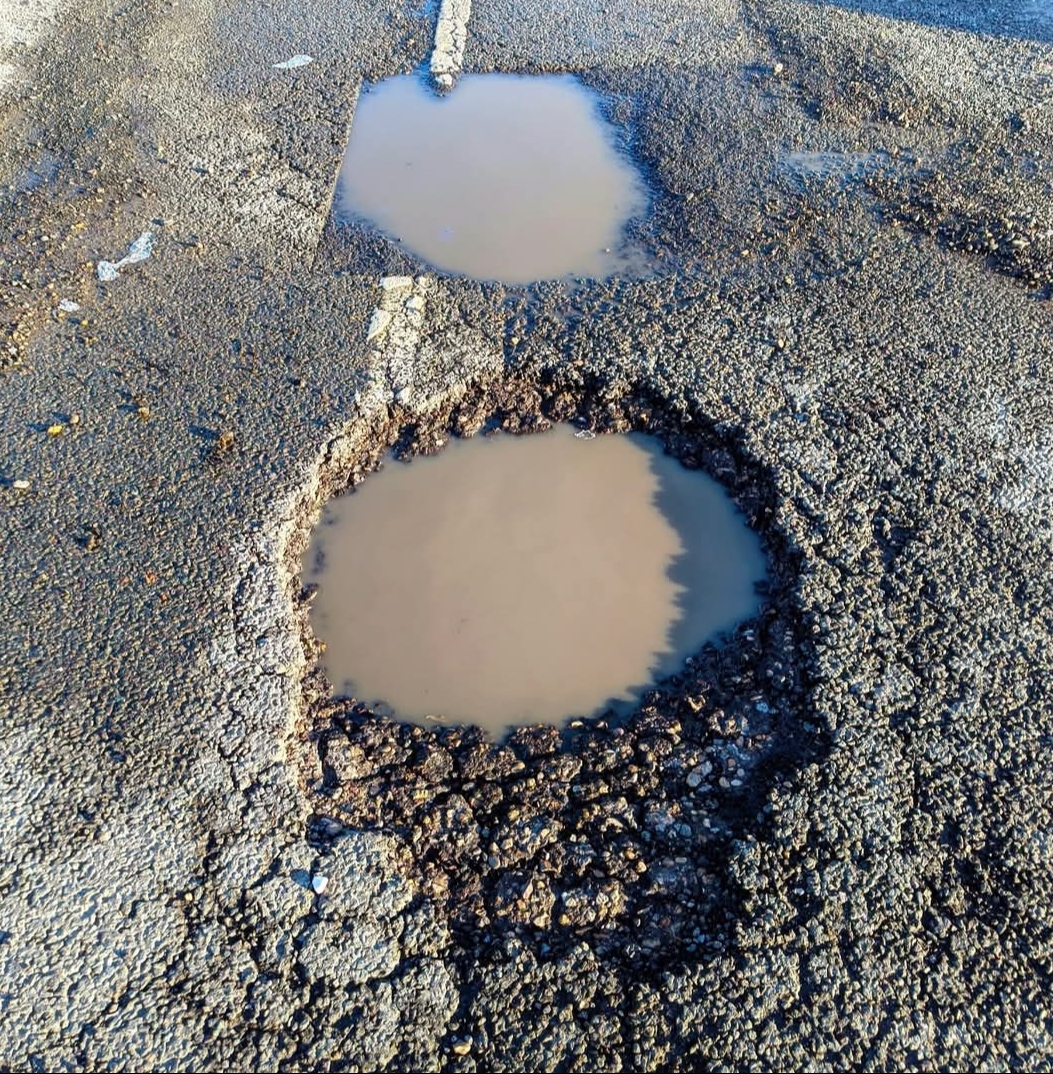
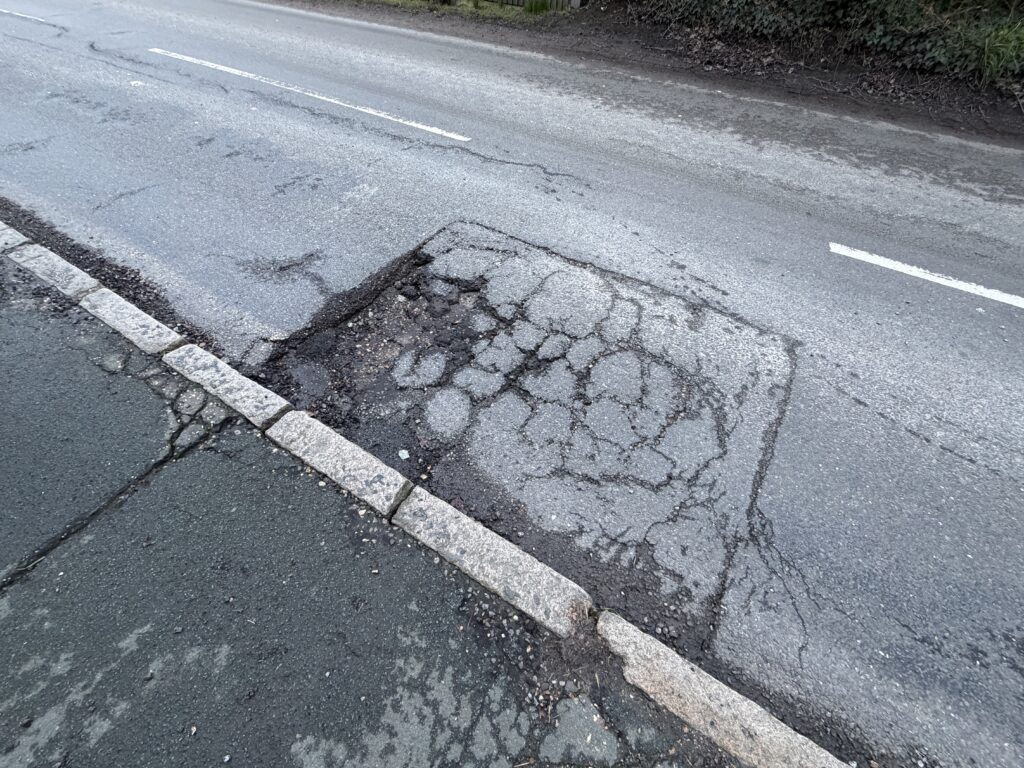
As the UK’s ‘pothole crisis’ seems to worsen on a daily basis, Highways News brings you three stories from around the country that highlight just how deep the problem is and, more to the point, what is being done in attempt to fix it.
A Shropshire MP has said that navigating the county’s roads was like “driving in a third world country” as he raised the state of rural roads in the county in Westminster.
SouStuart Anderson, MP for South Shropshire, secured a Westminster Hall debate on Tuesday to raise the issue of the state of rural roads across the county and beyond, says the Shropshire Star. Speaking to fellow MPs, the MP compared the roads in his constituency to those of the “third world”, adding that constituents had also compared it to “driving on the moon”.

“From Bridgnorth to Bishop’s Castle, and from Broseley to Ludlow, the whole of South Shropshire is suffering from the poor state of the roads. The roads around Ditton Priors, in particular, are impassable in multiple areas,” he said.
He added: “The roads are actually damaging tractor tyres in that area. It is a major issue.”=
He also criticised the Lib Dem-run Shropshire Council, saying: “We are finding that Shropshire council is putting cones in the potholes, because they are that big, or putting up traffic lights, and some of the traffic lights are not working.
Meanwhile in Warwickshire Prolonged wet weather has seen the county request 4,962 fixes across the first two months of this year, almost triple the 1,678 raised across the same period in 2025, says Warwickshire World.
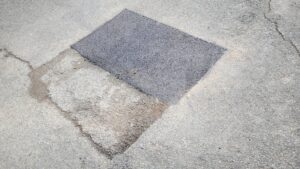
Last week the county’s Director of Highways Richard Fenwic told the communities overview and scrutiny committee – a panel of councillors that oversees and makes recommendations on areas of the council’s work – that for the sake of speed and hazard mitigation more than half of current repairs involve little more than a dollop of tarmac for the time being, acknowledging that some break away within a matter of days.
“Doing it right first time is best for value for money and means fewer revisits but the permanent saw-cut fixes take significantly longer to do,” he said.
“We have to choose between getting there in time to try to save people’s wheels from being broken or worse, even though we know we might have to go back, or leaving the hole there for longer with those gangs (doing the spot fixes) taking at least twice as long to do permanent repairs.”
The latest annual report on pothole damage by Kwik Fit, published this week, suggests that the cost of repairs has reached a new high, with the nation’s drivers shelling out a total of £1.8bn in the last twelve months.what is
Kwik Fit has monitored the cost of pothole repairs for its Pothole Impact Tracker (PIT) report since 2013. The company’s latest research has found that in the last twelve months, 12.8 million drivers have suffered damage to their car after hitting potholes, facing an average repair bill of £137.40.
Previously the highest annual total bill was in 2022, when drivers paid out a total of £1.7bn. The PIT report then found the total cost of damage dropped in 2023-24, only to rise again in 2025 (£1.7bn) and now reach a new high this year.
The condition of the roads has led to many drivers changing their car buying plans. Kwik Fit’s research found that 2.5 million drivers said their decision to buy a bigger, more robust car or an SUV was influenced by the condition of the roads in their area. In addition, 5% of drivers have changed the size of their wheels/tyres to ones better able to cope with pothole impacts.
The most commonly required repairs were to tyres (56% of instances of damage), wheels (32%) and suspension components (24%). While many drivers were able to limp to a garage or home, one in eight drivers (12%) suffering pothole damage said the impact was so severe that their car had to be recovered by a breakdown vehicle.
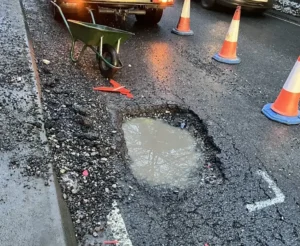
In contrast, a third (34%) of drivers whose cars were damaged by potholes say the issue only became apparent a few days after the impact. It’s not only the resulting damage which can be hidden – often the potential danger is obscured in the first place. Over five million drivers said they damaged their car after hitting a pothole they thought was just a puddle.
Dan Joyce, operations director at Kwik Fit, says:
“Our annual PIT report shows that the situation is the worst it has been since we started monitoring the cost of damage. The fact that many drivers are changing their decisions on which type of car to buy based on their local road surface shows how important this issue is.
“Drivers don’t necessarily need to change their car or wheels, but one simple thing we urge all drivers to do is to ensure their tyres are at the correct pressure. Tyre and wheels obviously take the brunt of the impact and but it’s easy to forget that the air inside the tyre plays a crucial role in cushioning the force from hitting a pothole. It’s particularly important with the lower profile tyres popular on many modern vehicles as they have a smaller volume of air inside than those with bigger sidewalls.”
(Pictures: Lee Hasler’ Paul Hutton/Highways News)