The Managing Director of enforcement technology company Jenoptik UK is warning that England’s third Road Investment Strategy (RIS3) will only deliver its potential to improve the maintenance and optimisation of the existing Strategic Road Network if enforcement technology is fully embedded into the programme.
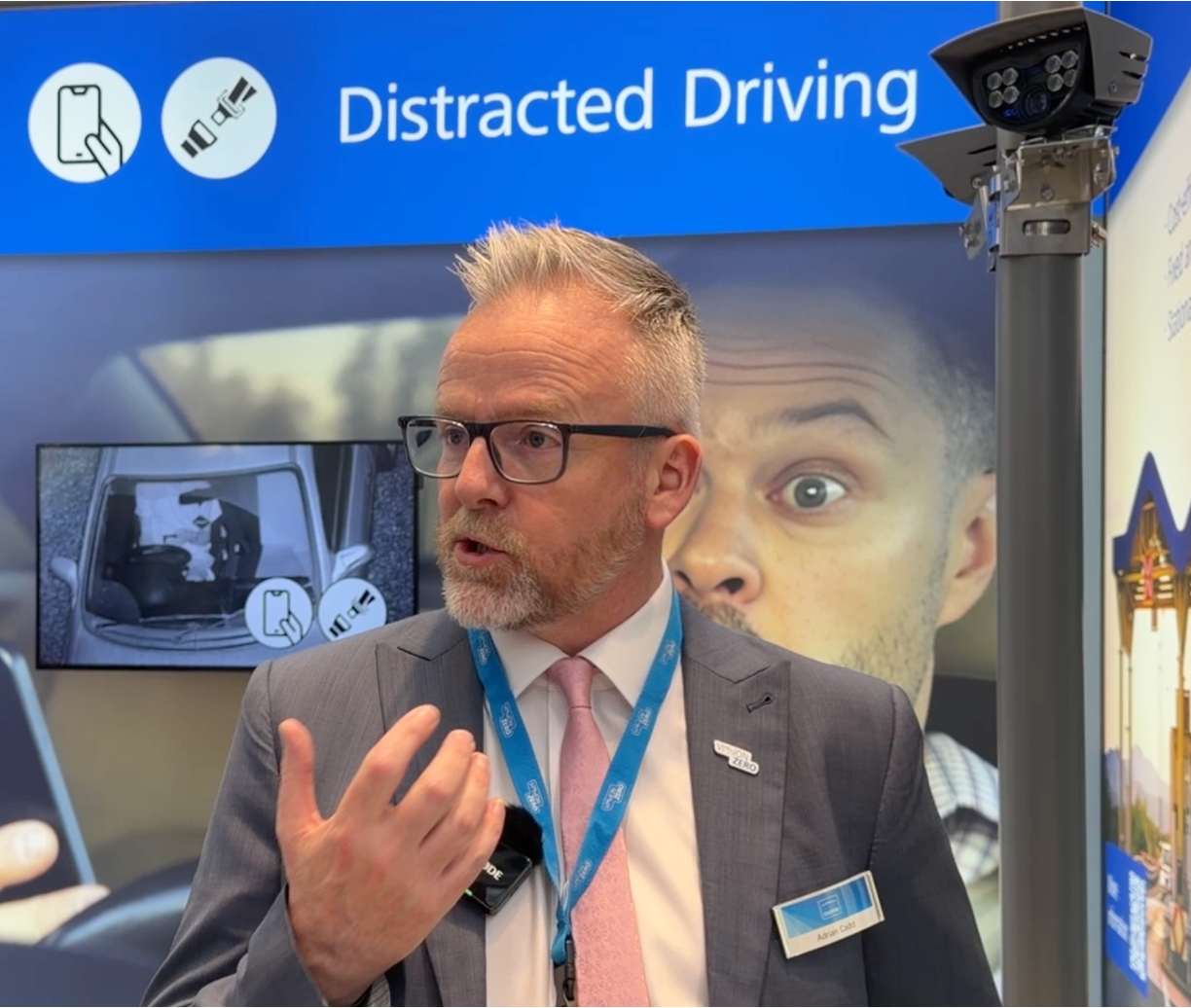
Writing on LinkedIn, Adrian Cadd (pictured speaking at Intertraffic Amsterdam) said the Government’s £27 billion RIS3 package marked “a clear pivot towards maintaining, renewing and optimising the roads we already have”, highlighting the £8.4 billion allocated to renewals.
However, he argued that infrastructure investment alone would not be enough to improve safety outcomes.

“Infrastructure alone doesn’t cause collisions – behaviour does,” he wrote.
In a personal reflection he writes about the real human cost of bad driving: “In my previous life as a Police Officer, I’ve been that person; knocking on a family’s door in the early hours to deliver dreadful news that a loved-one or relative has died in a collision,” he writes. “Some of those traumatic experiences live with me today, and I am positive they are a constantly in the minds of the bereaved families forevermore,” and therefore “One of the most encouraging aspects of RIS3 is its commitment to a technology-enabled road network,”, adding that enforcement technology should become “part of that ecosystem, not an afterthought”.
His article points to research showing that average speed enforcement can cut casualties by around 50%, while also improving compliance over the long term.
Jenoptik is now deploying systems capable of identifying drivers using mobile phones or failing to wear seatbelts, broadening enforcement beyond speed offences.
“Illegal mobile phone use behind the wheel is one of the fastest-growing risks on our roads,” Mr Cadd wrote. “Technology that can identify and deter this behaviour at scale has the potential to drive significant change.”
He writes how RIS3 creates an opportunity to integrate multi-purpose roadside technology as ageing infrastructure is renewed across the network, and rather than relying on standalone systems, he argues for “multi-functional platforms that can address multiple offences simultaneously”, improving safety while also delivering better value for money.
The article also linked road safety technology to wider economic performance, suggesting that reducing incidents and disruption would support freight movements and journey reliability.
“Better compliance doesn’t just save lives,” he wrote. “It keeps traffic moving, reduces disruption, and supports productivity.”
He concluded that enforcement technology should now be viewed as a core part of national transport infrastructure: “The question is no longer whether the technology works,” he said. “It’s whether we choose to use it at scale.”
Read the whole post on LinkedIn here.
(Picture – Highways News)