Shropshire Council has voted to remove the controversial Castle Foregate cycle lane and floating bus stop at the Shrewsbury Station Gyratory, marking a significant reversal of one of the most contentious transport schemes delivered under the Big Town Plan (BTP).
The decision follows sustained criticism from residents, local businesses, disability campaigners, public transport operators and emergency services. Council officers are currently calculating the costs of tearing up the newly built infrastructure before the Cabinet votes on which final design to implement. The reversal of the Castle Foregate road layout carries significant financial consequences and has heavily disrupted the local economy.
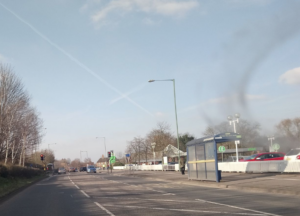
Two lanes of traffic were cut down to one, with the second lane replaced by a miniature section of cycle lane along with one of the world’s smallest zebra crossings. The bus stop was painted over the single car lane, meaning traffic would come to a standstill any time a bus stops – with passengers getting on and off stepping across a cycle lane. Within a month, Arriva Midlands said it would not stop at the bus stop due to safety concerns, with Shropshire Council saying it felt “let down” by the contractors that built it.
This was the first major infrastructure project delivered under the Big Town Plan (BTP) from Levelling Up grant. The £3.8 million redesign of the station gyratory at Castle Foregate in Shrewsbury has also drawn attention to compliance with national design standards. The scheme includes a floating bus stop island measuring approximately 1.1 metres in width, significantly below Department for Transport (DfT) guidance.
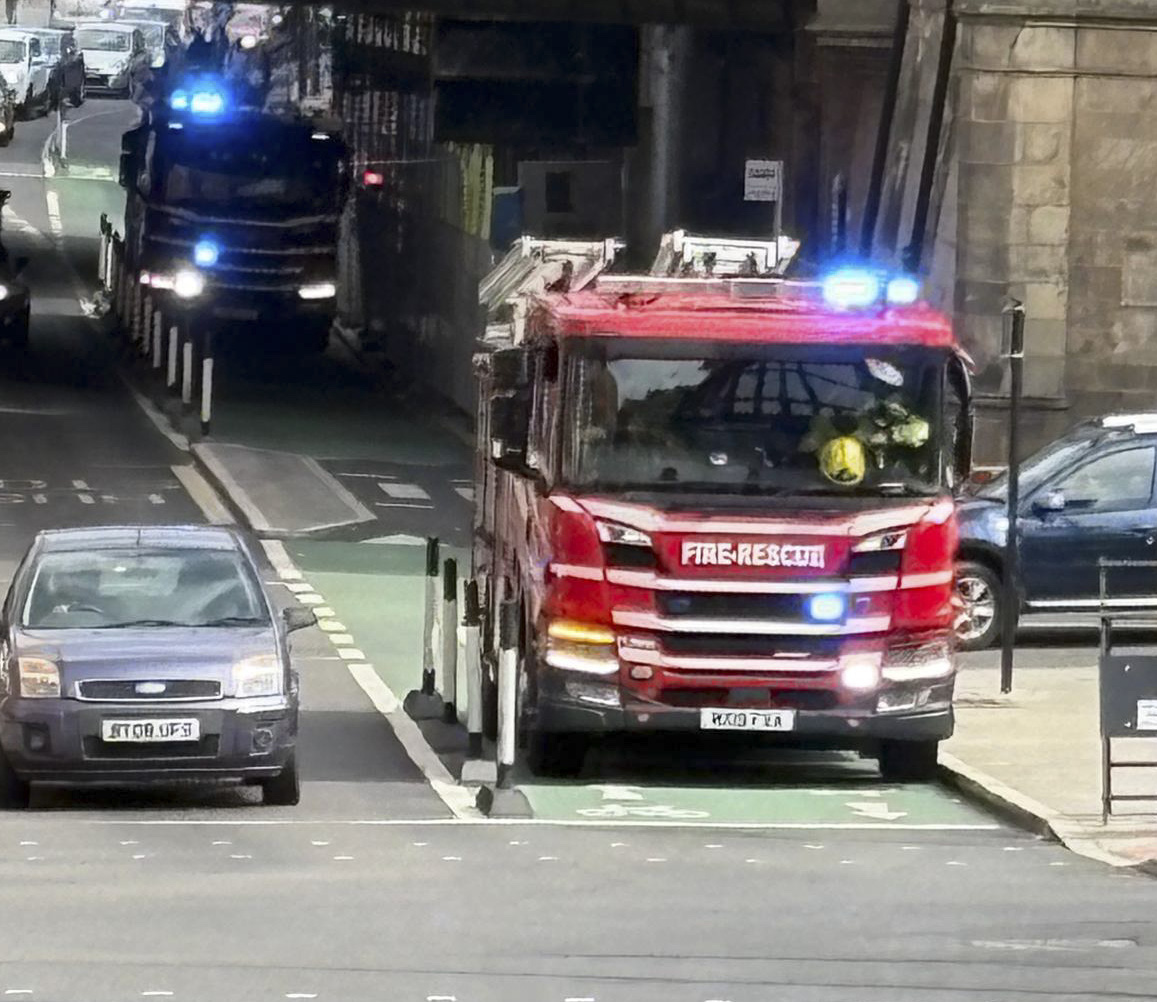
During the debate, Cabinet Member Cllr Rob Wilson argued that the emergency services’ use of the cycle lane had actually enhanced their ability to respond to incidents. However, when challenged on the safety implications of relying on emergency vehicles to use a cycle lane, he was unable to provide any reassurance beyond stating that liability for any resulting issues would rest with the emergency services. This response raised further concerns about both the safety of the arrangement and Shropshire Council’s willingness to take responsibility for its consequences.
In April 2025, the Department for Transport issued guidance advising against the use of this design type. The bus stop was installed in October 2025, four months after the current administration confirmed the North West Road Relief was dead and the traffic assumptions underpinning the scheme no longer held.
The chair of Shropshire Fire and Rescue Authority told a council scrutiny committee the situation was “putting lives and property at risk.”
Fire engines were documented using the cycle lane to bypass gridlock caused by the redesign and are still struggling to traverse the cycle lane, which is barely wide enough requiring them to proceed at a slow speed and drive over the floating bus stop which was not engineered for such abuse and will rapidly degrade. A Stage 3 Road Safety Audit was received by the council in March 2026 and has not been published.
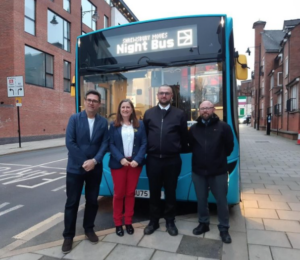
(Picture: Shrewsbury Reform UK)