A new survey of over 1500 British adults has suggested that while public awareness of robotaxis is high, attitudes remain cautious and a clear majority want government and regulators to act before autonomous taxi services are allowed to scale up.
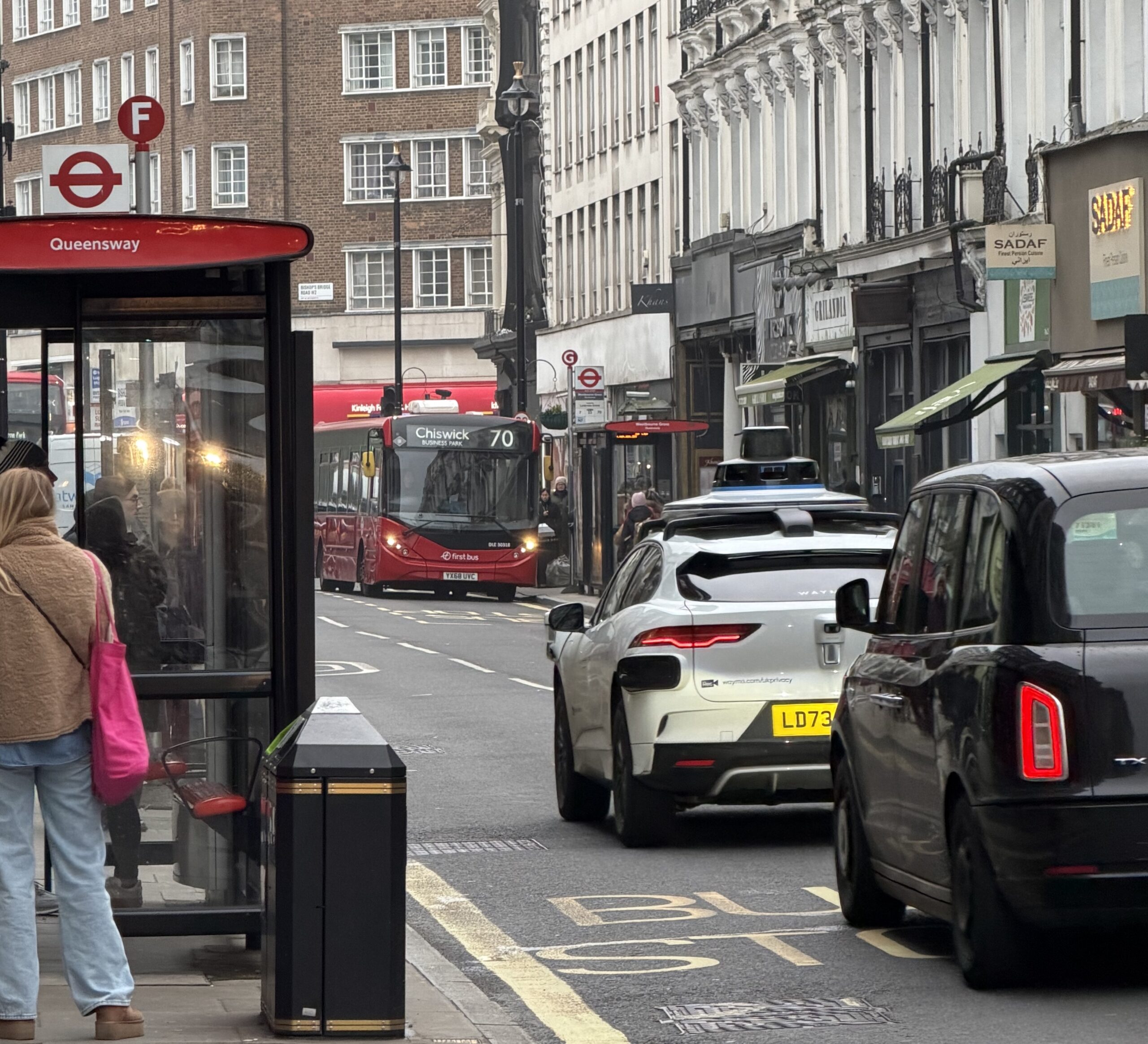
The findings come as several companies, including Wayve and Waymo, prepare to launch driverless services in London this year.
A new paper by Fortia Insight’s Director of Transport Economics John Siraut draws on BMG Research’s March 2026 national omnibus survey of 1540 over-16-year-olds in Great Britain. It explored awareness of robotaxis, expected effects on transport, roads and society, views on accessibility requirements and attitudes to flexible pricing. Where relevant, findings are broken down by gender, age and region. Both Fortia Insight and BMG Research are RSK Group companies.

BMG’s Simon Wood said:
“Most people in Britain have now heard of robotaxis, but hearing of something and understanding its consequences are very different things. Our survey suggests the public is still making up its mind – and that decisions taken now by government will shape whether this technology is welcomed or resisted.”
The survey found that robotaxis have entered public consciousness in Britain. Some 25% of respondents said they were “very knowledgeable” or “somewhat knowledgeable” about the technology (R1), while 43% had heard of them but knew little and only 33% said they knew nothing at all.
Awareness was markedly higher among men than women – a pattern consistent with broader research on attitudes to autonomous vehicles – and among younger age groups, with knowledge declining noticeably among those aged over 35.
London is on the brink of the biggest shake‑up of its taxi and private‑hire market in a generation but new national polling shows the public has concerns over pricing and accessibility.
The survey highlights the public’s concern about accessibility (R4) and pricing (R5). The survey delivers its most decisive verdict on accessibility: 70.2% of adults say robotaxis must be fully accessible, including wheelchair ramps and audio/visual navigation support. Only 11.5% consider accessibility unimportant. This mandate is consistent across every age group, from young adults to older Londoners.
The survey also shows that 41.8% of the public oppose flexible, surge‑style pricing, with only 18.2% in support, a net support rating of -23.6%. However, there is a clear generational difference, with older age groups strongly opposed while Gen Z is slightly in favour.
The paper’s author John Siraut added:
“The public’s instinct that robotaxis will worsen congestion and pull passengers off buses deserves to be taken seriously. Evidence from the United States shows these are not irrational fears. New York is a cautionary tale: ride-hailing apps were once expected to reduce car use but instead they have grown the combined taxi/private hire market by around 50%, increasing congestion. Policymakers need to get ahead of this.”
(Picture: Olga Gonzalez)