Road safety experts have told MPs that it should be made “physically impossible” for vehicles to break the speed limit and that every new driver should be forced to fit a dashcam and monitoring technology for their first five years on the road, reports Motorcycle News.
The suggestions came during a Transport Committee evidence session examining the Government’s road safety strategy, with a panel of four witnesses focusing on speed as a road safety issue.
Among the most far-reaching ideas put to the committee was mandatory, non-overridable Intelligent Speed Assistance (ISA) that reads the speed limit and prevents a vehicle from exceeding it.
Dr Rob Torok, a pre-hospital critical care doctor with Dorset and Somerset Air Ambulance, told MPs that new technology should be embraced.
“It should be physically impossible, technologically impossible for a vehicle to exceed a legal speed limit on the roads. We have the technical capability, we have the infrastructure, and where there are glitches, they can be ironed out,” he said.
He was clear that the version of ISA already being legislated for does not go far enough, because drivers can currently switch it off.
“Only proper ISA that is absolutely compulsory, mandatory. You can’t override it,” he said. Responding to points made about EU vehicle regulations, he added: “The ISA that is legislated for, I understand, is not absolutely compulsory and you can turn it off and it doesn’t absolutely adhere to the speed limits on the road.”
Lilli Matson, Chief Safety, Health and Environment Officer for Transport for London, confirmed the technology is already being used on London’s buses. Some 3000 of the capital’s 9000 buses have been fitted with mandatory ISA that cannot be overridden, and the system is also required across TfL’s own vehicle fleet. She said a national requirement would be possible.
Phil Jones, chair of Phil Jones Associates transport consultancy and former head of the Welsh Government’s 20mph task force, backed mandatory fitment but warned there is currently “a credibility problem” because in-car systems do not always read the correct limit.
He said the Government must make digital speed limit data available so that in-car systems can rely on it, otherwise there will be a public backlash. He added that ISA removes one of the main arguments used against lower speed limits – the difficulty of enforcement.
Adrian Berendt, a director at 20’s Plenty for Us, went further still, telling MPs it was “completely bizarre that any car is allowed to be sold which can do more than 70”.
Torok also called for a shift towards zero tolerance of drivers who wilfully exceed the limit. He criticised the current position, in which ACPO guidance means enforcement typically only begins at 35mph in a 30mph zone.
“The risk of 35mph, rather than 30mph, is an increase in fatalities of 90% and an increase in severe injuries of 62%.” He argued that “the penalties we see that only kick in at 35 do not relate to those” risks, adding that people “laugh about it and say, ‘Oh, I got sent on an enforcement campaign’.”
The panel repeatedly returned to a 20mph default limit on residential roads as the single most effective change available, citing reductions in people killed and seriously injured of around 34% in London over a ten-year period, with committee members also noting a broadly similar reduction in Edinburgh following the introduction of 20mph limits there.
The committee’s inquiry into the Government’s road safety strategy will resume its oral evidence sessions in the autumn.
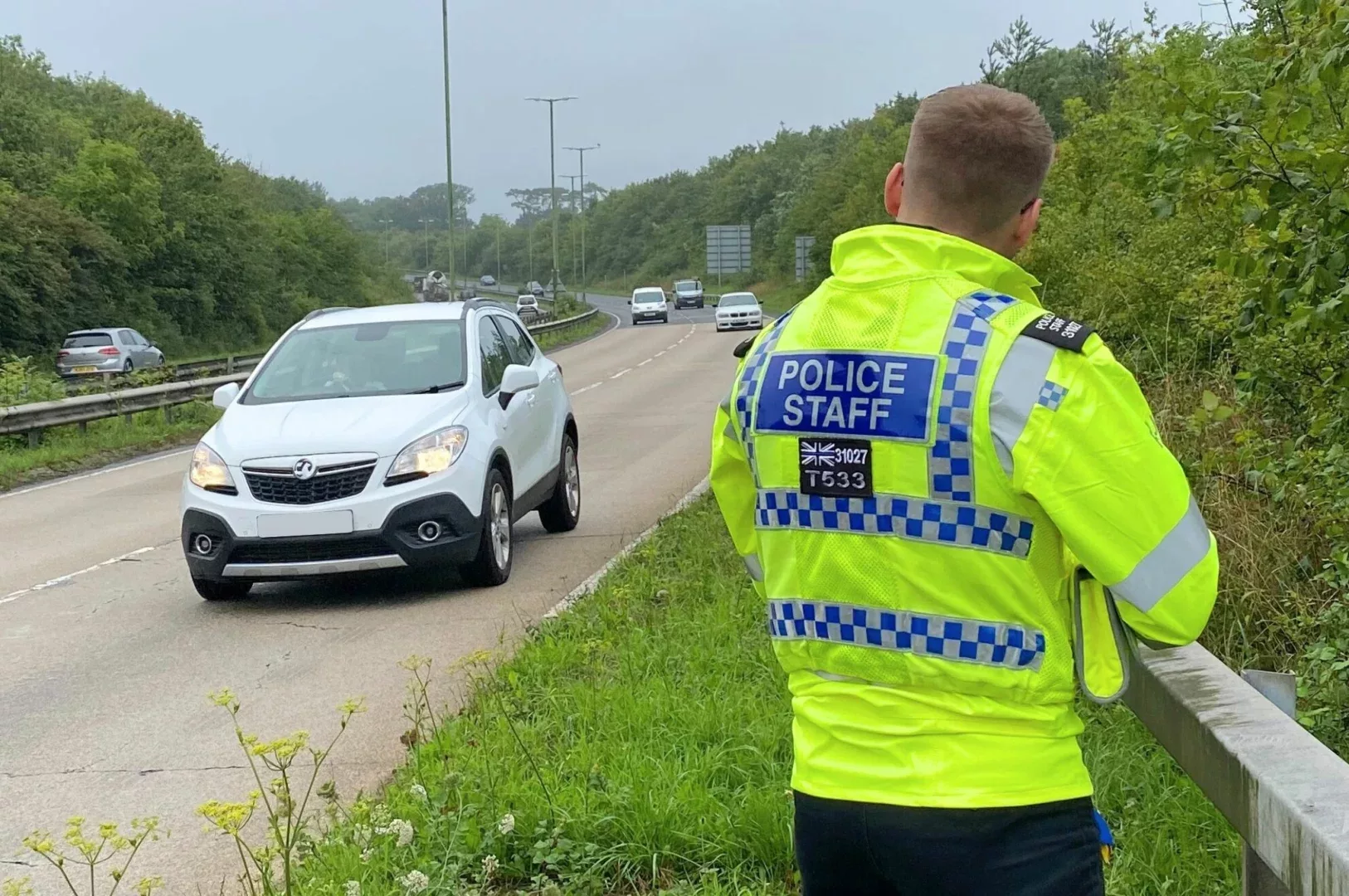
(Picture: Vison Zero South West)