The role of digitally managed kerbside space in supporting the growth of autonomous vehicles has been explored in a new article in Parking Review by Grid Smarter Cities founder Neil Herron.
The article, entitled Beyond the vehicle – Why the future of autonomous mobility depends on the kerbside, argues that discussion around connected and automated vehicles needs to extend beyond whether vehicles can safely navigate roads to how towns and cities will manage them once they arrive at the kerb.
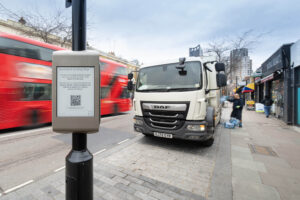
Grid Smarter Cities’ solution works by letting delivery drivers book a slot at the kerbside to remove the “free for all” where vehicles circle an area hunting for a space. Mr Herron says that while driving is a vehicle capability, stopping is ultimately a permission controlled by a city or highway authority.

As automated vehicles become part of everyday transport, cities will face an entirely new level of demand for temporary access to limited kerbside space,” he argues. “Think passenger pick-ups and drop-offs, vehicle staging, charging access, freight deliveries, servicing activity and accessibility requirements. All of these activities compete for exactly the same finite resource. Without intelligent management, the challenge quickly becomes one of coordination rather than simply compliance. Cities shouldn’t look to manage vehicles – they should ensure they manage outcomes.”
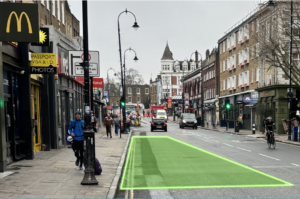
The article builds on Grid Smarter Cities’ work on digitally managed kerbside access, including its Bookable Loading Bays project in Southwark.
Under the approach, freight operators are able to reserve designated loading locations before starting their journey, giving them certainty over where and when they can stop while allowing the local authority to retain control of the kerbside asset.
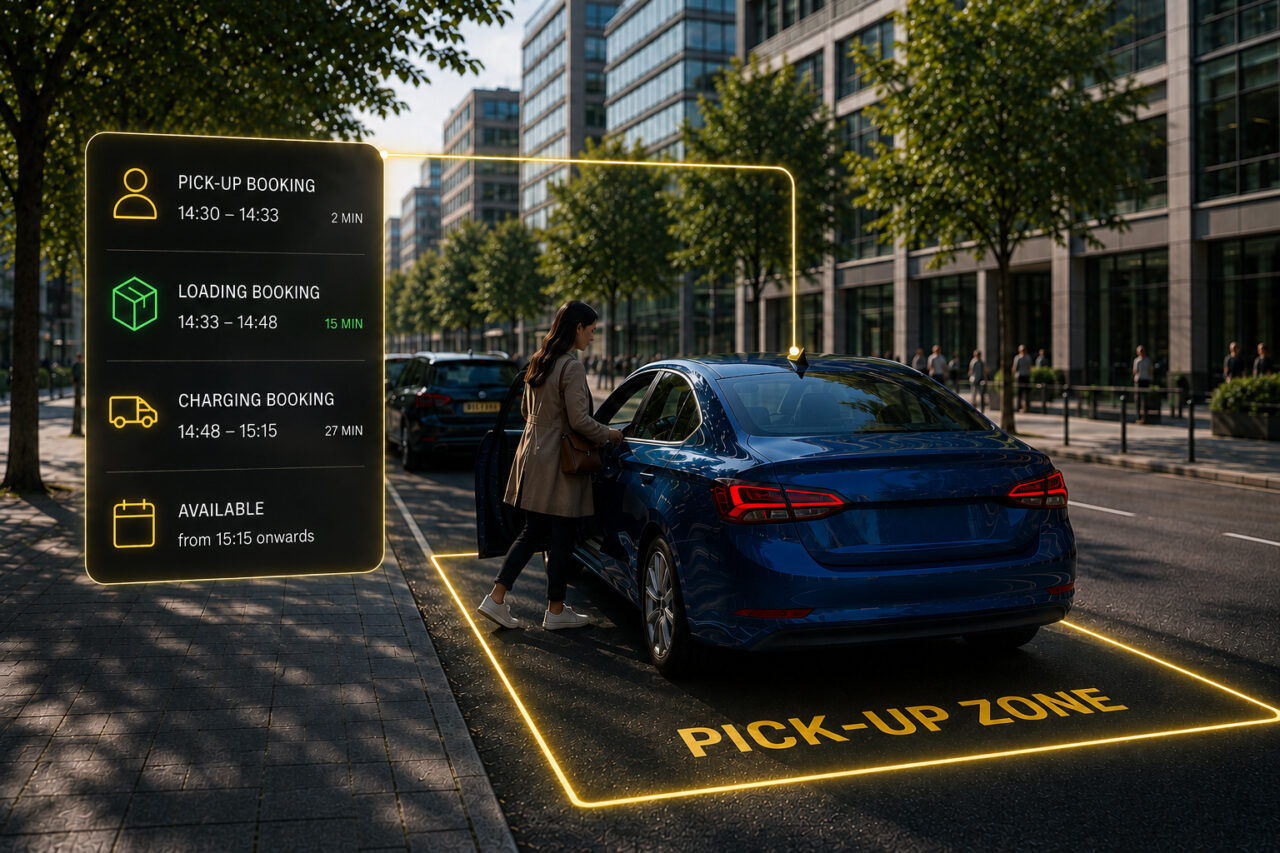
Mr Herron suggests the same principle could eventually be applied to autonomous passenger services, with vehicles requesting permission to use a suitable section of kerb rather than simply stopping wherever a passenger asks to be collected.
“Imagine a busy town centre during the afternoon peak: hundreds of autonomous vehicles are simultaneously receiving journey requests, some needing to collect passengers and others dropping people outside shops, hospitals or railway stations,” he suggests. “Some require short waiting periods before receiving another booking. Others may need access to charging infrastructure. If every vehicle independently decides where to stop, congestion is almost inevitable. The technology inside each vehicle may be operating perfectly, but collectively they create friction within the transport network. This is not simply a vehicle problem. It is an orchestration problem.”
In the article, Mr Herron – who won the Lifetime Achievement Award at last month’s British Parking Awards – explains how a digital platform could then take account of factors including traffic conditions, local priorities, accessibility requirements and competing demand before allocating a location.
He says this would allow authorities to move from largely static kerbside regulation towards more dynamic management, with different permissions potentially applying according to the time of day, the needs of individual passengers or designated servicing periods.
The feature also references Grid Smarter Cities’ work on Virtual Loading Bays, which are designed to allow authorities to introduce loading locations digitally without new street furniture, road markings or civil engineering.
It additionally highlights research with Durham University into optimisation techniques that could dynamically reschedule kerbside access when delays occur.
Mr Herron argues that these developments are building blocks towards a future in which local authorities could be required to coordinate much larger numbers of passenger pick-ups, deliveries, charging requests and vehicle staging movements.
He writes that digital infrastructure would not remove control from councils, but could instead give them additional tools to apply their policies dynamically while continuing to determine priorities and how public space is used.
The article concludes that autonomous vehicles alone will not transform towns and cities, and that the wider challenge will be developing a connected system capable of coordinating vehicles, infrastructure, regulation and the kerbside.
Mr Herron says: “Parking is no longer simply about enforcing restrictions. It is about becoming an integral part of how cities orchestrate movement.”
The full feature appears in Parking Review, pages 24 and 25.
(Picture – Grid Smarter Cities)