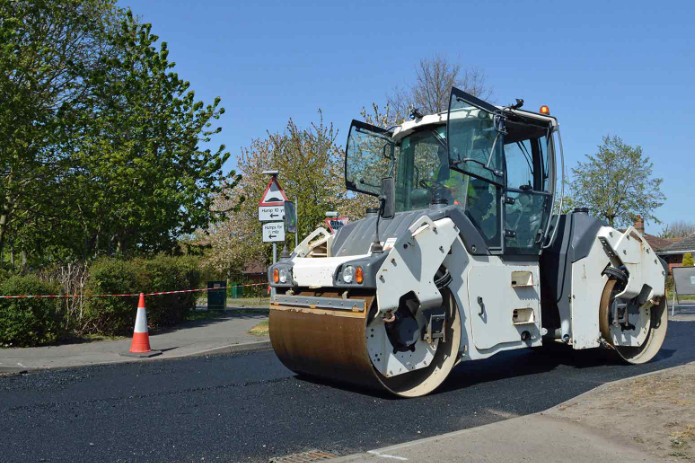
Lincolnshire County Council’s Strategic Route Surfacing (SRS) programme has major road improvement schemes taking place to keep some of Lincolnshire’s busiest and most important routes safe, reliable and in good condition.
The programme focuses on maintaining the county’s key strategic roads, helping improve journey quality for residents, businesses and visitors while reducing the need for more costly and disruptive repairs in the future. Unlike routine road maintenance, this investment is targeted at Lincolnshire’s busiest and most important routes, which connect communities across the county and provide vital links for tourism, businesses and freight, helping to keep Lincolnshire accessible.
The first of this year’s major road reconstruction projects, to the A17 in Bicker, came to a successful end in mid-July.

Cllr David East, executive member for highways, said:
“Our Strategic Route Surfacing programme represents a significant investment in Lincolnshire’s transport network, and it’s great to see so many schemes now progressing across the county. These are some of our busiest and most important roads. They carry high volumes of traffic every day and connect people to work, schools, healthcare, shops and leisure facilities, while also providing vital links for businesses transporting goods around the county and beyond.
“By investing in these roads now, we’re protecting taxpayers’ money by reducing the need for more expensive emergency repairs in the future. We’re also helping to improve journey reliability, support the local economy and keep communities connected.
However, behind every Strategic Route Surfacing scheme is the expertise of Lincs Laboratory, whose testing and analysis play a vital role in ensuring every road is rebuilt to the highest standard.
Before construction begins, the laboratory analyses existing road materials to help engineers design the most appropriate treatment for each site. During and after construction, the team carries out extensive quality assurance testing, including asphalt sampling, core testing, ride quality assessments and texture depth measurements to confirm the finished road meets the required specification.
This evidence-led approach helps ensure each scheme delivers a safer, longer-lasting road surface while protecting taxpayers’ investment by reducing the need for future maintenance.
Sam Edwards, head of highways and economic infrastructure at Lincolnshire County Council, said:
“Lincs Laboratory is a hugely important part of our Strategic Route Surfacing programme, even though much of its work takes place behind the scenes.
“Their testing and technical expertise give us confidence that every scheme is being built to the highest standards. From helping determine the right treatment before work starts to checking the quality of the finished road, they’re providing the evidence that ensures we’re delivering durable, reliable roads and the best possible value for taxpayers’ money.”
(Picture: Lincolnshire County Council)