A Lower Thames Crossing Skills Taskforce has been launched to help develop the green skills needed to meet the project’s ambitious low-carbon targets and support the construction industry’s drive toward net-zero, with a focus on new jobs, skills and business opportunities for the local community.
As well as helping the project to tackle local and industry skills shortages, with an estimated 35,000 construction sector vacancies across the country, the taskforce will also help shape the new generation of skills that are needed to deliver the Lower Thames Crossing and support the move to decarbonise the UK’s construction industry.
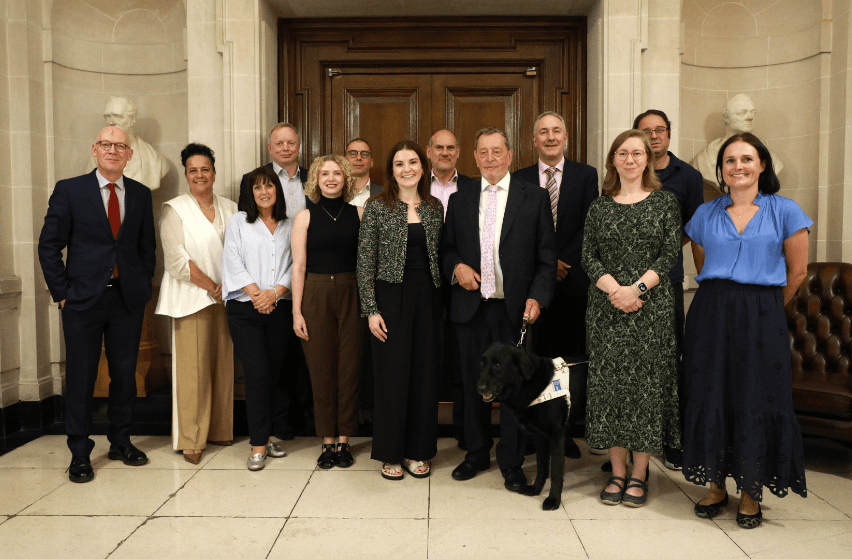
Chaired by Lord Blunkett (pictured, fifth right), the Skills Taskforce will help the project meet its ambitions by providing advice and direction, embedding a culture of transparency, and challenging it on targets and progress. The group includes Jen Craft, MP for Thurrock, Dr Lauren Sullivan, MP for Gravesham, Cllr Lynn Worrall, Leader of Thurrock, Cllr John Burden, Leader of Gravesham Council, as well as representatives from local education providers, business groups and trade unions.
The project’s updated Skills Strategy outlines its skills targets including the number of graduates, apprentices, and work experience placements, as well as the number of training opportunities and hours pledged to support local teachers and students. The strategy sets out how priority groups, including prison leavers, the long-term unemployed and women returning to work, will be given support to develop the necessary skills and access opportunities for jobs.
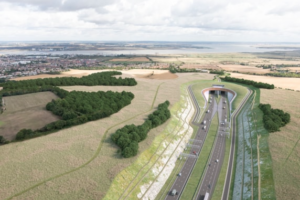
The construction industry is historically a major contributor to carbon emissions, due to its use of high carbon materials and fuels such as diesel, concrete and steel. The Lower Thames Crossing has been designated a Pathfinder project that is exploring and scaling-up low-carbon construction methods and materials. Its plans include buying British transport’s largest ever volume of green hydrogen to help it be diesel free by 2027, and kick starting the highly anticipated development of a hydrogen ecosystem in the Thames Estuary.
The project will create local jobs by employing at least 45% of the workforce from within 20 miles of the route and at least 20% from the most impacted boroughs, and will spend at least £800m with SMEs which equates to at least £1 in every £3 of the construction budget. The project plans to open Skills Hubs in areas along the new route, that will offer training and mentoring to help local people access new and better paid jobs on their doorstep. A pilot-scheme delivered with Gallagher Group and Flannery Plant Hire, near Maidstone in Kent, last year led to every participant successfully being employed within the construction industry.
Lord Blunkett, Chair of the Lower Thames Crossing Skills Taskforce, said:
“Major infrastructure projects like the Lower Thames Crossing aren’t just about what we build. They have the power to transform lives by providing meaningful, long-term opportunities for people from all walks of life. I’m honoured to serve as Skills Advisor to the project and to chair the Skills Taskforce. This independent group, made up of education leaders, trade unions, industry experts, MPs, and Council leaders, will hold the project to account, test progress, and challenge the project to go further.”
(Pic: National Highways)