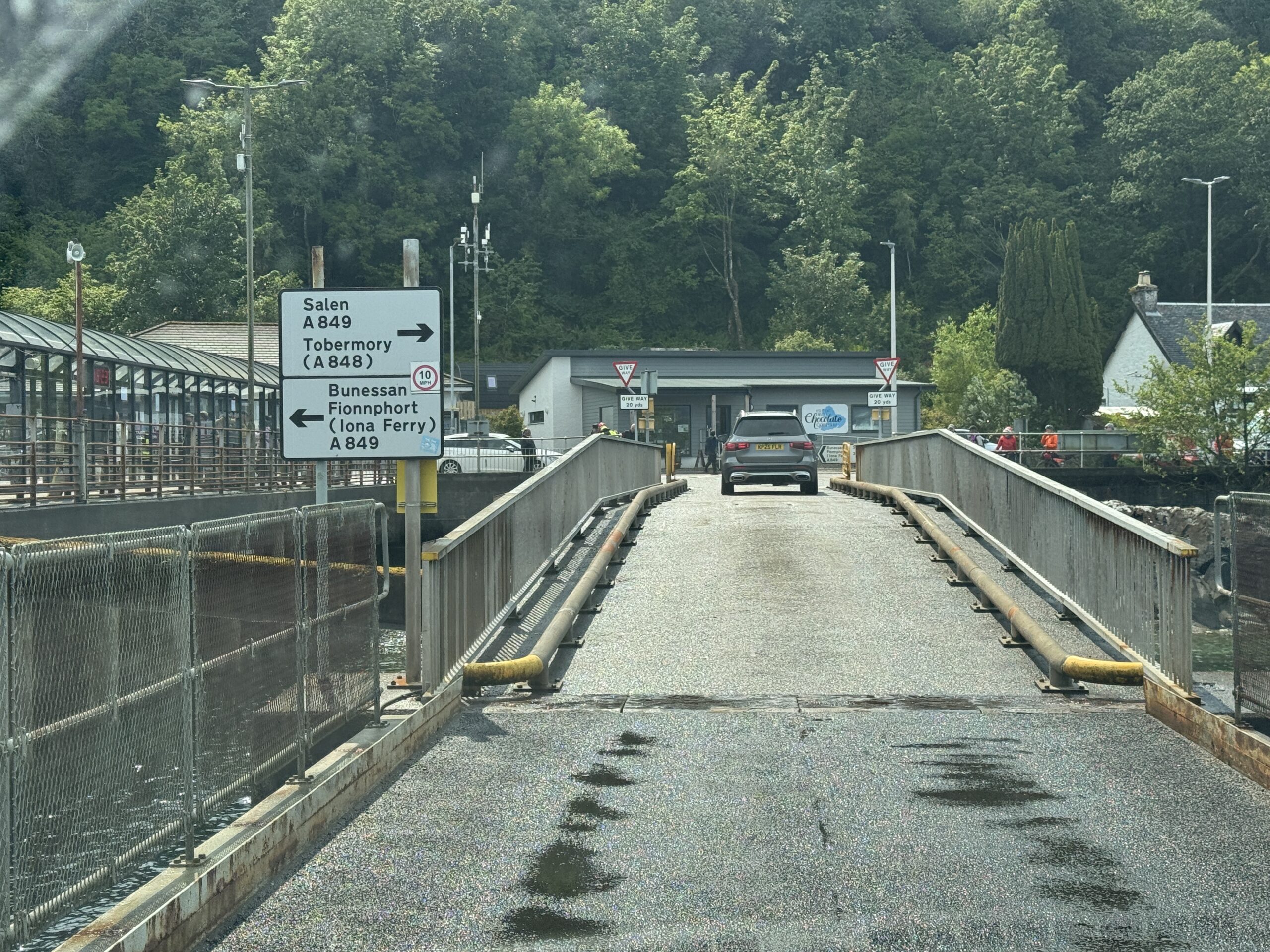
The Scottish Government’s new National Islands Plan, unveiled by first minister John Swinney, states that a formal consultation process is to take place on establishing a fixed link between the Isle of Mull and the Scottish mainland.
Opposition to a fixed link has centred on islanders’ concerns over the preservation of island identity, the adequacy of local infrastructure, and a preference for improved ferry services.
Islanders are concerned that some of the tourism, housing and transport pressures experienced on the Isle of Skye after the construction of its bridge could be replicated on Mull.
Vice chairman of the Mull and Iona Ferry Committee Finlay MacDonald said the community were ‘unaware a fixed link was still being considered by the Scottish Government.’
“Transport and digital connectivity are fundamental to the social, economic and cultural life of Scotland’s islands. They help to mitigate the challenges of distance and improve equity of access for islanders,” says the Plan.
“A combination of ferry services, aviation and fixed links provides transport connectivity to and from Scotland’s islands. These services are lifelines for islanders and their economies, supporting two-way access to public services, supplies, jobs and markets, and enabling people to reach facilities not available locally.
“A reliable, well-integrated transport system is essential to sustaining and growing island populations. For “islands off islands” – those that rely on multiple travel stages to reach the Scottish mainland – the challenges are even more complex, with higher costs, longer journeys, and fewer alternatives when disruption strikes.
“Islanders are known for their resilience and ability to plan ahead. Yet, extended periods of disruption to transport services can have far-reaching impacts. Essential supplies – from food and medicines to fuel and perishable goods – are particularly vulnerable, affecting households, businesses and communities alike. Climate change is expected to bring more frequent and severe weather events. This will place additional pressure on the ability to maintain reliable services in the years ahead. Much of the current transport infrastructure is also ageing and substantial investments are underway to improve resilience and efficiency across networks.”
Published in May 2025, the Islands Connectivity Plan (ICP) Strategic Approach sets out the Scottish Government’s vision for ferry services that are safe, reliable, affordable and inclusive. Alongside it, the Vessels and Ports Plan provides a long-term investment roadmap for renewing the fleet and upgrading port infrastructure for the Clyde and Hebrides (CHFS) and Northern Isles Ferry Services (NIFS) networks. The Scottish Government’s Aviation Statement (2024), meanwhile, recognises the importance of air services in linking island communities to the mainland, opening onward travel opportunities within Scotland, across the UK and internationally.
“The transport sections of this Plan build on the commitments outlined in the documents above, fostering greater coordination and driving forward a shared ambition for prosperous, sustainable, and well-connected island communities.
“With more public and private services available online, digital connectivity can reduce the need to travel and increase equity of access for island residents. Fast and reliable digital connectivity is also a driver of economic growth, opening new markets to businesses of all sizes and supporting individual opportunities for remote working.
“Although responsibility for telecommunications rests with the UK Government, ongoing Scottish Government investments in digital infrastructure have contributed to significant improvements in broadband and mobile coverage across many island areas. This is reflected in the largely positive feedback from respondents to the Scottish Islands Survey 2023[9]. However, gaps and “not-spots” remain, underlining the need for continued effort to extend infrastructure and improve digital access further.
“The knowledge, lived experience and priorities of islanders are crucial to delivering effective connectivity – whether by sea, air, road or online.”
As for the ferry issue, the Plan says:
“Island local authorities face similar challenges in renewing their ferry fleets and infrastructure. While developing investment cases and securing funding options is the responsibility of each council, Scottish Ministers have provided targeted support where possible. This has included the establishment of Ferry Taskforces in partnership with Orkney Islands Council and Shetland Islands Council. In 2025-26, both local authorities received a one-off allocation of £10 million to support inter-island connectivity projects, in addition to funding provided through the Local Government Settlement. Separately, Orkney Islands Council was awarded £3 million to pilot two electric ferries and progress the business case for renewing its inter-island fleet.
“We will provide advice and practical support to local authorities to help them progress their fleet replacement plans.”
(Picture: Paul Hutton/Highways News)