National Highways has issued a statement by way of a response to a story on the BBC’s website that suggests a speed camera fault may have allowed drivers to escape fines.
The BBC reported that National Highways discovered issues with speed cameras last year (confirmed by National Highways in their statment), which affected 154 out of 400 cameras but, following an investigation, said it had found another fault on units monitoring roads including those running between Huntingdon and Cambridge. The Home Office has revoked approval that allows footage from the cameras to be used as evidence in legal proceedings. US firm Verra Mobility operates the cameras but National Highways said it will now end the contract.
Roads minister Justin Madders said:
“The government holds itself to the highest standards of criminal proof and in the protection of road safety. Ministers are not prepared to accept any scenario where there is a hypothetical risk some drivers could be prosecuted incorrectly, or that enforcement was in any way compromised.

“The Home Office has decided to revoke the camera system’s type approval status, which allows the data from the camera to be more easily admitted as evidence of fact into certain legal proceedings. The Home Office concluded that the issues with the camera could not be addressed to their satisfaction in any reasonable timeframe.”
“We can’t take chances with this. If we’re going to prosecute people, we need to be confident the system is working as it should. That’s why we’ve taken the action we have.”
In response, National Highways said:
“Last year we identified an anomaly affecting the interaction between some variable speed cameras and signage on some A roads and motorways in England.
“This meant that on rare occasions there was a slight delay between cameras and variable speed signs, leading to some drivers being incorrectly detected as speeding after the limit had changed. Everyone who we’ve been able to identify and contact has been offered redress. We’ll continue to provide redress to eligible individuals, where identified.
“Since then, we’ve been working in collaboration with the Home Office and others to rigorously test the system. During this work we identified a potential further issue relating to how some of these cameras may activate in specific and rare circumstances.
“Our modelling indicates that the circumstances in which the latest issue could occur are extremely rare, and there’s no evidence to suggest it has impacted enforcement.
“T”he Home Office has decided to revoke the camera system’s type approval status, which allows the data from the camera to be more easily admitted as evidence of fact into certain legal proceedings. The Home Office concluded that the issues with the camera could not be addressed to their satisfaction in any reasonable timeframe.
“The camera system was procured on the basis that it maintained its Home Office Type Approval. Since that’s no longer the case, we’re ending our contractual relationship to use the cameras for enforcement with the device supplier, Verra Mobility, and we’re considering all further commercial and legal options that may be appropriate.
“Enforcement continues on motorways and A roads through a range of unaffected methods, including mobile camera sites, average-speed cameras and marked and unmarked police patrols. Variable speed signs remain in operation to help manage traffic safely and reduce congestion, and drivers should continue to comply with all speed limits and signs, including Red X signs. Anyone who breaks the law should expect to be prosecuted.
“Our monitoring through focused Traffic Officer patrols and data collection has assured that compliance with the law remains at the usual high levels on these roads, which remain safe.
“However, we’re taking immediate steps to ensure compliance is maintained at relevant locations. We have today put in place further Traffic Officer patrols to monitor these sites and are using existing CCTV cameras to assist with monitoring the network and compliance. This is in addition to existing safety measures like the stopped vehicle detection radars on sections of All Lane Running and emergency areas, and the use of existing ANPR cameras, to identify offenders.
“The Department for Transport has also today published the review into the original issue and its handling carried out by Tracey Westall OBE. We accept the review’s findings and recommendations in full and want to take this opportunity to apologise to affected motorists. Safety is our first priority, and we’re committed to putting things right and strengthening our systems and oversight. We’ve already begun making significant changes and will continue working closely with the Department for Transport to address the issues identified by the review.”
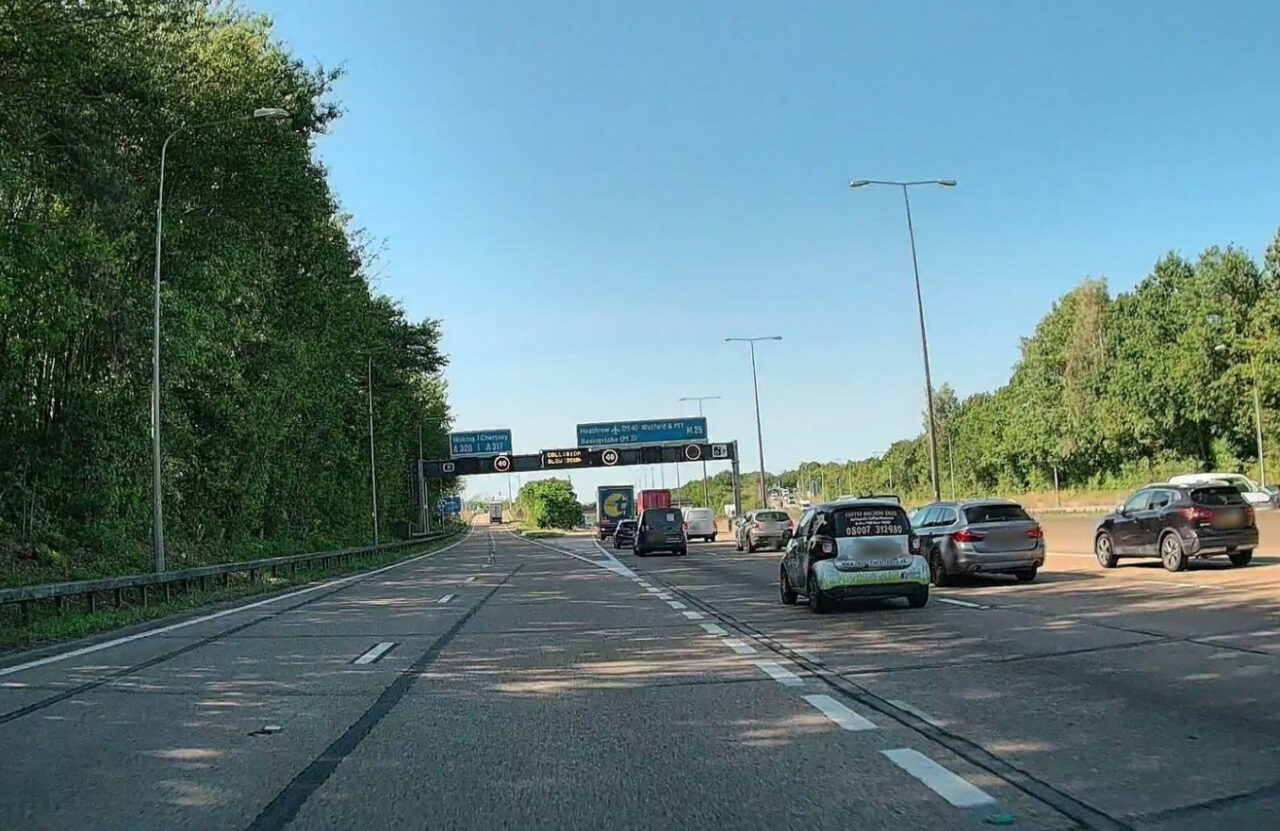
(Picture: Mapillary)