A new study undertaken by the Institute of Transport and Logistics Studies (ITLS) at the University of Sydney Business School in Australia has found that changing how and why people travel is just as important as building new transport infrastructure when it comes to reducing congestion and emissions. This study is part of the iMOVE CRC series with funding from ITS Australia.
The Behaviour Change for Sustainable Transport study looked at how and why people choose to travel the way they do. It was based on surveys of more than 4,000 people across seven countries, including Australia, the UK, the US and parts of Europe. While the research was led from Australia, its findings apply to cities and road networks around the world.
The study found that people are most likely to change their travel habits during major life events – such as moving home, changing jobs or adjusting work hours. These moments, known as “windows of change”, disrupt daily routines and make travellers more open to using public transport, walking, cycling or other alternatives to driving.
Rather than treating all travellers the same, the research identified four broad groups with different needs and behaviours:
• Lifestyle and household changes (such as moving home, changes in family size, health or finances);
• Work and commuting changes (starting or changing jobs, flexible or remote work);
• Transport and mobility changes (new or improved public transport, buying or selling vehicles, access to bikes or micromobility); and
• Social and environmental factors (environmental awareness, influence of family or peers, or public campaigns).
The study found that targeting policies to these moments makes behaviour change far more likely. ITS Australia’s CEO Susan Harris (pictured) calls out the simple yet complex findings of the study.
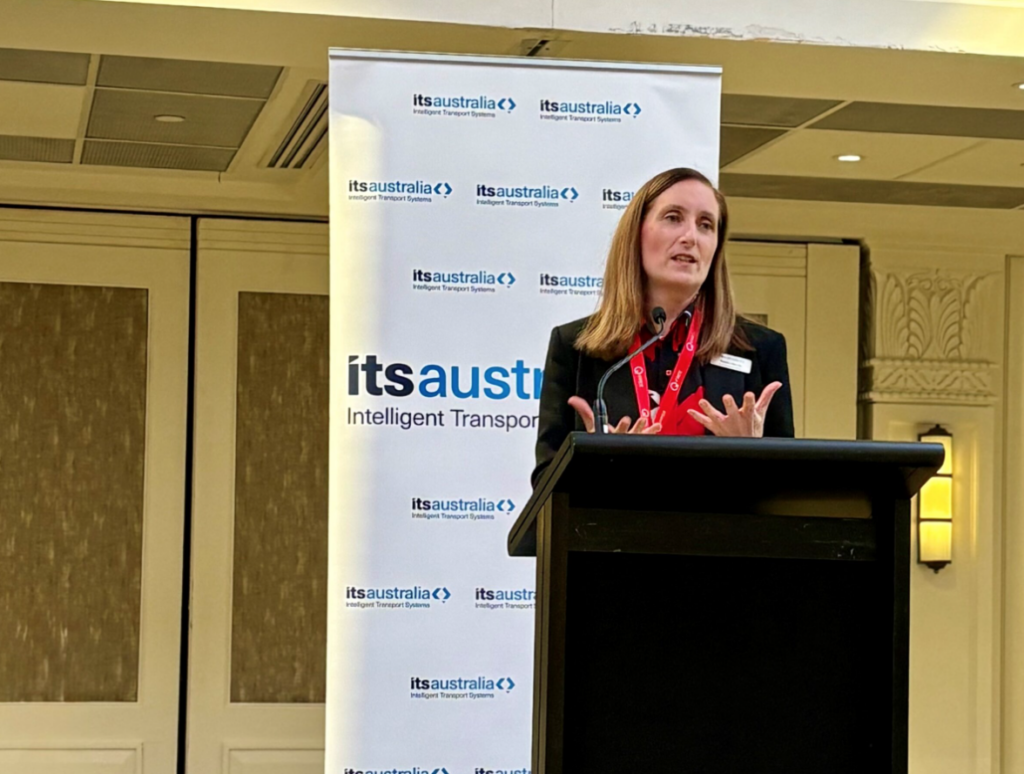
“The findings may sound obvious – when people’s lives change, the way they travel changes too. But what this
study shows is how little attention transport systems worldwide have paid to supporting those moments,’ revealed Ms Harris.
“Too often, behaviour change has been discussed in general terms, without aligning infrastructure, services and policy to real world life transitions. This research brings much needed clarity, showing how better timed and better designed transport options can support people everywhere to make more sustainable travel choices.”
For road agencies and transport planners, the findings highlight several clear priorities. Improvements to public transport – especially better frequency, reliability and access – were strongly linked to reduced car use. Simple workplace measures, such as discounted public transport, flexible work hours and facilities for walking and cycling, were also shown to influence travel choices more effectively than penalties or pricing alone.
The study also warns that cleaner vehicles are not a complete solution. While electric and fuel- efficient cars help cut emissions, the research found they can lead to more driving if demand is not managed. This can increase congestion even as vehicles become cleaner. The message is that technology must be paired with policies that reduce the need to drive and support other transport options.
Professor John Nelson, from the Institute of Transport & Logistics Studies (ITSL), stressed the importance of taking a wider view at not just the results from the behavioural findings, but also the practical guidance that would then form as a result – and the importance of having the right people at the table to determine the outcomes.
“At ITLS, our focus is on turning behavioural research into practical guidance that policymakers and practitioners can actually use,” said Professor Nelson. “By bringing together perspectives from government, industry and academia, this work bridges theory and practice. Importantly, our findings from this project draw on international as well as Australian evidence to highlight practical initiatives that government, businesses or other organisations could introduce either separately or together to encourage sustainable travel choices”.
Dr Camila Balbontin of ITLS, who also contributed to the study, said:
“The resulting framework helps identify what really shapes travel decisions, and how context‑sensitive, user‑centred interventions can support more sustainable transport outcomes at scale.”
Professor Nelson insists that recent international research reinforces these findings. In the UK, the Department for Transport has shown that travel behaviour change is most effective when interventions coincide with “moments of change” such as moving house, starting a new job or changes in working patterns, leading the concept to be embedded in national policy guidance.
While long‑running studies in the Netherlands using national mobility panel data have consistently found that life events – particularly residential moves, job changes and changes in household composition – are among the strongest predictors of sustained shifts away from car use towards public and active transport.
For highway and road authorities worldwide, the message is clear. Building and maintaining infrastructure remains critical, but long-term success also depends on understanding people’s behaviour. By planning networks around how people actually live and travel – especially during moments of change – transport systems can become safer, cleaner and more efficient without relying solely on costly expansion.
You can read the full report here.
(Pictures: Yay Images/ITS Australia)