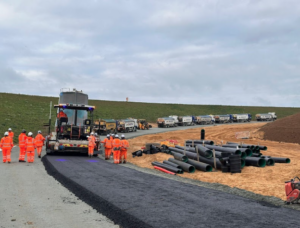
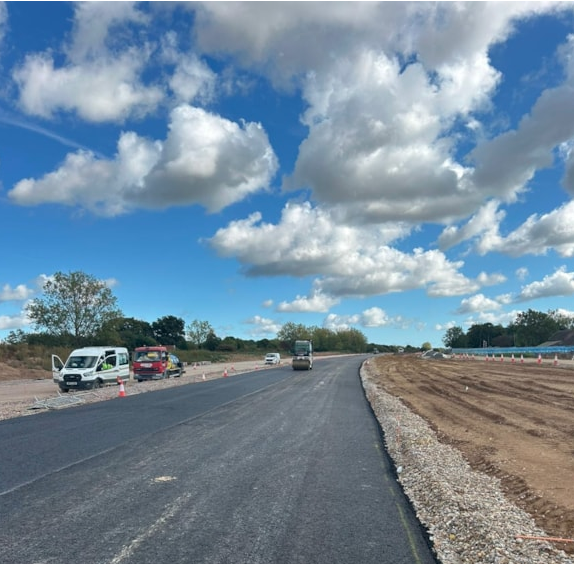
A smooth new surface has been laid on the A47 between Blofield and North Burlingham – a year on from work starting on the £90m road dualling project.
Meanwhile, 12 huge new beams weighing 35 tonnes each have been lifted into place for a new bridge, which will ultimately take traffic from Blofield to join the A47 East bound to Great Yarmouth.
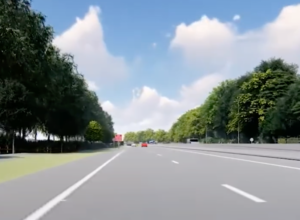
And unique features to enhance and protect wildlife are being created with a new wetland and special “bat and bird crossings” – with tall trees planted to encourage them to cross high above the new road.
With 30,000 vehicles using this section of road daily, the new stretch of dual carriageway is set to open to traffic by summer 2026, easing congestion, improving safety and resilience and speeding up journey times.
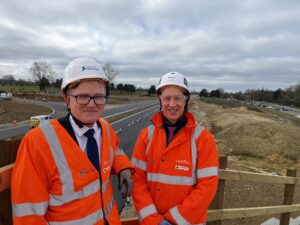
National Highways Programme Lead, Chris Griffin, said:
“This is a significant step forward for the project and a great time for motorists and the local community to see the progress we have made. It is not too far away until the new dual carriageway will be completed.
“This new road will reduce congestion, improve the flow of traffic – especially at the road junctions – make journey times more reliable and increase the capacity of the A47 to cope with more vehicles in the future. But most importantly, in a stretch prone to collisions, it will improve safety.”
Safety improvements have also been made to the Yarmouth Road junction at Blofield, closing the right turn and adding a dedicated lane to join the A47.
A new bridge has been added over the new dual carriageway to connect the villages of Blofield and North Burlingham and take traffic from Blofield toward Great Yarmouth. In addition, the B1140 junction is being changed, with a new two-tier junction connecting B1140 South Walsham Road (north of the A47) with B1140 Coxhill Road (south of the A47). Direct access from Lingwood Road and Lingwood Lane to the A47 will be closed when it becomes a dual carriageway.
(Picture: National Highways)